T-Shirt Back Neck Tape Guide for Streetwear
T-shirt back neck tape is a narrow internal component, but it changes comfort, neckline stability and perceived workmanship. It may cover only the center-back collar seam or continue from shoulder to shoulder, depending on the construction. When a tech pack says only “add neck tape,” the factory must guess the material, route, width, stretch and stitch method.
Quick Answer: Specify T-shirt back neck tape by material, finished width, start and end points, stretch behavior, color, branding, stitch type and finished appearance. Match it to the body fabric and neckline construction, approve it on a production-intent sample, then inspect coverage, puckering, abrasion, stretch and wash performance before bulk production.
What is T-shirt back neck tape?
T-shirt back neck tape is a strip applied over or alongside the inside neckline seam. Its route may be limited to the back neck, extend across both shoulder seams, or bind the complete neckline. The term is used inconsistently, so a flat sketch and cross-section are more useful than the name alone.
The tape can conceal a rough seam allowance, reduce direct skin contact with thread and labels, and help control stretch in selected areas. It does not automatically prevent every collar problem. Neck rib properties, collar length, stitch tension, shoulder construction and laundering still affect the finished result.
Which T-shirt back neck tape material should a brand choose?
Material choice should start with the main fabric and the amount of movement expected at the neckline. A firm woven tape can add structure but may feel rigid on a soft or highly extensible jersey. A knit or self-fabric tape can follow a curved seam more easily, but it still needs controlled recovery and clean edges.
| Tape option | Useful characteristic | Buyer check | Potential concern |
|---|---|---|---|
| Woven twill tape | Stable, crisp and dimensionally controlled | Edge softness and compatibility with knit stretch | Rigid hand or restricted neckline movement |
| Knit tape | Conforms to curved knit constructions | Stretch direction and recovery | Waviness if fed with excessive tension |
| Self-fabric strip | Color and hand can match the body | Cut direction, bulk and edge behavior | Rolling or inconsistent width |
| Branded printed tape | Adds visible interior identity | Print adhesion, readability and skin feel | Cracking, dye migration or abrasion |
| Elastic reinforcement | Controlled stretch and recovery | Elongation match and seam comfort | Over-tightening the neckline |
For an external technical reference, the ECI manufacturing guide distinguishes woven, knit and elastic tape types. Treat supplier recommendations as a starting point and validate the selected tape with the actual garment.
What T-shirt back neck tape coverage route should appear in the tech pack?
The tape route must be visible in an inside-view drawing. Mark whether it starts and ends at the shoulder seams, continues across the shoulders, covers only the back-neck curve or wraps the whole neckline. State whether raw tape ends are turned, caught into another seam or left hidden beneath a label.
Shoulder-to-shoulder taping can reinforce more of the upper garment, but it also crosses seam junctions and curves. The operator needs a folder or application method that maintains consistent coverage without stretching the shell. A center-back-only tape is simpler but does not perform the same function. Neither method should be described as universally premium without examining the garment design.
Back neck tape specification checklist
- Tape material, fiber content and construction.
- Nominal and finished width.
- Color or approved color reference.
- Stretch direction and recovery expectation where relevant.
- Start point, end point and complete application route.
- Folded, bound, raw or sealed edge treatment.
- Stitch class, visible stitch rows and thread color.
- Relationship to main label, size label and heat-transfer branding.
- Approved supplier/reference and sample revision.
- Care and wash review requirements.
How is T-shirt back neck tape sewn?
Factories may use a folder and coverstitch, a single-needle operation, binding equipment or another approved method. The correct choice depends on the seam being covered, the intended appearance and available machinery. A method that looks clean on a light jersey may become bulky on a heavyweight fabric.
During sewing, tape tension is critical. Pulling the tape can shorten the back neck and cause puckering or a distorted collar. Feeding it too loosely can create ripples or exposed seam allowance. Seamwork’s knit T-shirt construction guide also highlights stabilizing shoulder seams and controlling neckband handling, reinforcing the need to treat the neckline as a system rather than a decorative strip.
How should comfort and appearance be inspected?
Turn the sample inside out under consistent light. The tape should cover the intended seam evenly, sit flat without sharp ridges and end cleanly. Run a finger across the edge, label junctions and thread tails. A tape can be visually neat yet uncomfortable if its edge is stiff or if a dense stitch ridge sits directly against the skin.
- Compare left and right coverage from the center back.
- Check that the tape does not pull the shoulder or neckline out of shape.
- Confirm the collar seam allowance is concealed as specified.
- Inspect skipped stitches, roping, puckering and raw tape ends.
- Stretch the neckline only within its intended use and observe recovery.
- Wear-test the sample for abrasion at the back neck.
- Review the tape and branding after the agreed laundering process.
How do wash tests support tape approval?
Laundering can reveal differential shrinkage between the tape, rib and body, as well as print cracking, curling or color transfer. Use a defined procedure and record the condition of the whole neckline before and after care. ISO 6330 describes domestic washing and drying procedures for textile testing, while dimensional-change assessment requires the related measurement method and an acceptance rule set by the buyer.
Do not claim that a particular tape “never stretches” or will last a fixed number of washes without evidence for that specific construction. Compare the approved sample and representative bulk garments under the same agreed method. The streetwear shrinkage test guide explains how to document pre- and post-care measurements.
What T-shirt back neck tape defects should be rejected?
| Defect | Possible cause | Corrective review |
|---|---|---|
| Wavy neckline | Tape, rib or body stretched during sewing | Review feed, tension and material compatibility |
| Tape puckering | Differential feed or shrinkage | Test sewing settings and care behavior |
| Exposed seam allowance | Incorrect tape width or route | Confirm folder, coverage and finished width |
| Scratchy edge | Rigid material, raw end or thread tail | Change finish, material or label junction |
| Printed branding peels | Incompatible print system or cure | Verify supplier settings and wash result |
| Shoulder distortion | Tape too stable or applied under tension | Match extension and inspect pattern balance |
How does neck tape connect with labels and branding?
Map the main label, size label, care label and any heat-transfer mark in the inside-view artwork. Avoid stacking several stiff components at the same skin-contact point. If the tape carries branding, approve the graphic width, repeat, color and orientation, and decide whether trimming may cut through a repeated logo.
Use the streetwear woven label placement guide to coordinate label attachment with the tape. The final specification should identify which component carries mandatory information for the target market; decorative tape does not replace legal label review.
Frequently asked questions
Is back neck tape the same as shoulder tape?
Not always. Back neck tape may cover only the rear neckline, while shoulder-to-shoulder tape follows a longer route. Show the exact route rather than relying on terminology.
Does every oversized T-shirt need woven tape?
No. A woven tape may be too rigid for some soft or stretch constructions. Choose the tape after reviewing fabric, neckline stretch, comfort and intended appearance.
Can self-fabric be used as T-shirt back neck tape?
Yes, when the cut direction, width, bulk, edge control and stretch are suitable. It still requires a documented application method and sample approval.
Should the tape stretch during sewing?
It should be applied according to the approved construction, generally without uncontrolled pulling. Required tension depends on the materials and method, so confirm it through a sewn sample.
Can neck tape replace a main label?
It may carry printed branding, but mandatory fiber, care, origin or other information depends on the destination market and cannot be assumed to be replaced.
What should be retained after approval?
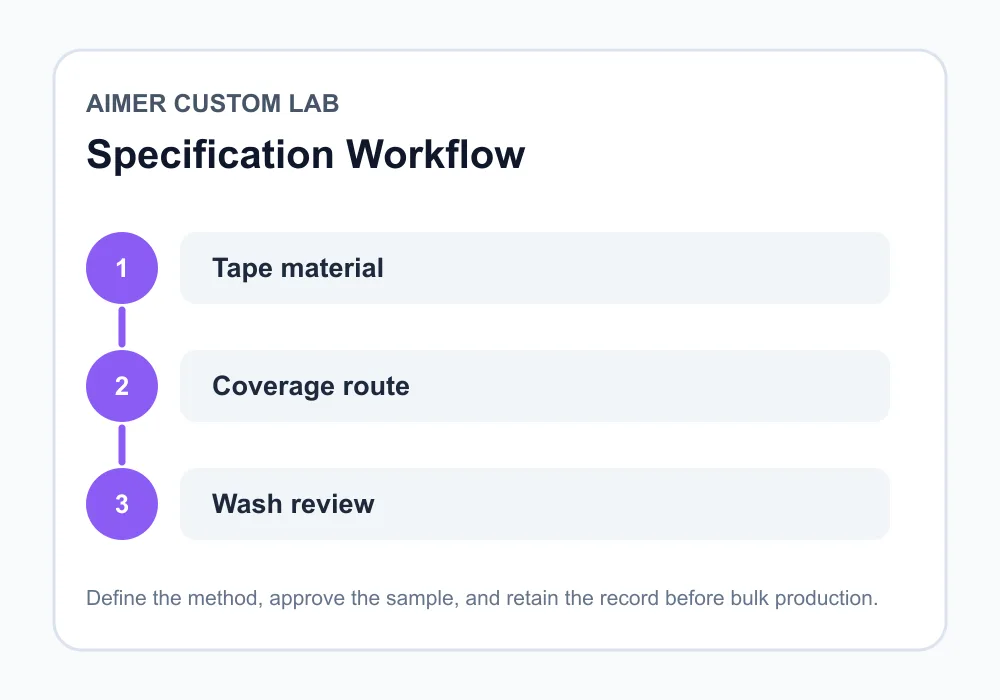
Keep the tape reference, supplier or material code, approved sample, artwork, stitch callout, color approval and relevant wash or comfort results.
Conclusion: specify the inside as carefully as the outside
T-shirt back neck tape works best when it is treated as part of the neckline engineering. Define the tape, route, stitching, branding and acceptance checks, then validate them on the real fabric. Send Aimer Custom Lab the inside-view tech pack, body and rib specifications, size range and label artwork to confirm the appropriate sampling and production plan.