Streetwear Woven Label Placement Guide
Quick answer: Streetwear woven label placement should be controlled by label purpose, fold type, finished size, seam allowance, orientation, comfort and legal information plan. Common locations include the inside neck, side seam, hem, pocket or sleeve, but no location suits every garment. Approve exact distances and stitching on a finished, washed sample before bulk production.
Labels are small components with a large effect on brand presentation and wearer comfort. A woven neck label can reinforce identity, while a poorly folded edge or dense stitching can scratch the wearer. A decorative hem label may look premium on a T-shirt but distort lightweight fabric if its size or stitch tension is unsuitable.
This guide turns streetwear woven label placement into a repeatable private-label specification. It works with our streetwear sampling process and measurement tolerance guide.
What is a woven garment label?
A woven label builds the artwork into interlaced yarns rather than printing the image on the surface. It can be cut and sewn flat, folded into a seam, turned at the ends or made as a loop. Yarn, weave density, ground colour, fold and edge finishing affect detail, thickness and comfort.
The New York Custom Labels clothing label comparison notes that woven, printed, cotton, satin and heat-transfer options serve different products. Buyers should choose the format by garment function and brand experience, not assume woven is always superior.
Which labels belong in a private-label garment?
| Label role | Typical information | Common construction |
|---|---|---|
| Main brand label | Brand identity | Woven, printed or heat transfer |
| Size label | Garment size | Separate tab or combined label |
| Care/content label | Required fibre, care and origin information as applicable | Usually printed or specialist woven/transfer format |
| Decorative flag label | Brand device or collection marker | Woven fold inserted into a seam |
| Patch label | Visible branding or story element | Flat woven, leather-like or other approved material |
Legal requirements depend on the destination market and product. Do not replace required care or fibre information with a decorative brand label. Confirm current requirements with qualified compliance resources for the selling market.
Where can streetwear woven label placement work?
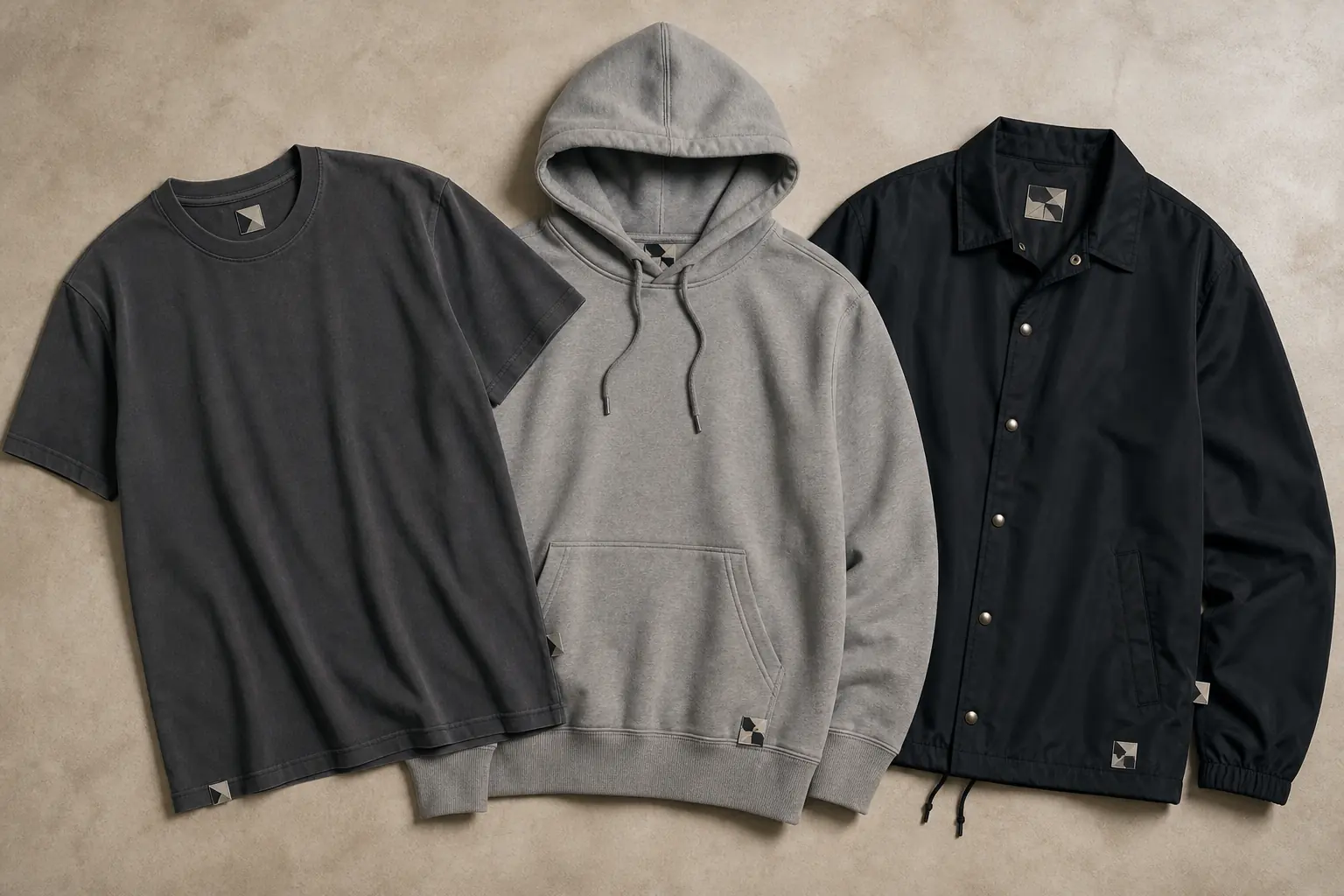
Inside back neck
The inside neck is common for the main brand and size. It is easy for customers to find, but it sits against sensitive skin and may conflict with neck tape, hood seams or an interior print. Review label softness, edge finish and stitch show-through.
Side seam
A care label or brand flag may enter the side seam. The placement should not sit directly at a high-friction point or disrupt a side slit. State the distance from hem or underarm and whether the label faces front or back.
Lower hem or exterior side
A flat or folded woven label can become a visible streetwear detail. Control its height from the hem, distance from the side seam, orientation and stitch box. Heavy labels can distort soft jersey, so sample the exact combination.
Pocket, sleeve or cuff
These locations can identify a collection but must respect movement, decoration and laundering. Avoid placing a stiff label where it catches a hand or repeatedly folds.
HEM Apparel’s garment label placement guide maps main, size, care and decorative labels to common locations. Use those categories as a starting point, then specify exact measurements for the individual style.
Which fold type supports streetwear woven label placement?
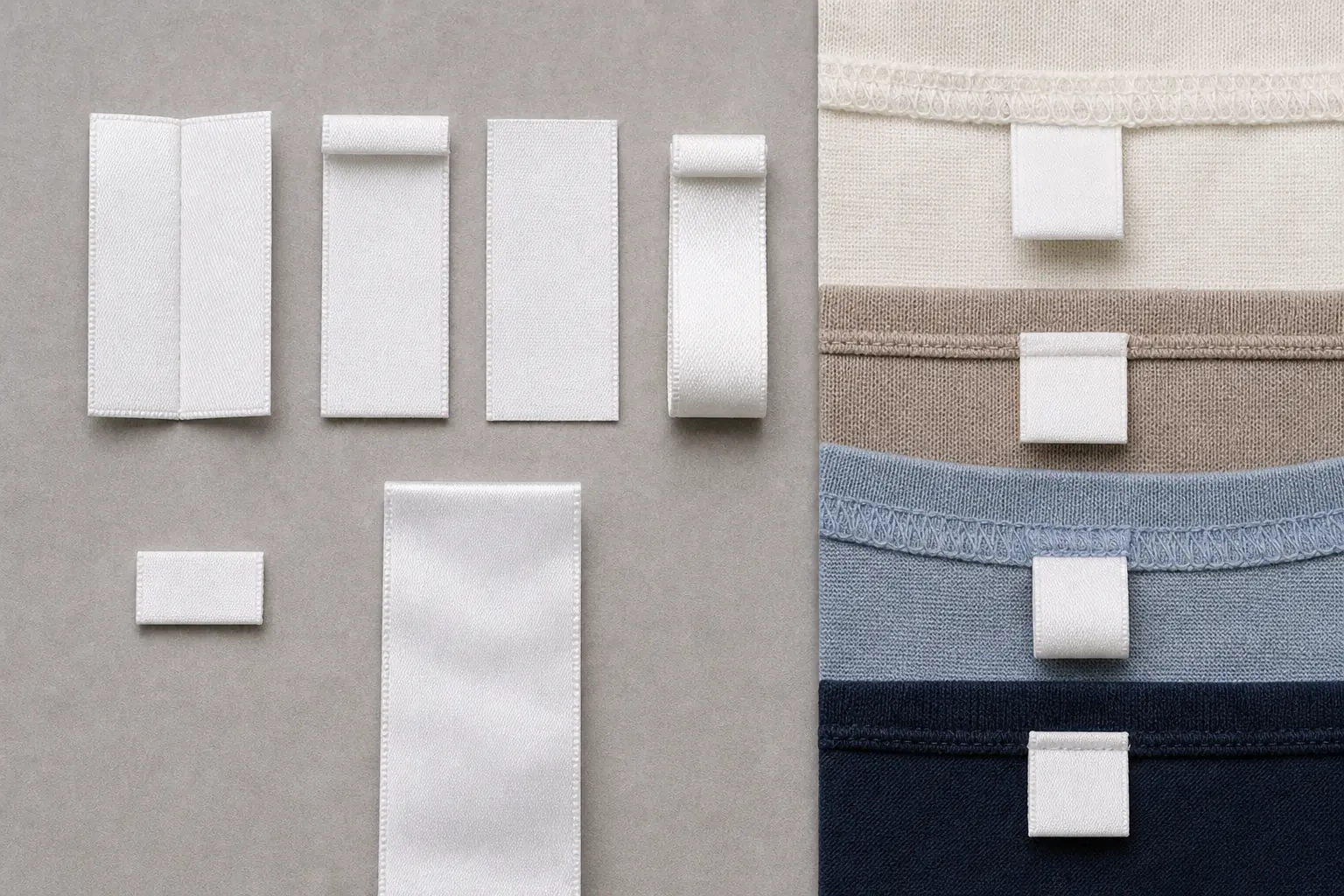
- Straight cut: Flat label sewn around edges or inserted on one side
- End fold: Side edges turn under for a clean flat attachment
- Center fold: Label folds in half, often entering a seam
- Loop fold: Fold creates a loop with both ends captured
- Mitre or book fold: Specialized folds for particular presentation or attachment
The Custom Woven Labels fold and sizing guide shows why fold type determines finished size and seam allowance. Artwork must fit inside the visible area after folding; the production file should show cut line, fold line and safe zone.
What measurements control streetwear woven label placement?
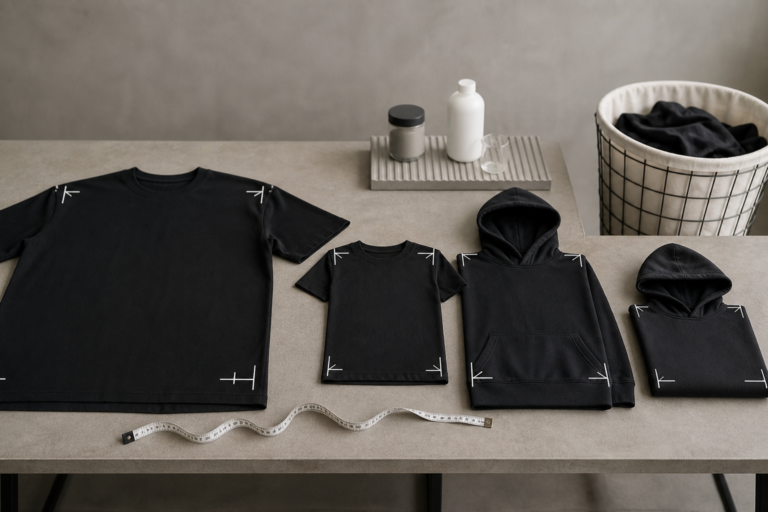
A streetwear woven label placement drawing should include finished width and height, flat size before folding, fold type, seam allowance, artwork orientation and attachment method. The garment drawing should show two reference distances so operators can reproduce the location.
Examples include centre of label to centre back, top edge to neck seam, or label edge to side seam and hem. Avoid instructions such as 鈥渘ear bottom left,鈥?which cannot be inspected consistently.
How should colour and artwork be approved?
Woven detail is limited by yarn and construction. Very small text, thin lines or tight counters may fill in or lose clarity. Review a physical strike-off at the final size. Approve front and reverse appearance, edge finish and colour under consistent lighting.
If the label touches light fabric, test colour transfer through laundering, rubbing, pressing and storage conditions appropriate to the order. Dark labels and wet finishing deserve particular attention.
How does label placement affect comfort?
Comfort depends on yarn, cut edge, fold, thickness, seam bulk and location. A soft label can still scratch if a heat-cut edge is exposed. A center-fold label may create a thick seam when combined with neck tape and hood layers.
Wear the sample for an extended period and after washing. Check whether corners lift, edges curl, the label rubs skin or the surrounding garment puckers.
How should buyers approve streetwear woven label placement?
- Define the label system: Separate brand, size, care and decorative roles.
- Approve artwork feasibility: Check safe area, weave detail and final dimensions.
- Review a strike-off: Inspect colour, clarity, hand, reverse and edges.
- Sew it into the garment: Use final location, stitch, thread and seam construction.
- Measure placement: Record reference points and tolerance.
- Wear and wash: Check comfort, distortion, fraying, bleeding and legibility.
- Seal standards: Retain the approved label card and signed garment.
What label-placement failures are common?
The label sits off centre
Use a garment centre reference, not a visual estimate. Confirm that hood, neck seam or back panel geometry does not mislead the operator.
The label puckers the garment
Check label weight, stitch tension, attachment method and fabric stability. A large dense label may be unsuitable for lightweight jersey.
Artwork is hidden by the seam
The file may not include fold and seam allowances. Separate flat size from finished visible size and keep critical detail in the safe area.
The label irritates the wearer
Review cut edge, yarn, fold, seam bulk and location. Consider a softer label or heat transfer only after testing it with the specific garment and care process.
Streetwear woven label placement bulk quality-control checklist
- Correct label design, colour and fold used
- Brand, size and care labels match the SKU plan
- Placement measurements meet the approved tolerance
- Orientation is consistent and readable
- Stitching is secure without puckering
- Edges do not fray or scratch
- Dark labels do not mark light fabric
- Required information remains legible after the agreed wash review
Frequently asked questions
Is a woven label better than a printed label?
Not universally. Woven labels offer a textured brand presentation, while printed labels can carry fine care information. Choose by purpose and comfort.
Where should a streetwear brand label go?
Inside neck is common, while hem, side seam, pocket or sleeve can create visible identity. The right location depends on the garment and brand plan.
Can size be combined with the main label?
Yes, if the label system and SKU management support it. Separate size tabs can be easier to change across a range.
How close can a label sit to the hem?
There is no universal distance. Define a measurable position that avoids hem bulk and remains consistent across sizes.
Do woven labels need wash testing?
Yes. Inspect colour, shrinkage, fraying, distortion, comfort and attachment after the proposed care cycle.
Can a decorative label replace care information?
No. Required information must follow applicable destination rules. Decorative branding serves a different purpose.
Conclusion
Consistent streetwear woven label placement combines brand presentation with measurable attachment and wearer comfort. Define each label’s role, approve the fold and strike-off, locate it with fixed references and retain washed garment standards for bulk inspection.
Preparing private-label garments? Use the sampling workflow to organize label approvals, then contact Aimer Custom Lab with your garment, label artwork, size range and destination. Confirm options, sampling, MOQ and timing for the specific project.