Streetwear Hoodie Rib Cuff Specification Guide
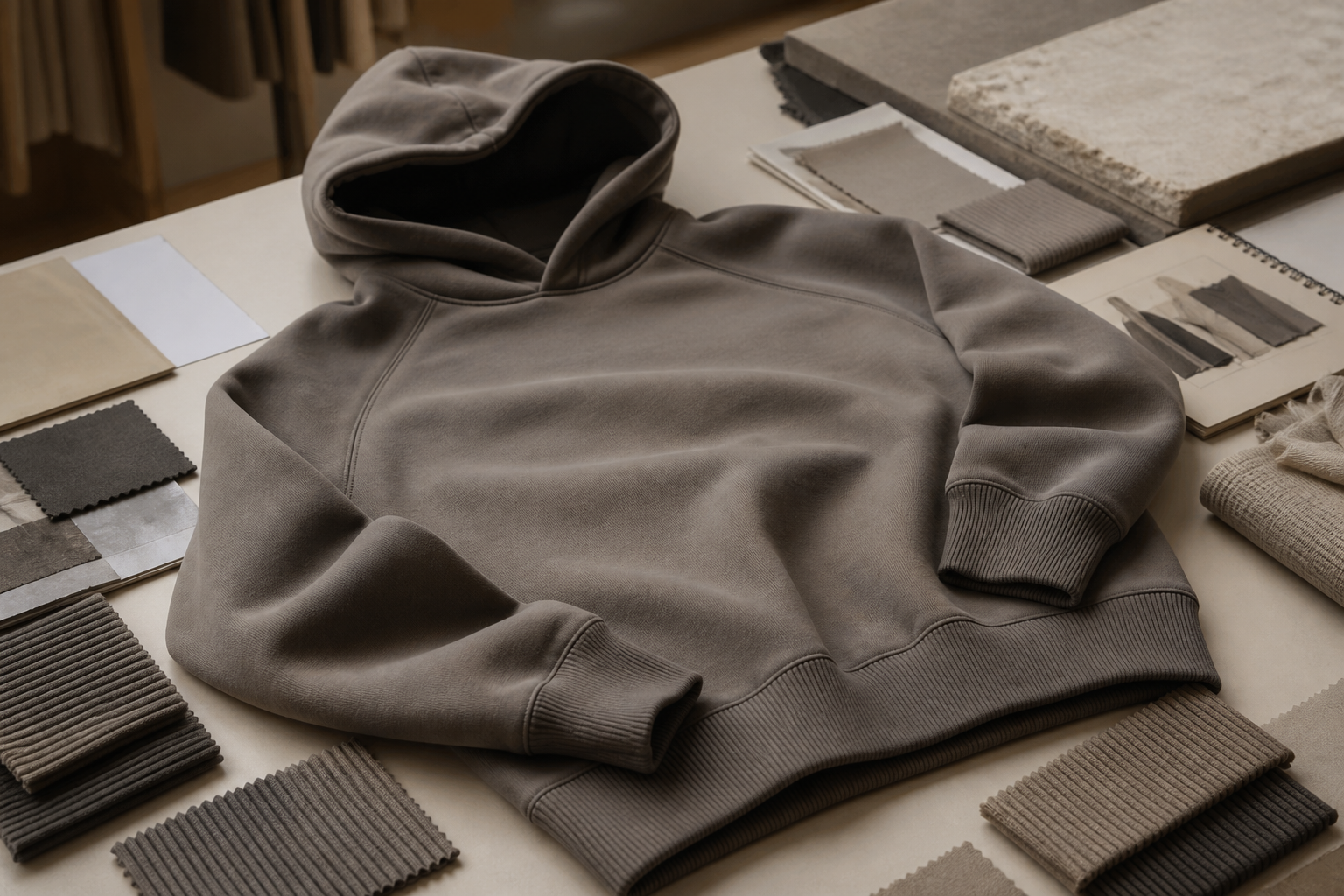
A streetwear hoodie rib cuff is a small component with a large influence on fit, comfort, silhouette, and perceived quality. If the rib is too loose, the sleeve looks tired. If it is too tight, the cuff can feel restrictive and distort the sleeve. Private-label buyers should specify rib structure, measurements, stretch, recovery, attachment, color, and wash performance instead of approving only a fabric swatch.
Why Streetwear Hoodie Rib Cuff Details Matter
Streetwear hoodies often use generous sleeves, dropped shoulders, and heavier body fabrics. The cuff controls how that volume finishes at the wrist. Its tension can make the sleeve stack, hang cleanly, or balloon. The cuff also experiences repeated pulling during dressing, hand movement, laundering, and drying.
Rib quality is not determined by thickness alone. Knit structure, yarn, elastane content where used, stitch density, finishing, cuff dimensions, and the ratio between sleeve opening and rib opening work together. A component that feels strong when new can relax after wash if the complete system is not tested.
Streetwear Hoodie Rib Cuff Knit Structure
Rib is a double-knit structure with visible vertical wales and natural widthwise stretch. CottonWorks’ guide to single and double knits explains structural differences that help buyers discuss rib, jersey, and fleece more precisely.
| Specification point | What to record | Why it matters |
|---|---|---|
| Rib structure | Approved knit reference and visual scale | Changes appearance, bulk, and stretch |
| Fiber content | Supplier-confirmed composition | Influences hand, recovery, dyeing, and care |
| Weight | Approved measured range or sealed swatch | Affects support and balance with hoodie fabric |
| Stretch direction | Marked orientation on pattern | Ensures extension around the wrist |
| Color | Approved lab dip or production standard | Rib and body may dye differently |
| Finish | Surface, softness, and recovery reference | Finishing can change dimensions and hand |
Terms such as “2×2 rib” can be useful, but they are not enough by themselves. Suppliers may interpret scale, yarn, density, and finish differently. Keep an approved swatch and finished sample.
How to Measure a Streetwear Hoodie Rib Cuff
Relaxed cuff opening
Lay the cuff flat without stretching and measure the opening consistently. State whether the measurement is across the laid-flat cuff or around the full opening. A tech pack should not leave this interpretation to the factory.
Cuff height
Measure finished height from the sleeve seam to the fold or outer edge. Taller cuffs create a stronger visual block and may produce more sleeve stacking. Shorter cuffs can feel less dominant but need enough stability for the design.
Sleeve-to-cuff relationship
The sleeve opening is usually larger than the relaxed rib opening, so the rib is distributed during attachment. Record both finished dimensions and approve the visual gathering. Excess difference can create puckering, while too little difference may leave the cuff loose.
Stretch and Recovery Testing
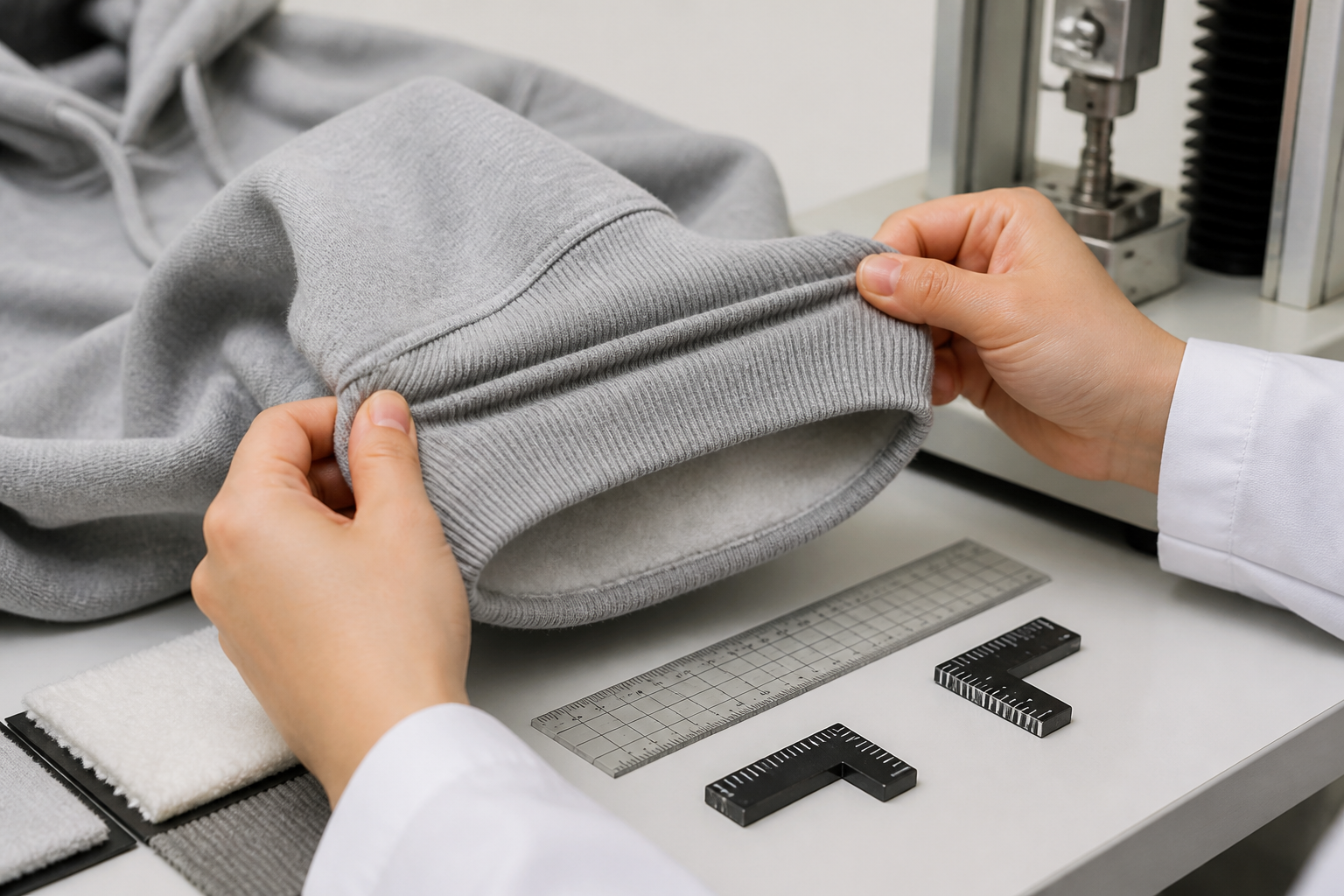
Stretch is how far the cuff can extend; recovery is how well it returns. Both should be checked. A cuff that stretches easily but remains enlarged can lose shape quickly. A very firm cuff may recover well but feel uncomfortable or stress the attachment seam.
- Condition the sample in a consistent environment.
- Measure the relaxed opening.
- Extend it to the agreed test distance without shock loading.
- Hold for the defined time and release.
- Measure immediately and after a recovery interval.
- Repeat the sequence consistently and record any permanent growth.
The exact method and acceptance range should be agreed with the manufacturer for the selected rib. Avoid inventing a universal percentage that has not been validated on the product.
Streetwear Hoodie Rib Cuff Attachment
The attachment seam must extend with the cuff and distribute the sleeve evenly. Approve seam type, thread, stitch density, allowance, and the placement of the cuff join. Check whether the cuff seam aligns with the sleeve seam and whether bulk is managed cleanly.
- Match quarter points or other controlled notches.
- Distribute fullness evenly with no concentrated gathers.
- Keep seam allowance consistent around the opening.
- Check the seam for extension without popping.
- Trim thread tails without damaging the knit.
- Confirm the cuff is not twisted before attachment.
Coats discusses softness solutions for activewear seams, a useful reminder that thread and seam profile influence comfort as well as strength.
Preventing Puckering and Uneven Gathering
Puckering can come from feed imbalance, tension, differential stretch, stitch density, or mismatched shrinkage. Coats’ technical overview on eliminating seam puckering describes the need to diagnose causes rather than treat every wave as the same defect.
| Problem | Likely area to investigate | Buyer evidence |
|---|---|---|
| One section is heavily gathered | Marking and distribution method | Quarter-point alignment and sample photos |
| Attachment seam pops | Seam extension, thread, stitch formation | Stretch test and inside inspection |
| Cuff twists | Cut orientation or join alignment | Pattern marks and flat garment check |
| Sleeve waves above cuff | Feed, tension, ratio, shrinkage | Before/after wash comparison |
| Cuff feels hard | Bulk, seam profile, rib density | Wear test and cross-section review |
Color and Shade Approval
Matching rib to fleece or jersey can be challenging because different knit structures reflect light differently. A numerical or dye recipe match does not always appear identical. Approve the assembled hoodie under consistent lighting and define whether the intent is exact-looking, tonal, or contrast.
Check shade after the intended garment wash or finishing process. Rib and body may respond differently to washing, softening, brushing, pigment treatment, or heat. If the design includes intentional contrast, record the standard so bulk inspection does not “correct” the concept.
Wash and Wear Tests
- Measure cuff opening and height before washing.
- Wash and dry according to the proposed care label.
- Compare shrinkage between rib and sleeve fabric.
- Inspect twisting, seam puckering, color change, and surface wear.
- Repeat the stretch and recovery check after laundering.
- Wear the hoodie and observe pressure, sleeve stacking, and comfort.
Test the complete garment because body fabric shrinkage can change cuff tension even if the rib itself remains stable.
Grading Across Hoodie Sizes
Do not scale cuff dimensions automatically by the same amount as chest width. Wrist openings, sleeve volume, styling, and customer profile need their own rules. Review representative end sizes. A dramatically oversized body may still use a controlled cuff to create the intended sleeve stack.
Record relaxed cuff opening, height, sleeve opening, and attachment relationship by size. If unisex or extended sizing is offered, check that the cuff remains wearable without losing the brand silhouette.
Bulk Quality Control Checklist
- Verify rib fabric and color against the approved reference.
- Check cut orientation and pair consistency.
- Measure relaxed opening and height.
- Inspect cuff join and sleeve-seam alignment.
- Check even gathering around the opening.
- Stretch the attachment seam using an agreed method.
- Inspect for holes, skipped stitches, twisting, and thread tails.
- Compare washed test samples with the sealed standard.
Use first-piece approval and recheck after a rib lot, machine, needle, thread, or operator change. Repeated variation should trigger corrective action before packing.
What Buyers Should Put in the Tech Pack
Include the rib material code, composition, structure, color, weight or sealed reference, stretch direction, pattern piece, cuff join location, finished measurements by size, attachment seam, and appearance photos. Add the approved wash method and acceptance notes.
For connected development decisions, review our private-label capabilities, streetwear garment wash guide, and streetwear sampling process.
Frequently Asked Questions
What makes a streetwear hoodie rib cuff feel premium?
A balanced combination of knit structure, hand, recovery, consistent measurements, smooth attachment, color control, and wash performance creates a stronger result than thickness alone.
Should the cuff match the hoodie body exactly?
That depends on the design. Approve exact-looking, tonal, or contrast intent on the finished garment because different structures reflect light differently.
Why does a cuff become loose after washing?
Possible causes include poor recovery, finishing changes, fiber behavior, attachment damage, or differential shrinkage. Compare pre- and post-wash measurements.
How tight should a hoodie cuff be?
There is no universal measurement. It should support the intended silhouette without discomfort. Confirm it on relevant sizes and target wearers.
When should rib testing be repeated?
Repeat relevant checks after a material, dye, finishing, pattern, attachment, or care-method change and when bulk variation appears.
Conclusion
A reliable streetwear hoodie rib cuff requires a clear fabric standard, size-specific measurements, controlled attachment, stretch and recovery testing, and wash approval. Treat it as an engineered component that shapes the whole sleeve.
Developing a private-label hoodie? Review our custom streetwear product example and contact Aimer Custom Lab with your reference, size range, fabric direction, and construction goals. Order-specific details can then be confirmed during sampling.