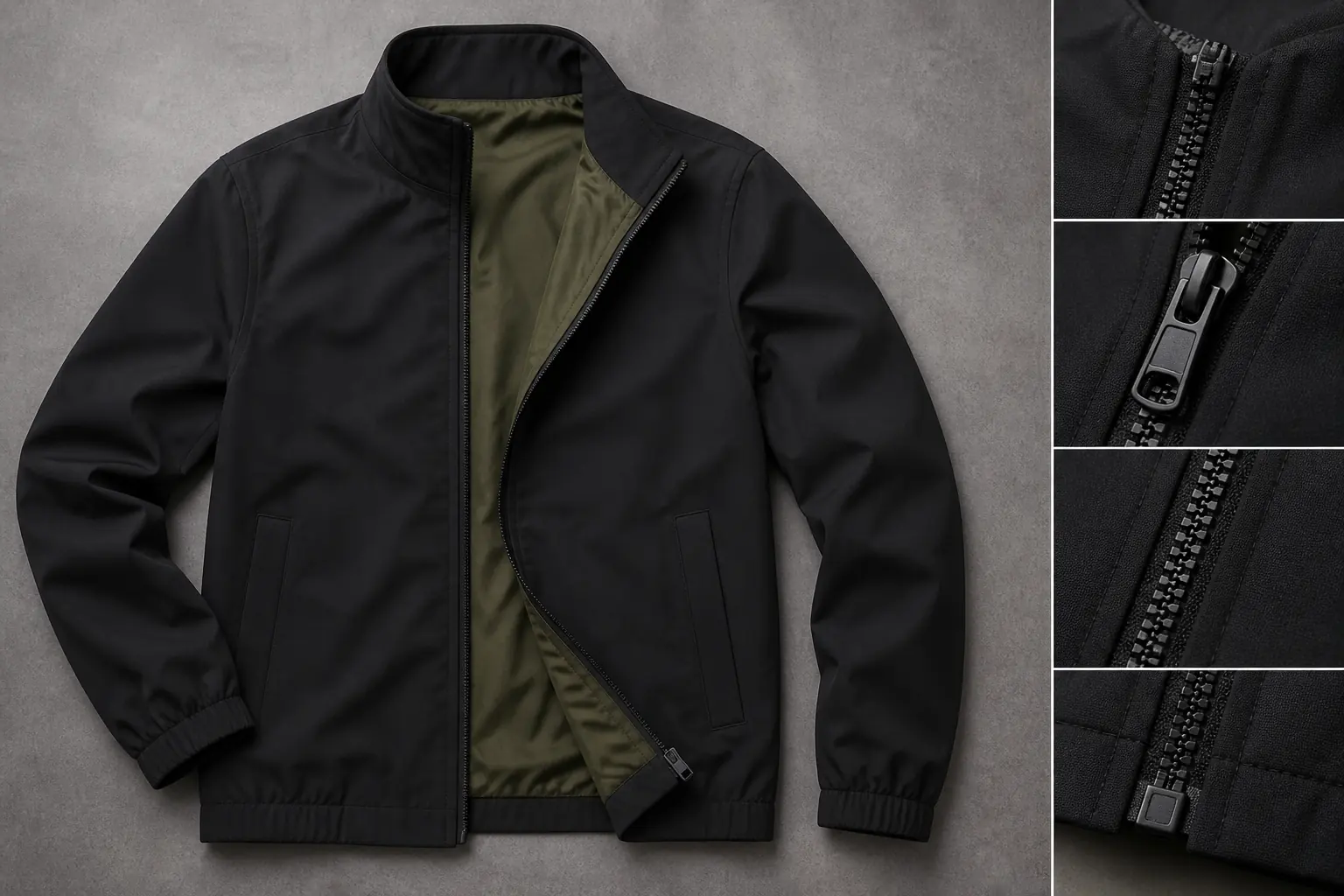
Streetwear Jacket Zipper Specification Guide
Quick answer: A streetwear jacket zipper specification should define zipper type, element material, gauge, open- or closed-end construction, tape, slider lock, puller, length, colour, stops and sewing method. The best zipper is the one matched to shell weight, silhouette and end use, then approved through operation, strength, laundering and full-garment wear tests.
A tech pack that says only 鈥渂lack zipper鈥?leaves the supplier to decide the most visible and frequently handled component on the jacket. Two black zippers may differ in chain width, tooth shape, shine, tape density, slider behaviour and bottom-box strength. Those differences change function and perceived quality.
This guide gives private-label buyers a practical streetwear jacket zipper specification workflow. It connects trim approval with the streetwear clothing sampling process and garment measurement tolerance guide.
What parts make up a jacket zipper?
A jacket zipper normally includes two tapes, interlocking elements or teeth, one or more sliders, a puller, top stops and an open-end bottom system. The bottom system commonly includes an insertion pin and retaining box. Every component must be compatible; replacing a slider or box without testing the complete chain can create operating failures.
YKK’s zipper reference page separates coil, metal and moulded-element families and provides nomenclature and testing resources. Buyers can use that structure without assuming a particular brand is mandatory.
Which zipper types suit a streetwear jacket zipper specification?
| Zipper type | Visual/functional character | Approval focus |
|---|---|---|
| Coil | Flexible, relatively low-profile chain | Coil alignment, tape stability and slider movement |
| Moulded plastic | Bold elements with lightweight feel | Element shape, colour, bottom box and lateral strength |
| Metal | Visible hardware and heritage appearance | Finish, weight, smoothness, corrosion and fabric marking |
| Reverse coil | Cleaner face with coil turned inward | Seam cover, slider direction and abrasion |
| Two-way open end | Lower opening for styling or movement | Slider compatibility, insertion and user operation |
The choice is not purely aesthetic. Heavy shells may need a different chain and reinforcement system from lightweight coach jackets. A two-way zipper adds function but also adds an operating step that should be tested by real users.
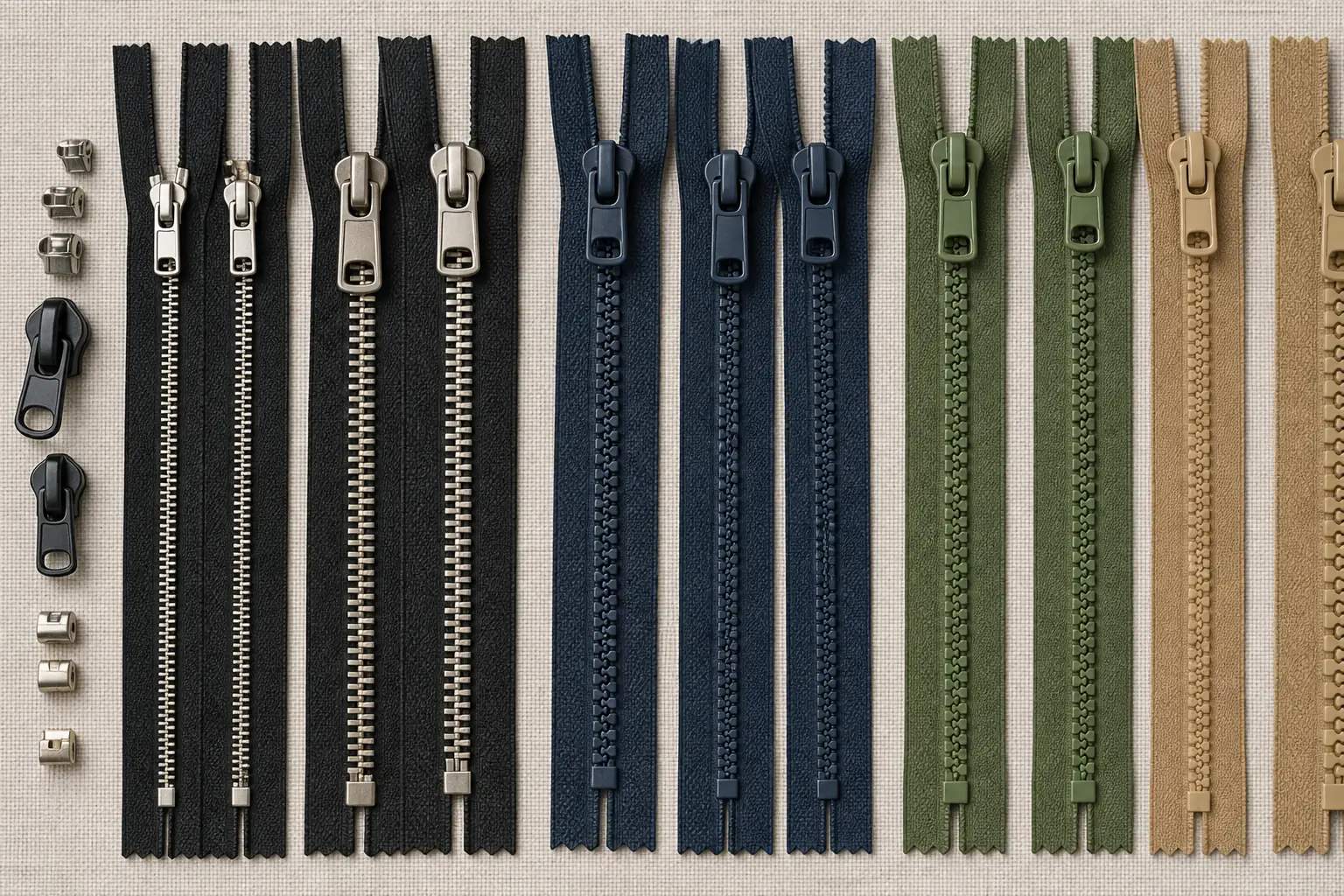
What does zipper gauge mean?
Gauge describes the approximate width class of the engaged chain or elements, commonly expressed with numbers such as No. 3, No. 5 or No. 10. A larger number generally indicates a wider, heavier chain, but product families and suppliers vary. Record the supplier’s exact product code and measured sample rather than relying on a generic number alone.
YKK Americas’ jacket zipper guidance illustrates the application logic: lighter jackets or small pockets may use smaller elements, while heavier materials may require larger constructions. The final decision must still be based on the actual garment and supplier data.
What measurements belong in a streetwear jacket zipper specification?
Define the measurement method with a diagram. For an open-end front zipper, buyers often reference the functional chain length between stops rather than the total tape length. The jacket opening, neckline, hem facing and seam allowances must be coordinated with that value.
Include allowable variation and how the zipper should end relative to collar and hem. A zipper that is technically the ordered length can still create a wavy front if the garment opening or sewing feed is inconsistent.
Which slider and puller details matter?
- Locking, semi-locking or non-locking slider behaviour
- Single or double slider configuration
- Puller length, thickness and grip
- Material, plating and colour
- Orientation for right- or left-hand insertion where relevant
- Logo-free standard pull or approved custom mould
- Operation with gloves or layered styling if relevant
- Scratch, edge and snag review against the garment
Do not approve a puller only in a digital rendering. Check its weight, sound, edge finish and how it rests on the jacket. A heavy pull can distort a light chain or strike the garment during movement.
How should zipper tape and colour be controlled?
Specify tape fibre, weave, width and colour standard. The tape may appear darker or lighter than the shell because texture and dye systems differ. Approve it attached to the actual fabric under consistent lighting.
For contrast designs, confirm whether the exposed tape width is intentional. For tonal designs, include acceptable shade difference and verify colour after the proposed wash or finishing process.
What sewing details belong in the tech pack?
The streetwear jacket zipper specification should identify seam allowance, stitch type, topstitch rows, visible distance from the chain, facing or placket construction and reinforcement at the bottom box. Define whether the front edge should be flat, covered or intentionally exposed.
Mark match points so neck seams, pockets, colour blocks and hem lines align across the closed zipper. The operator should not stretch one side to force alignment.
How should a streetwear jacket zipper specification be sampled?
- Verify components: Compare chain, slider, puller, stops, box, pin and tape with the approved code.
- Operate repeatedly: Open, close and insert the pin while observing resistance or catching.
- Check alignment: Close the garment and compare collar, pocket, artwork and hem levels.
- Wear the jacket: Sit, walk, bend and layer it over expected garments.
- Apply relevant strength tests: Use supplier and destination requirements appropriate to the application.
- Launder or finish: Follow the proposed care route and inspect tape shrinkage, colour and operation.
- Retain a standard: Keep an approved zipper card and signed garment with the purchase specification.
The YKK fastening catalogue notes that similarly classified products can have different strength characteristics. Buyers should request the specific supplier data needed for the chosen application.
What common zipper defects should buyers reject?
The front edge waves
Possible causes include mismatched zipper and opening lengths, tape shrinkage, uneven sewing feed or excessive topstitch tension. Measure the components and garment before pressing the symptom flat.
The slider catches near seams
Check chain clearance, facing bulk, top stops and stitch position. Loose thread ends or excessive seam allowance can enter the slider path.
The bottom box is difficult to insert
Inspect component compatibility, reinforcement bulk, damage and user orientation. Test more than one garment to separate a design issue from an isolated defect.
Metal parts mark the fabric
Review finish, corrosion, rubbing, wash chemistry and packaging contact. Light-coloured garments may need extra migration or crocking checks.
Streetwear jacket zipper specification bulk quality-control checklist
- Correct zipper product code and length used
- Chain type, gauge, tape and hardware match the approved sample
- Slider runs smoothly without separating the chain
- Bottom box and insertion pin operate consistently
- Closed front aligns at collar, pocket and hem
- Topstitching is straight and evenly spaced
- No tape waviness, loose threads or sharp hardware edges
- Post-wash operation and appearance remain acceptable
Frequently asked questions
Is a No. 5 zipper always best for a jacket?
No. It is a common reference, but shell weight, style, use and supplier product data should determine the choice.
Are metal zippers stronger than coil zippers?
Not automatically for every failure mode. Compare specific products and the required test data rather than the material name alone.
When is a two-way zipper useful?
It can open from the hem for sitting, styling or movement, but adds complexity and must be tested for smooth insertion and slider coordination.
Should zipper colour match the shell exactly?
Only if the design requires tonal matching. Approve tape, elements and hardware separately because their surfaces reflect colour differently.
Can a custom puller be added later?
It should be sampled with the actual slider and jacket because weight, shape and clearance affect operation.
Does water-resistant tape make a jacket waterproof?
No. Whole-garment protection depends on shell, seams, design and testing. Do not make a waterproof claim from one trim.
Conclusion
A dependable streetwear jacket zipper specification defines a complete fastening system and proves it on the finished garment. Match the chain to the shell, control tape and hardware, test real operation and retain the approved trim card for bulk comparison.
Developing a private-label jacket? Use our sampling guide to prepare the brief, then contact Aimer Custom Lab with the garment design, shell, size range and trim target. Confirm options, sampling, MOQ and timing for the individual project.