Streetwear Fabric Tear Strength Test Guide
A streetwear fabric tear strength test measures the force required to start or continue a tear under a defined procedure. It is especially relevant to woven jackets, cargo pants, overshirts and lined outerwear, where a small cut or snag can propagate through the fabric. The result is method-specific and should not be confused with tensile strength.
Quick answer: identify the fabric and end use, choose a tear method suited to its construction, test both principal directions, condition representative specimens, record individual results and failure behavior, then compare them with a buyer-approved requirement. Many tear methods are mainly intended for woven fabrics and may not suit stretchy knits.
Why streetwear tear strength needs method control
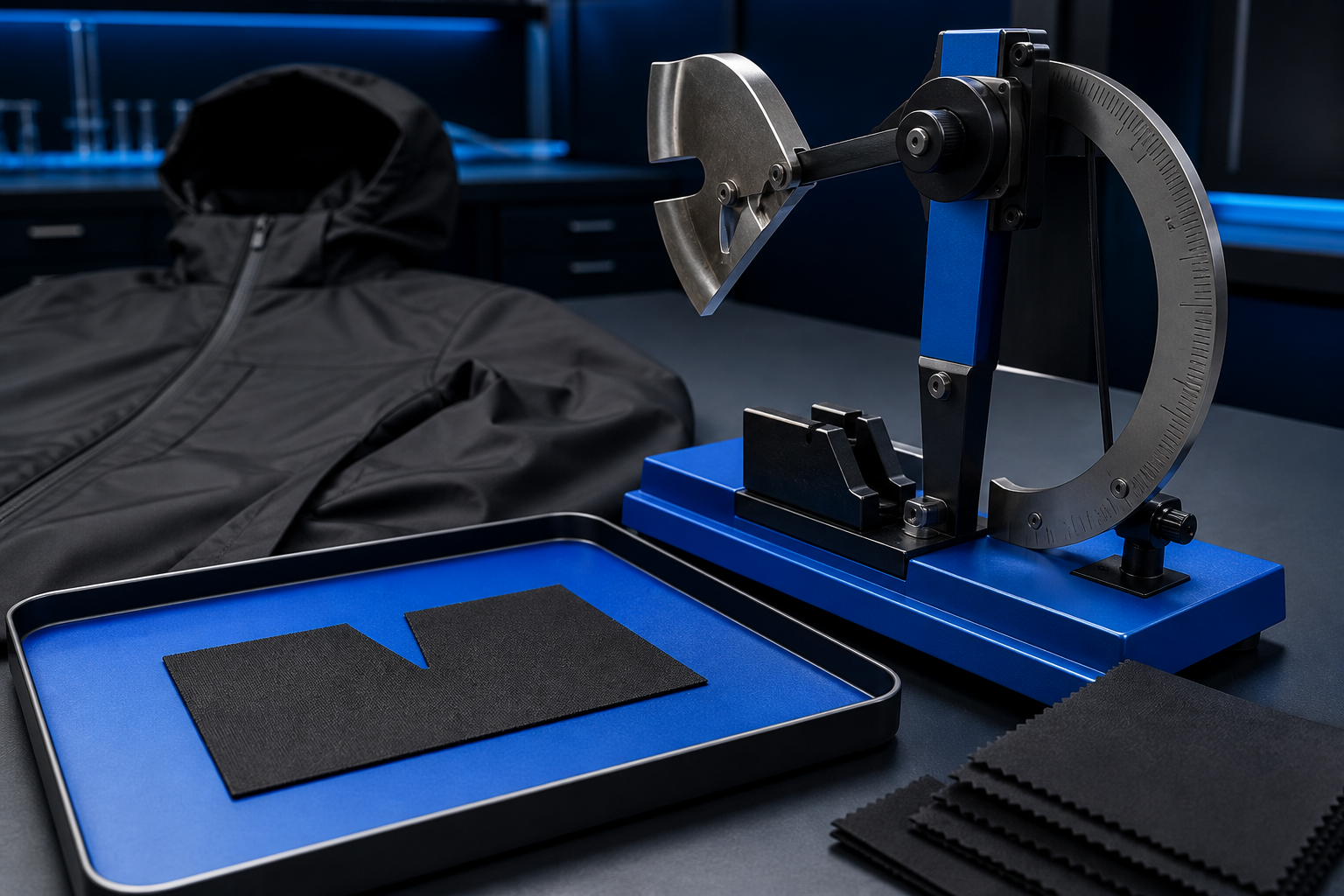
ASTM D1424 measures the force required to propagate a single-rip tear using a falling-pendulum apparatus. ISO 13937-2 uses a trouser-shaped specimen and constant-rate-of-extension machine. These methods create different stress conditions and their numerical results should not be treated as interchangeable.
A streetwear fabric tear strength test is valuable when a fabric is used around pockets, vents, hardware, distressed details or high-movement areas. It does not predict every real-world failure, but it helps compare materials and production lots under controlled conditions.
| Method family | Basic action | Common use | Important limitation |
|---|---|---|---|
| Falling pendulum | Propagates a prepared cut with pendulum energy | Routine woven-fabric comparison | Not suitable for every knit or unstable tear path |
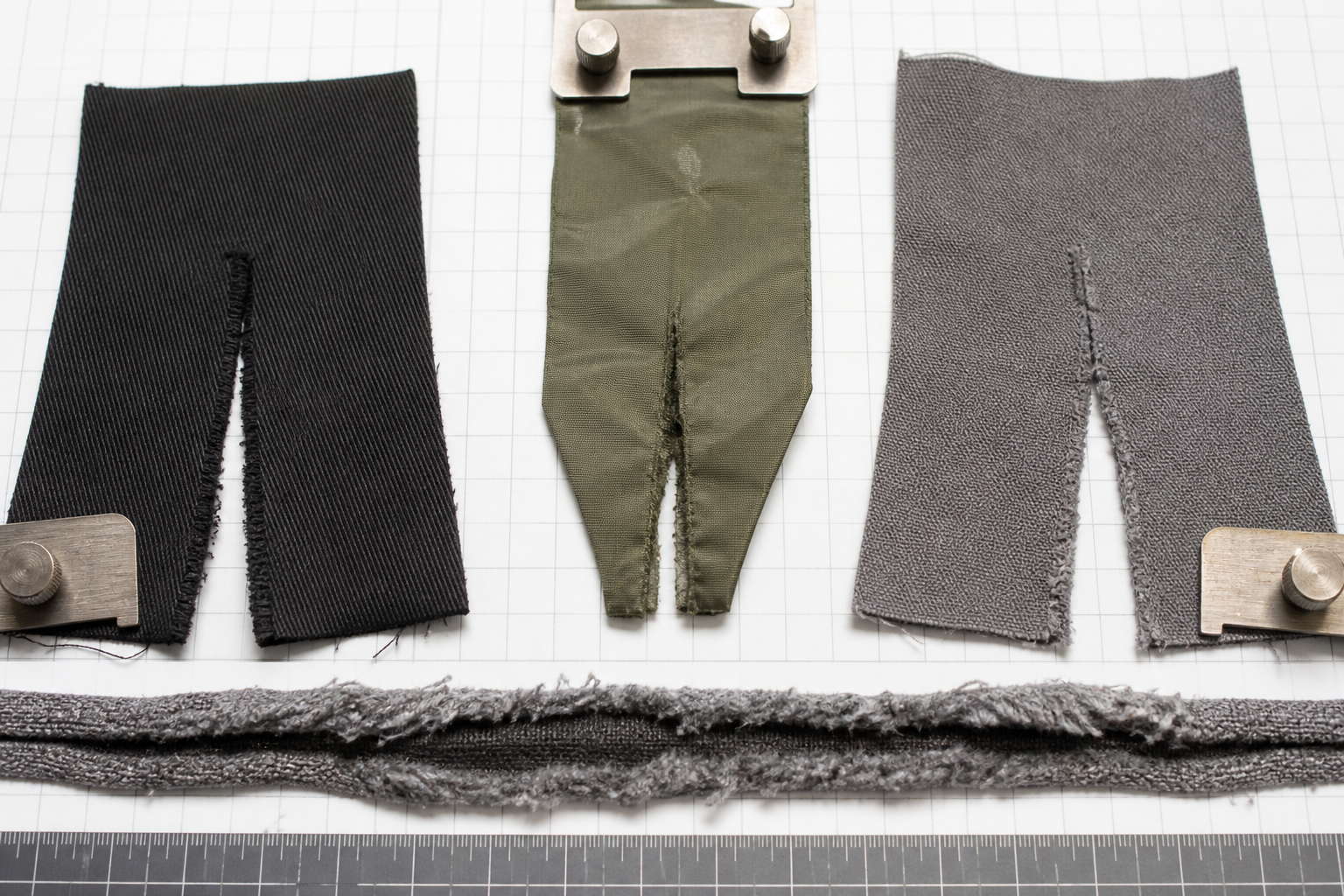
| Trouser tear | Pulls two legs of a cut specimen apart | Controlled propagation on suitable fabrics | Primarily intended for woven structures |
| Tongue tear | Separates tongues in a tensile tester | Alternative directional comparison | Method and calculation must be stated |
| Trapezoid tear | Loads a cut within a trapezoid specimen | Selected fabrics, coated materials or nonwovens | Scope depends on the named standard |
How to plan a streetwear fabric tear strength test
1. Define the product risk
Record whether the material is intended for a lightweight shell, cargo pocket, overshirt, lining or coated panel. Map stress concentrators such as rivets, zipper ends, pocket corners and laser-cut openings.
2. Select a suitable method
Ask the laboratory to review fiber, weave, coating, stretch and expected tear path. ASTM D1424 notes restrictions for some fabric types and directions. ISO 13937-2 is principally applicable to woven fabrics and has limitations for knits and highly anisotropic structures.
3. Sample both directions
Warp and filling, or machine and cross directions, often give different results. Mark direction before cutting and spread specimens across representative roll locations. Do not cut every piece from the same corner.
4. Condition and prepare accurately
Condition specimens under the agreed atmosphere. Use the specified dimensions, cut geometry and notch. A damaged or misaligned notch changes how the tear begins and weakens comparisons.
5. Run the test and observe propagation
Record individual forces and whether the tear followed the expected path. Note yarn pullout, coating delamination, jaw slippage or a cross-direction break. An irregular specimen may need method-specific treatment rather than silent deletion.
6. Compare with a pre-agreed requirement
The streetwear fabric tear strength test should use limits tied to method, direction, end use and buyer standard. There is no universal value for every jacket or pant. Agree the rule before viewing results.
What affects streetwear tear performance
- Yarn strength, twist and linear density.
- Weave structure, density and yarn mobility.
- Coatings, resin finishes and garment washes.
- Direction of the tear relative to the fabric.
- Needle holes or perforated fashion details.
- Pocket, snap and zipper reinforcement.
- Cut edges and seam allowance.
- Abrasion or UV exposure before the tear begins.
Buyer workflow from material selection to bulk
- Map panels where a cut could propagate.
- Specify the method, direction and conditioning state.
- Test development fabrics before finalizing construction.
- Add reinforcement trials around high-risk details.
- Retest washed, coated or finished materials where relevant.
- Approve limits and decision rules in the test plan.
- Sample representative bulk rolls.
- Retain reports and failed specimens by purchase order.
Integrate the test into the streetwear sampling process and review applicable custom manufacturing capabilities before construction is frozen.
Common tear-testing mistakes
- Comparing results from different methods as though identical.
- Applying a woven method to an unsuitable knit.
- Reporting one direction only.
- Ignoring specimen conditioning and coating state.
- Deleting irregular tears without explanation.
- Using an average that hides one very low result.
- Assuming tensile strength predicts tear propagation.
- Testing fabric but ignoring pocket and hardware stress points.
Turning laboratory data into a sourcing decision
Start with the use case rather than a fashionable number. A lightweight lining, a coated shell and a cargo-pocket reinforcement face different loads. Define which direction and condition control the decision, whether every specimen must meet a minimum, and how an outlier will be investigated. Keep the average, range and individual observations visible to the buyer.
If a candidate fabric is below the requirement, options include changing material, increasing yarn density, adding reinforcement, moving hardware, widening seam allowance or removing a perforated detail. Each change has consequences for cost, appearance and hand feel, so validate the revised construction instead of assuming improvement.
When laboratories disagree, compare conditioning, specimen preparation, notch geometry, calibration, test speed and calculation. Request comparative testing on material from the same roll. A dispute process agreed before ordering prevents repeated tests from becoming a search for the most convenient result.
Finally, connect tear data with abrasion, seam strength and wear trials. A strong unused fabric may weaken after finishing or repeated surface damage. Buyers should retain both original and post-finish evidence when the garment wash, coating or distressing operation is part of the product identity.
Streetwear fabric tear strength test checklist
- Product, panel, fabric code, lot and finish are recorded.
- The method is appropriate for the material.
- Both principal directions are represented.
- Specimen size, notch and conditioning are controlled.
- Individual values and tear paths are retained.
- Clamping or cross-direction failures are reported.
- Acceptance rules are method-specific.
- Washed or coated states are included when relevant.
- Construction reinforcement is reviewed with fabric data.
- Bulk changes trigger retesting.
Frequently asked questions
Is tear strength the same as tensile strength?
No. Tensile testing loads an intact specimen toward maximum force, while a tear test propagates a prepared cut under a defined geometry.
Can this test be used for oversized T-shirt jersey?
Many common tear methods are intended mainly for woven fabrics. Ask the laboratory to select a suitable method for the knit and its failure behavior.
Why test both fabric directions?
Yarn systems, density and construction differ by direction, so results may vary significantly.
Does higher tear strength always mean better drape?
No. Tear strength is one property. Drape, stiffness, thickness, weight and finishing must be reviewed separately.
What if the tear changes direction?
Record the behavior and follow the named method’s validity rules. Do not invent a value from an invalid path.
Photograph representative tears beside their specimen identifiers so later reviewers can connect the reported force with the actual failure shape.
Conclusion
A controlled streetwear fabric tear strength test helps buyers distinguish attractive material from material suited to the garment’s stress points. Select the right method, test directions separately and combine results with construction review.
Browse our streetwear products and contact Aimer Custom Lab with your tech pack and test plan. The buyer should confirm final acceptance criteria.
Authority references: ASTM D1424 and ISO 13937-2.