Streetwear Hydrostatic Pressure Test Guide
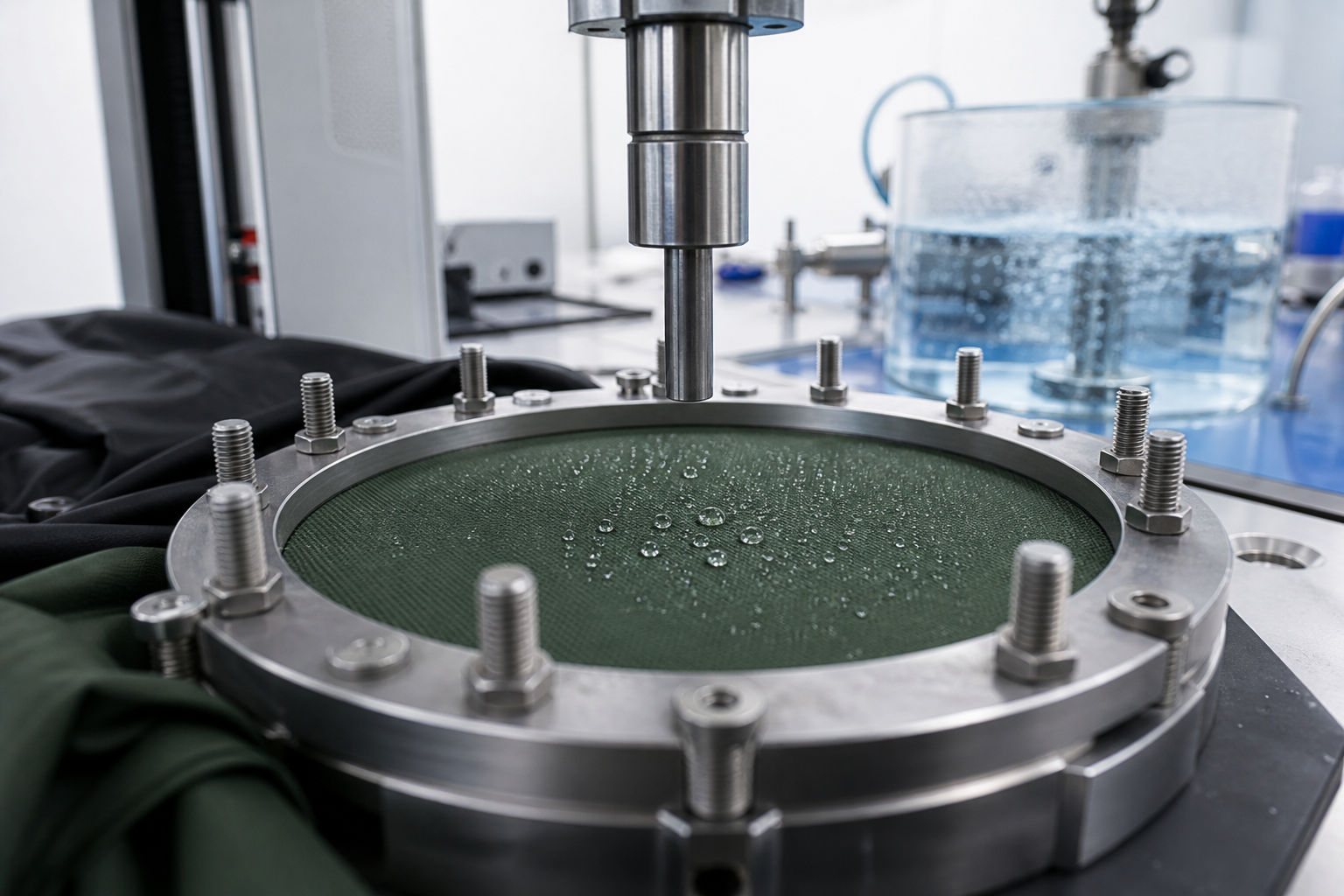
A streetwear hydrostatic pressure test measures how a fabric resists water penetration while water pressure increases against one face. It is useful for coated shells, lightweight jackets, windbreakers and technical streetwear materials intended to provide water resistance. The result is a fabric test, not a complete guarantee that a sewn garment is waterproof.
Quick answer: define the product claim, choose an appropriate method, test representative conditioned specimens from the production-intent fabric, record the pressure at the specified penetration endpoint, compare individual results with a pre-agreed requirement, and separately evaluate seams, zippers and construction.
What the streetwear hydrostatic pressure test measures
ISO 811:2018 specifies a hydrostatic-pressure method for fabrics intended to resist water penetration. The pressure increases steadily against the specimen until water penetrates at the defined endpoint. AATCC TM127 also measures fabric resistance to water penetration under hydrostatic pressure.
These methods are different from spray tests, rain tests and whole-garment shower evaluations. A streetwear hydrostatic pressure test describes resistance under a controlled pressure condition. It does not by itself prove comfort, breathability, durable repellency or seam sealing.
| Evaluation | What it addresses | Useful for | Does not replace |
|---|---|---|---|
| Hydrostatic pressure | Resistance to water penetration under pressure | Shell and coated fabric comparison | Whole-garment leakage review |
| Spray rating | Surface wetting under sprayed water | Repellent finish screening | Pressure resistance |
| Rain simulation | Water exposure under defined rain conditions | Construction and fabric systems | Every real weather condition |
| Seam leakage check | Penetration around stitches or tape | Finished jackets | Base-fabric testing |
| Breathability test | Water-vapor or air transfer under a named method | Comfort comparisons | Water resistance |
How to plan a streetwear hydrostatic pressure test
1. Define the intended claim
Clarify whether the product is designed for light showers, everyday weather protection or another use. Avoid marketing claims before method, threshold and complete-garment evidence are approved.
2. Identify the material state
Record fiber, construction, coating or membrane, finish, color, lot and fabric face exposed to water. Test the production-intent material, including relevant lamination or finishing.
3. Choose method and pressure direction
ISO 811 allows water pressure to be applied under controlled conditions to the specified fabric face. Record method version, rate of pressure increase, test area, water temperature where required and endpoint definition. Do not compare numbers from different procedures without review.
4. Sample representative locations
Spread specimens across rolls and avoid visible defects unless defects are part of the investigation. Include printed, washed or embossed areas when those processes may affect the barrier.
5. Condition and mount specimens
Condition as required, place the correct face toward water and clamp without folds, leakage or damage. Edge leakage from poor mounting should not be reported as fabric penetration.
6. Record endpoint and failure pattern
Record the pressure at the defined number of penetration points and note whether leakage occurred through coating damage, yarn intersections, a printed area or the clamp edge. Retain individual results rather than only the average.
Why garment construction still matters
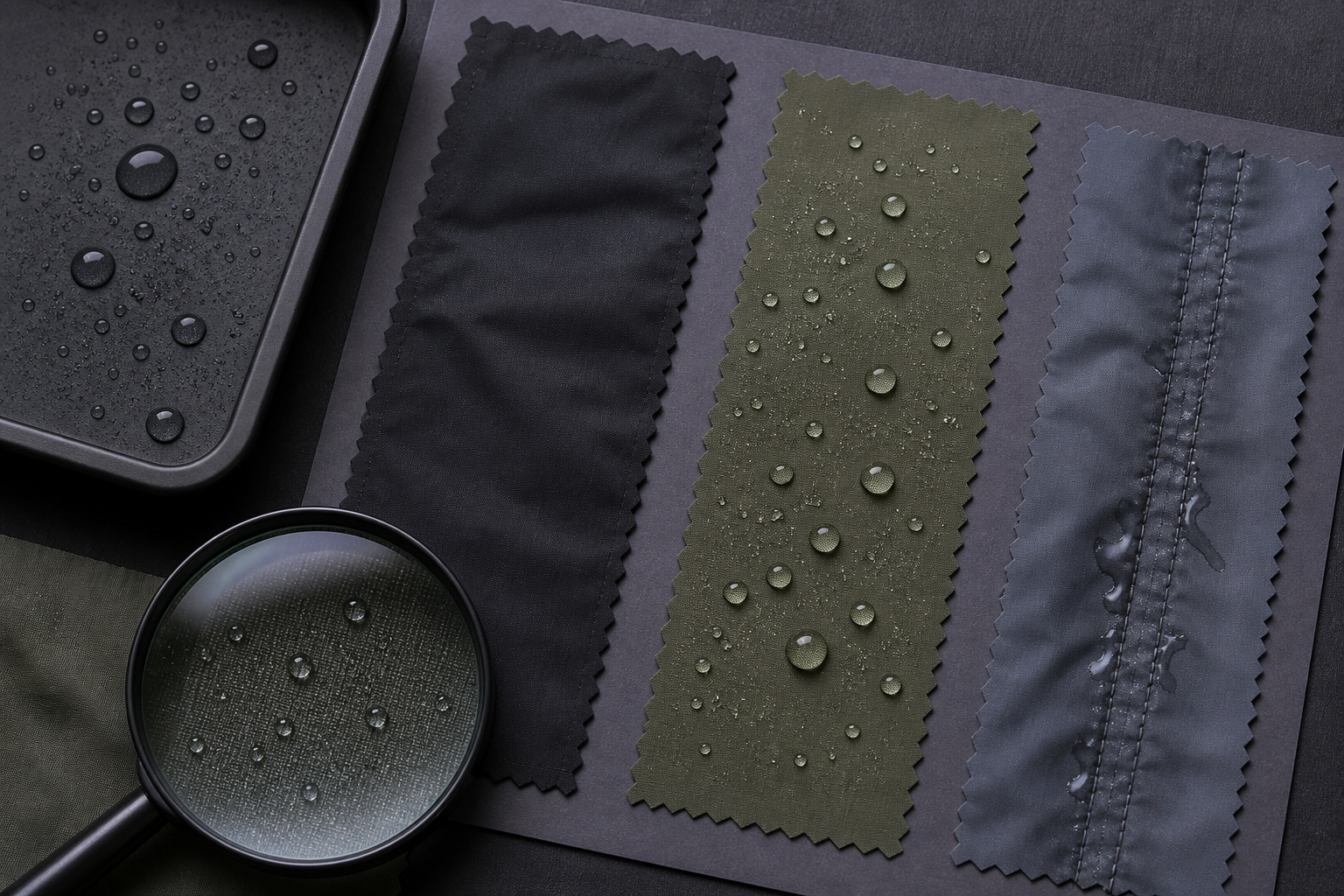
Needle holes, zipper tape, pocket openings, hood seams and drawcord exits can leak even when the shell fabric records a strong result. Seam tape compatibility, stitch density and curved construction influence the finished system. A streetwear hydrostatic pressure test should therefore be paired with a construction-focused water test when a garment claim is planned.
- Check seams before and after laundering or flexing.
- Inspect seam tape width, adhesion and continuity.
- Review zipper shields and pocket-bag construction.
- Test panels containing prints, embroidery or laser cuts.
- Confirm that care instructions protect the coating.
Private-label buyer workflow
- Define the intended market claim and risk level.
- Choose candidate shell materials and finishing.
- Specify method, conditioning and acceptance rule.
- Test development fabric before final garment sampling.
- Build a production-intent jacket with real trims and seams.
- Evaluate high-risk construction points separately.
- Retest after wash, flex or aging when required.
- Approve bulk lots against the retained reference.
Use the existing jacket lining construction guide to coordinate the shell and internal build. Review our manufacturing capabilities during sampling.
Common hydrostatic-test mistakes
- Calling a fabric result a waterproof-garment guarantee.
- Comparing different pressure rates or endpoints.
- Mounting the wrong face toward water.
- Reporting clamp leakage as material failure.
- Testing pristine fabric but selling a washed garment.
- Ignoring printed, stitched or embossed areas.
- Using only an average and hiding a low specimen.
- Forgetting that breathability is a separate property.
Interpreting results across development and bulk
Review the distribution of individual results, not only a mean. One low result can reveal a coating pinhole, print damage or roll variation that an average hides. Map every specimen to its roll and location so an investigation can distinguish an isolated defect from a systematic production shift.
When a material is retested after washing, flexing or abrasion, keep the pre-treatment result and use the same method. Report the treatment details and any visible coating changes. A lower value after treatment may be relevant to care durability, but it should not be presented as the result of the original unaged fabric.
Set the commercial decision rule before testing: approve, request more sampling, restrict the lot to a lower-risk product, reprocess where technically appropriate or reject. Retesting should use a documented sampling rule instead of another convenient swatch.
For mixed-panel garments, test each shell material and pay attention to transitions. A high-performing main body does not compensate for a lower-performing yoke, gusset or pocket panel. The claim must reflect the weakest relevant part of the finished construction.
Streetwear hydrostatic pressure test checklist
- Claim, product and destination market are defined.
- Fabric, coating, finish, color and lot are traceable.
- The named method and test face are recorded.
- Pressure rate, area and endpoint are stated.
- Specimens are conditioned and mounted correctly.
- Individual results and failure locations are retained.
- Washed or finished states are tested when relevant.
- Seams, zippers and openings receive separate review.
- Acceptance criteria were agreed before testing.
- No unsupported waterproof claim is published.
Frequently asked questions
Is hydrostatic pressure the same as spray rating?
No. Hydrostatic pressure evaluates penetration under pressure; a spray test primarily evaluates surface wetting under its own procedure.
Does a passing shell fabric mean the jacket is waterproof?
No. Seams, zippers, pockets and openings can leak. Whole-garment construction needs separate validation.
Should washed fabric be tested?
Yes when the buyer wants to understand care durability or when garment washing may change the coating or finish.
Can two laboratories produce different results?
Differences can arise from method version, pressure rate, conditioning, specimen location, face, mounting or equipment. Reconcile these variables before deciding.
What pressure is best for streetwear jackets?
There is no universal value. Set a method-specific requirement based on claim, end use, retailer standard and product risk.
Keep photographs of the penetration endpoint and specimen face with the test report. They help later reviewers distinguish true droplets from condensation, edge leakage or handling marks.
Conclusion
A controlled streetwear hydrostatic pressure test gives buyers useful evidence about shell-fabric water resistance. Specify the method, face, state and endpoint, retain individual data and combine the result with construction testing before making a claim.
Browse our custom streetwear products and contact Aimer Custom Lab with your jacket tech pack and test requirements. Final claims remain the buyer’s responsibility.
Authority references: ISO 811:2018 and AATCC TM127.