Streetwear Jacket Lining Construction Guide
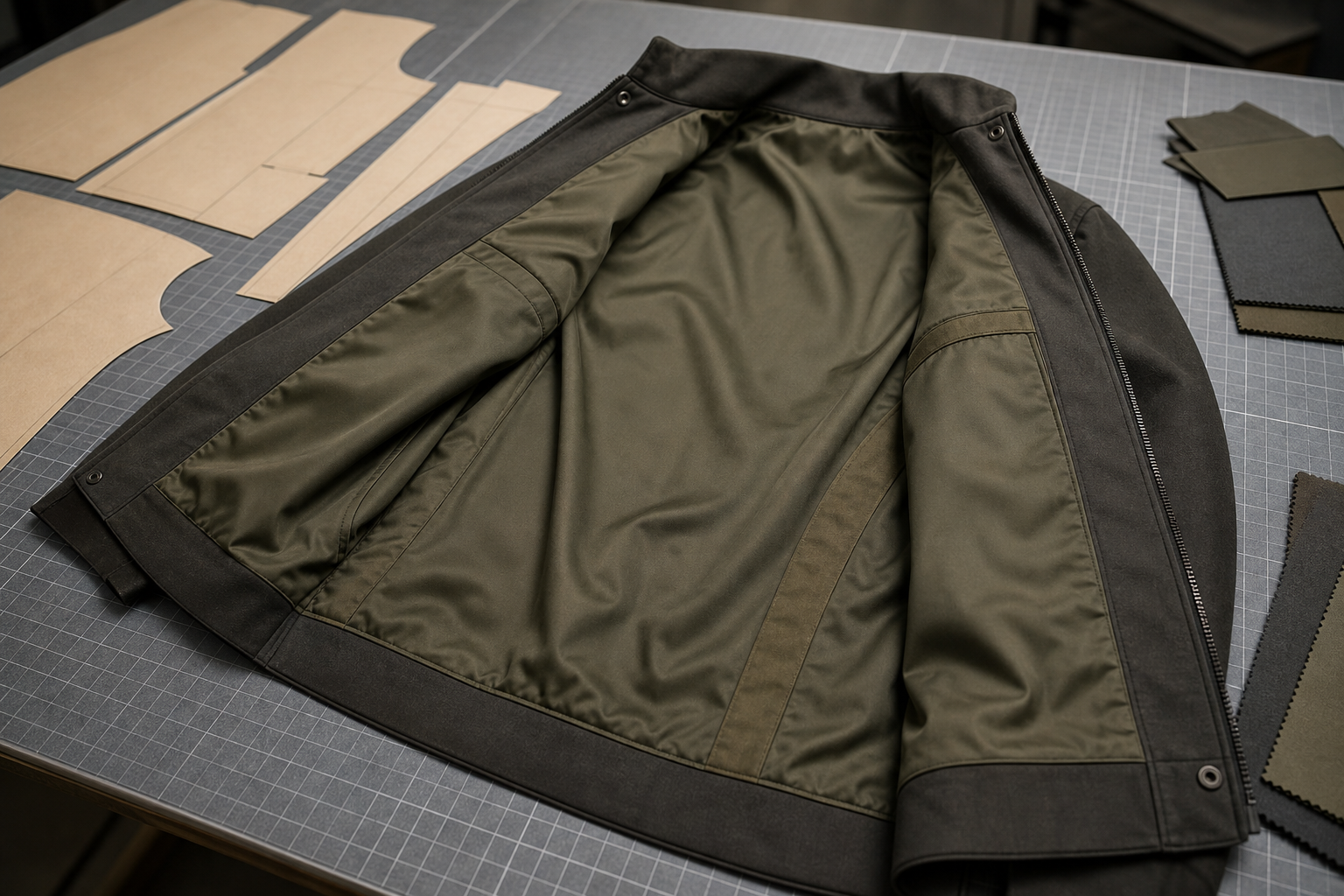
Streetwear jacket lining construction shapes comfort, movement, durability, pocket access, and the inside appearance of a private-label jacket. A good lining supports the shell without pulling, twisting, or adding unnecessary bulk. A poor lining can tear at the armhole, hang below the hem, catch on clothing, or hide weak internal workmanship.
Why Streetwear Jacket Lining Needs Its Own Specification
The lining is not simply a smaller copy of the outer shell. It must fit inside the jacket while allowing the wearer to move and the shell to drape as designed. Oversized bodies, dropped shoulders, wide sleeves, elastic hems, padded layers, or cropped silhouettes each create different internal requirements.
The lining also connects many components: front facings, zipper tape, neck finish, sleeve cuffs, inside pockets, labels, hem, vents, insulation, and openings used to turn the garment. If these decisions are not mapped in the tech pack, the factory may use a generic method that changes the intended hand or appearance.
Choose a Streetwear Jacket Lining Fabric
| Lining option | Useful characteristics | Buyer checks | Potential concern |
|---|---|---|---|
| Smooth woven lining | Easy layering and clean inside surface | Opacity, snagging, seam slippage, static | Noise, limited stretch, heat buildup |
| Mesh lining | Open structure and sporty appearance | Hole size, softness, stretch, pocket interaction | Snagging or transparency |
| Brushed or tricot lining | Soft hand and added body | Pilling, stretch, bulk, recovery | More friction during dressing |
| Quilted lining | Holds insulation and creates structure | Quilt spacing, loft, migration, seam bulk | Extra weight and measurement change |
| Partial lining | Targets selected zones | Edge finishing and transition points | Exposed seams or inconsistent comfort |
Record composition, construction, weight or approved reference, color, finish, stretch direction, and care behavior. Test it with the shell fabric because two individually acceptable materials can shrink, stretch, or slide differently as a garment.
Map the Streetwear Jacket Lining Pattern
Body lining
Define center back, side seams, hem, and any pleat or ease allowance. The body lining should follow the shell without becoming the structure that limits movement. A center-back pleat or other controlled ease feature may be used depending on the design; its depth and securing points must be shown.
Sleeve lining
Sleeve lining needs enough length and circumference for bending the elbow and layering over clothing. It must connect cleanly at the armhole and cuff without twisting. Mark front and back notches and confirm the sleeve lining is inserted into the correct side.
Front facings
Facings create a stable finish near zippers, snaps, or buttons and separate the lining edge from the closure. Specify facing width, interfacing, seam direction, topstitching, and how the lining joins it.
Neck and hood areas
Collars and hoods can contain multiple layers. Plan how the lining terminates, how seam allowances are controlled, and where labels are attached. Avoid a hard stack at the center back neck.

Movement Ease and Lining Balance
The wearer should be able to raise the arms, bend the elbows, reach forward, and sit without the lining becoming tight before the shell. Check the sample over the intended base layer. Streetwear jackets designed for hoodies underneath need different allowance from a fitted lightweight shell.
- Compare shell and lining chest, back, sleeve, and length relationships.
- Check that ease is controlled rather than creating loose folds at the hem.
- Move both arms through realistic ranges.
- Confirm the lining does not rotate inside the body.
- Inspect underarm and sleeve-head junctions for tension.
- Recheck after the proposed care process.
Do not solve a tight lining by adding random width. Identify whether the issue comes from pattern shape, missing ease, sleeve pitch, armhole balance, layer bulk, or assembly.
Seam Construction and Internal Durability
Light lining fabrics can fray, pucker, or slip at seams. Specify seam type, stitch type, thread, stitch density, allowance, and reinforcement. Coats’ references on seam types and seam puckering help buyers frame inspection questions.
| Area | Construction objective | Risk to inspect |
|---|---|---|
| Armhole | Secure join with movement allowance | Tightness, missed seam, bulk |
| Side and sleeve seams | Even allowance and balanced feeding | Puckering, slippage, fraying |
| Facing join | Flat transition near closure | Twisting or visible lining roll |
| Hem attachment | Controlled length and clean hang | Lining droop or shell pulling |
| Turning opening | Secure, discreet closure | Weak hand sewing or visible repair |
Hem Ease and Attachment
The lining should not hang below the shell or pull the shell upward. Specify finished relationship at the hem and how any ease fold is formed. Elastic, rib, drawcord, vented, curved, or cropped hems need different solutions.
Check the garment hanging on a suitable hanger and worn. Move the body, zip the jacket, and place items in pockets. A lining that looks correct flat may shift when the shell carries weight.
Inside Pockets and Pocket Bags
Inside pockets add function but also load the lining. Define pocket size, opening, closure, position, reinforcement, and whether the bag attaches to shell structure or floats. A phone-sized object can distort a light lining if the pocket lacks support.
- Check pocket access with the jacket open and closed.
- Verify contents do not interfere with the zipper or hem.
- Reinforce opening ends as approved.
- Inspect pocket bag seams and corners.
- Test weight without permanent stretching.
- Keep pocket placement clear of labels and quilting lines.
Labels, Branding, and Internal Presentation
Specify main label, size label, care label, origin information, and any brand tape or patch. Show exact placement from stable landmarks. Decide whether labels attach through the lining only, to a facing, or into a seam. Dense patches on light lining may need local support.
Inside branding should not hide functional details or create scratchy edges. Approve thread color, stitch line, backing or reinforcement, and the appearance on the reverse side.
Quilted and Insulated Jacket Linings
Insulated styles add questions about baffle or quilting pattern, fill distribution, migration, compression, and cold spots. Coats provides a technical overview of construction solutions for down jackets. The appropriate method depends on the jacket system and should be confirmed in sampling.
Record quilting line spacing, stitch type, thread, layer stack, and panel boundaries. Measure the finished jacket after quilting because stitch take-up and loft can change dimensions.
Care, Wash, and Wear Testing
- Measure shell and lining relationships before care testing.
- Follow the proposed label method for the complete jacket.
- Condition and inspect shrinkage, twisting, seam pucker, color, and hand.
- Check whether the lining drops below the hem or pulls at cuffs.
- Load pockets and repeat movement checks.
- Inspect labels, turning opening, and internal thread tails.
If the garment is not intended for home washing, use the relevant approved care evaluation. Do not invent care claims without verifying the complete material and trim system.
Bulk Quality Control Checklist
- Confirm lining fabric, color, and orientation.
- Check correct body and sleeve pieces by size.
- Inspect ease features and matching notches.
- Verify facings, pockets, labels, and closure alignment.
- Check seams for puckering, fraying, skips, and allowance.
- Test arm movement and sleeve insertion.
- Measure hem relationship and finished garment dimensions.
- Turn the garment inside out where practical for inspection.
Use an approved first piece and recheck after a fabric lot, pattern, machine, needle, thread, or operator change. The sealed sample should include the inside as well as the exterior.
What Buyers Should Include in the Tech Pack
Provide lining fabric code, pattern map, seam and stitch callouts, facings, movement ease, pleats, pockets, label placement, sleeve and hem attachment, turning opening, dimensions, tolerance, care method, and inside photos from the approved sample.
For related planning, review our private-label capabilities, streetwear sampling process, and streetwear packaging guide.
Frequently Asked Questions
What is the best streetwear jacket lining?
There is no single best material. Select by shell, climate, silhouette, layering, care, pocket use, hand, and cost, then approve the complete jacket.
Why does jacket lining hang below the hem?
Possible causes include excess length, poor hem ease control, differential shrinkage, incorrect attachment, or shell-lining imbalance.
Should sleeve lining be the same as body lining?
Not necessarily. Some designs use a smoother sleeve lining for easier dressing, but both materials and their junction must be specified and tested.
How much movement ease should lining have?
The required amount depends on pattern, silhouette, shell stretch, layers, and intended base garments. Confirm through representative size samples and movement tests.
When should lining tests be repeated?
Repeat relevant checks after changes to fabric, finishing, insulation, pattern, seam, pocket, label, or care method and whenever bulk defects appear.
Conclusion
Reliable streetwear jacket lining comes from a fabric and pattern system designed for movement, clean internal construction, functional pockets, controlled hems, and repeatable care performance. Approve the inside of the jacket with the same attention given to the shell.
Developing a private-label jacket? Contact Aimer Custom Lab with your reference, shell and lining direction, size range, pocket plan, and target use. Construction details can then be confirmed during sampling.