Oversized T-Shirt Drop Shoulder Measurement Guide
Quick answer: An oversized T-shirt drop shoulder is created by extending the shoulder line beyond the wearer’s natural shoulder and coordinating it with chest width, armhole depth, sleeve angle, sleeve length, body length, and fabric drape. Brand buyers should define the exact points of measure, approve the silhouette on multiple sizes, and avoid treating an oversized fit as a regular tee in a larger size.
An oversized T-shirt drop shoulder is a defining streetwear proportion, but it is often communicated with a mood board instead of a technical specification. “Oversized,” “boxy,” and “relaxed” are not interchangeable factory instructions. A sample can match the chest measurement and still look wrong if the shoulder extension, armhole, sleeve volume, or body length is out of balance.
This guide explains how to translate the intended silhouette into measurable terms, how fabric changes the result, which sizes to approve, and what to inspect before bulk production. For a general measurement workflow, see our oversized T-shirt measurement guide.
What does drop shoulder mean?
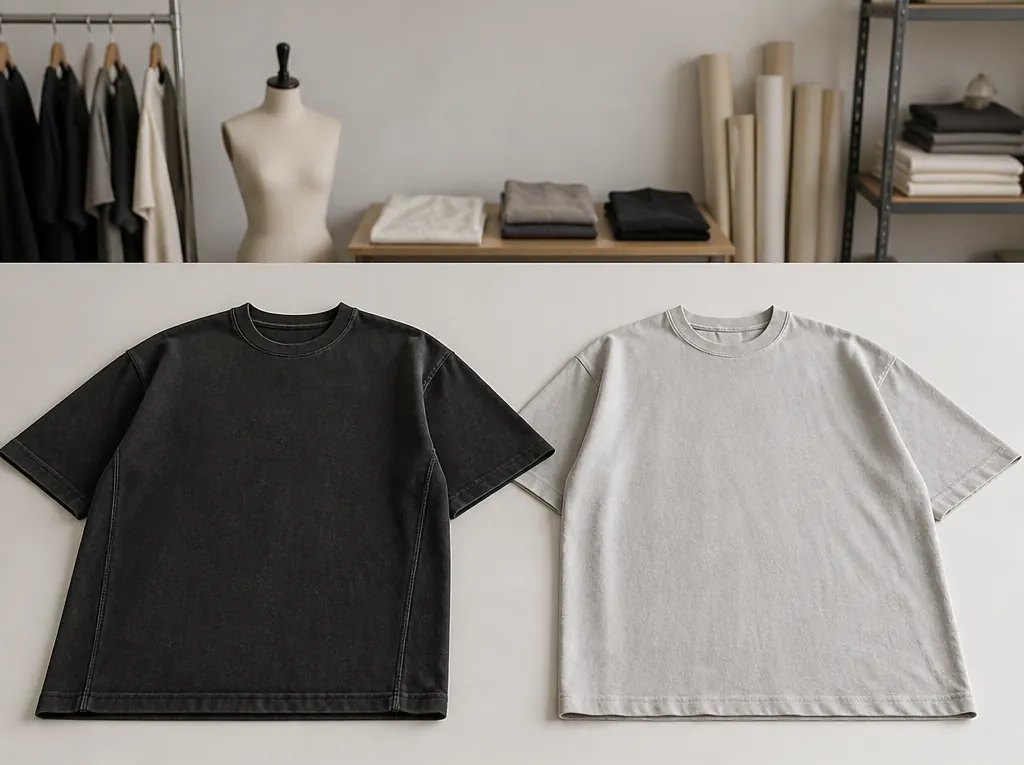
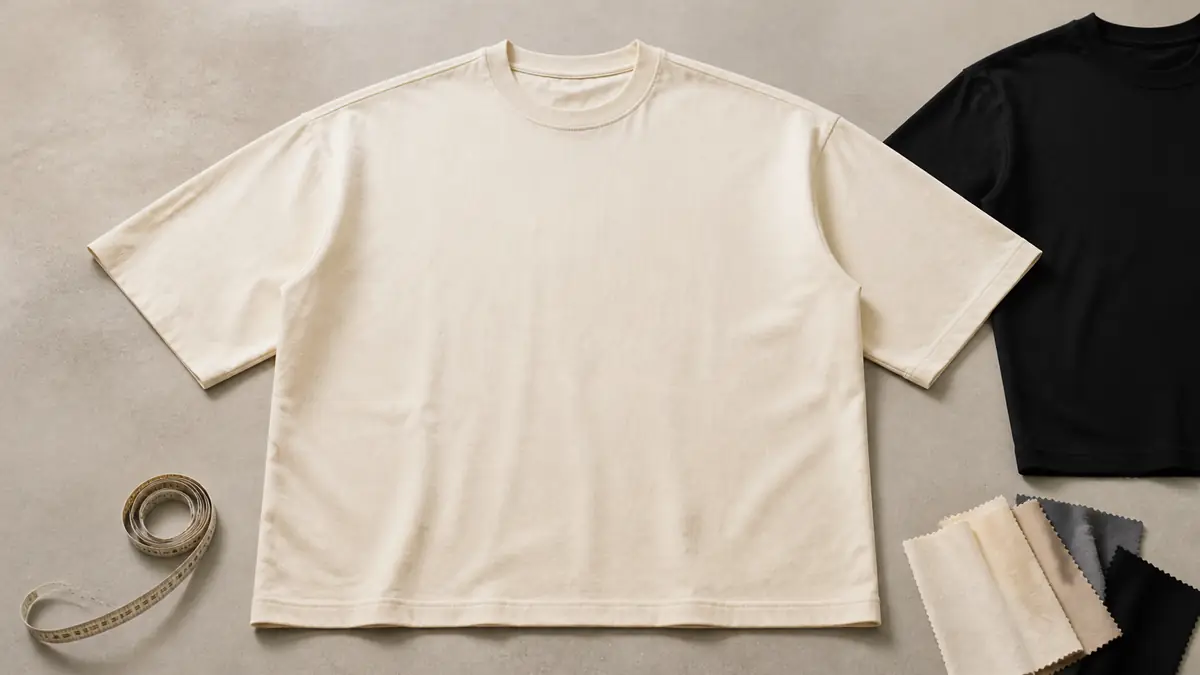
In a drop-shoulder garment, the shoulder seam extends beyond the wearer’s natural shoulder point and sits on the upper arm. The visual result depends on how far it extends, how the sleeve joins the body, and how the fabric falls. A regular T-shirt purchased several sizes larger may become wide and long, but it does not necessarily create the controlled boxy shape of a purpose-built oversized pattern.
Current technical-pack resources such as T*Pack’s oversized T-shirt guide emphasise that small measurement changes can alter the silhouette. Manufacturer pages including Ishadhari’s oversized tee overview also distinguish true drop-shoulder construction from simply upsizing a standard garment.
Which measurements control the silhouette?
| Point of measure | What it controls | Risk if omitted |
|---|---|---|
| Shoulder width | Degree of shoulder extension | Fit looks regular or accidentally oversized |
| Chest width | Body volume and ease | Garment feels tight or shapeless |
| Armhole depth | Sleeve mobility and underarm position | Restriction, drag lines, excessive bulk |
| Sleeve length | Where sleeve ends on arm | Sleeve becomes too long after shoulder drop |
| Sleeve opening | Upper-arm proportion | Opening looks narrow or overly wide |
| Body length | Boxy versus longline effect | Wide tee looks like a tall regular size |
| Hem width | Side-seam shape and lower balance | Unexpected taper or flare |
| Neck width and drop | Neckline scale and stability | Loose, tight, or poorly balanced neck |

How should shoulder width be measured?
The oversized T-shirt drop shoulder must be tied to an illustrated shoulder-width method, otherwise two teams may report different results on the same sample.
The tech pack must show the exact start and end points. Some teams measure straight across from shoulder seam to shoulder seam; others follow a contour. Both approaches can work, but mixing them creates false discrepancies. Add a diagram and written method for every point.
Also define whether the measurement includes the neck rib, seam allowance, or any panel detail. If the T-shirt uses a back yoke, shoulder panel, or forward shoulder seam, a generic shoulder method may no longer describe the design accurately.
How do shoulder drop and sleeve length interact?
Extending the shoulder moves the sleeve attachment outward. If sleeve length remains copied from a regular block, the finished sleeve may end much lower on the arm than intended. Brands should approve the combined distance from centre back neck to sleeve opening as well as the component measurements where relevant.
Sleeve angle also changes drape. A low, relaxed angle can support a soft silhouette; a different angle may create folds or lift the sleeve. Evaluate the pattern on a body, not only as a flat garment.
What is the difference between oversized and boxy?
An oversized fit generally adds width and ease, often with a dropped shoulder. A boxy fit combines width with a relatively controlled or shorter body length, creating a squarer outline. A longline oversized tee adds length as a deliberate feature. These are design families, not universal measurement formulas.
State the intended fit in words, then support it with a complete measurement chart and approved photographs. A reference garment can help, but the factory still needs measurable specifications and construction notes.
How does fabric GSM affect drop shoulder?
GSM describes mass per unit area, not the full hand feel. Fibre, yarn, knit density, finish, and washing process also influence drape. A heavier, compact jersey may hold a structured shoulder and boxy body. A lighter fabric may collapse closer to the body and make the same pattern appear less architectural.
Approve the target silhouette in the nominated fabric and colour. Dark and light colourways can sometimes feel or behave differently because of dyeing and finishing. If the fabric changes after sampling, repeat fit and wash approval.
Which construction details stabilise the shoulder?
Shoulder seams carry garment weight and can lengthen over time. Neck tape, shoulder tape, seam type, thread, and stitch elasticity affect stability. Define whether tape runs shoulder to shoulder across the back neck or only through specific areas. Check that stabilisation does not make the seam stiff.
The neckline also affects the visual width of the shoulder. Use our oversized T-shirt neck rib guide to coordinate rib width, recovery, attachment, and neck opening with the body pattern.
How should sizes be graded?
Grading is not simply adding the same amount to every measurement. Shoulder, chest, body length, armhole, sleeve, and neck may need different increments. The aim is to preserve the fit concept across the size range while providing appropriate wearing ease.
Review at least the base size plus representative smaller and larger sizes. For a broad international range, body proportions and target-market expectations should be discussed before approving the grade. Do not publish a consumer size chart until it matches the approved garment specification.
How should brands run a fit approval?
Review the oversized T-shirt drop shoulder from the front, back, and side, then repeat the evaluation while the wearer raises and moves the arms.
- Condition the sample: Let it relax and follow the agreed pre-measurement procedure.
- Measure flat: Record every POM using the illustrated tech-pack method.
- Fit on the intended wearer: Check natural shoulder, seam position, chest ease, arm movement, sleeve end, and body length.
- Photograph consistently: Use front, back, side, and raised-arm views at a fixed distance.
- Wash and remeasure: Follow proposed care instructions and compare dimensional change.
- Review multiple sizes: Confirm that the silhouette remains deliberate at both ends of the range.
- Issue one comment sheet: Identify each change by POM and sample version.
Common drop-shoulder sampling problems
The tee looks like a larger regular size
Chest and length may have increased without a coordinated shoulder, armhole, sleeve, and hem strategy. Return to the fit block and define the silhouette as a system.
The sleeve ends too low
Shoulder extension and sleeve length may both be adding reach. Review the combined neck-to-sleeve distance and intended end point.
Drag lines appear from the neck or armhole
Possible causes include shoulder slope, neck balance, armhole shape, sleeve angle, or fabric behaviour. Diagnose on the body rather than changing chest width blindly.
The smallest size loses the oversized look
The grade may be reducing shoulder and chest too aggressively. Review fit intent with representative wearers and adjust grade rules where justified.
The largest size becomes too long
Linear body-length grading can overpower a boxy silhouette. Define size-specific length increments that preserve the design and coverage target.
Drop-shoulder buyer checklist
Use the checklist to confirm that the oversized T-shirt drop shoulder remains intentional across the smallest, base, and largest representative sizes.
- Fit family defined: oversized, boxy, cropped, or longline
- Shoulder POM illustrated with exact landmarks
- Chest, armhole, sleeve, body length, and hem coordinated
- Fabric reference, GSM, composition, and finish approved
- Neckline and shoulder stabilisation specified
- Grade rules listed for every size
- Base, small, and large representative sizes fitted
- Post-wash measurements and appearance approved
- Sealed sample and consistent fit photographs stored
Frequently asked questions
Is a drop-shoulder tee the same as sizing up?
No. A purpose-built pattern coordinates shoulder, chest, armhole, sleeve, length, and hem. Sizing up a regular tee changes multiple dimensions without preserving the intended proportion.
How many centimetres should the shoulder drop?
There is no universal number. It depends on size, target wearer, fit concept, sleeve design, fabric, and body length. Approve a measurable sample.
Does higher GSM create a boxier fit?
It can add structure, but GSM alone does not determine drape. Yarn, knit, finish, wash, and pattern are also important.
Should shoulder width grade equally across all sizes?
Not automatically. Grade rules should preserve the brand’s silhouette while fitting the intended size population. Review representative sizes.
What photos should be included in fit approval?
Use consistent front, back, side, and movement views, plus close-ups of the shoulder seam, armhole, sleeve end, neckline, and hem.
When should the fit be re-approved?
Repeat oversized T-shirt drop shoulder approval after meaningful changes to fabric, finish, pattern, grade, sewing construction, wash process, or supplier.
Conclusion: control the full proportion
An oversized T-shirt drop shoulder is successful when shoulder extension, chest volume, armhole, sleeve, length, hem, neckline, fabric, and grading create one deliberate silhouette. Clear POM diagrams and multi-size approval turn a subjective design phrase into a repeatable production standard. Preserve the oversized T-shirt drop shoulder through controlled grading instead of enlarging every measurement equally.
Preparing an oversized tee sample? Combine this guide with the streetwear sampling approval process and send Aimer Custom Lab your technical flats, reference measurements, fabric target, size range, artwork, quantity, and delivery window. Confirm available materials, MOQ, sample timing, and production schedule for the specific order.