Oversized T-Shirt Neck Rib Guide
oversized t-shirt neck rib is a small component with a large effect on streetwear quality. It frames the face, controls the neckline and often reveals wash or sewing problems before the body fabric does. This guide helps brands specify rib material, dimensions, attachment and recovery without assuming that a heavyweight body automatically creates a durable collar.
Quick answer: define the rib fibre and knit, finished width, neckline opening, collar length relationship, attachment seam and recovery expectation. Review the sample flat, on a wearer and after an agreed care process, then retain the approved component and measurement record.

Why oversized t-shirt neck rib needs its own specification
Oversized bodies use wider shoulders, dropped sleeves and extra volume, but the neckline still needs controlled fit. If the opening grows with the body without a design decision, the shirt may look accidental rather than intentionally relaxed.
Specify the neck component separately from the body fabric. Record its fibre content, knit structure, colour, finished width and source. A buyer should approve substitutions because a visually similar rib can have different stretch, recovery or shrinkage.
Choose rib structure and material
Common neck ribs use a knit structure designed to extend and recover, sometimes with elastane. The best option depends on body weight, desired hand and care method. A thicker rib is not automatically more stable, and a soft rib is not automatically weak.
Compare the rib with the body for shade, surface texture and care response. If the collar is contrast coloured, approve the physical combination under consistent lighting. Verify any fibre or performance claim through appropriate documentation.
Oversized t-shirt neck rib measurements
Define the finished neck opening, collar width, centre-front drop and centre-back position. Show the measurement method on a sketch. Collar component length should be related to the body neckline and material behaviour rather than copied from an unrelated style.
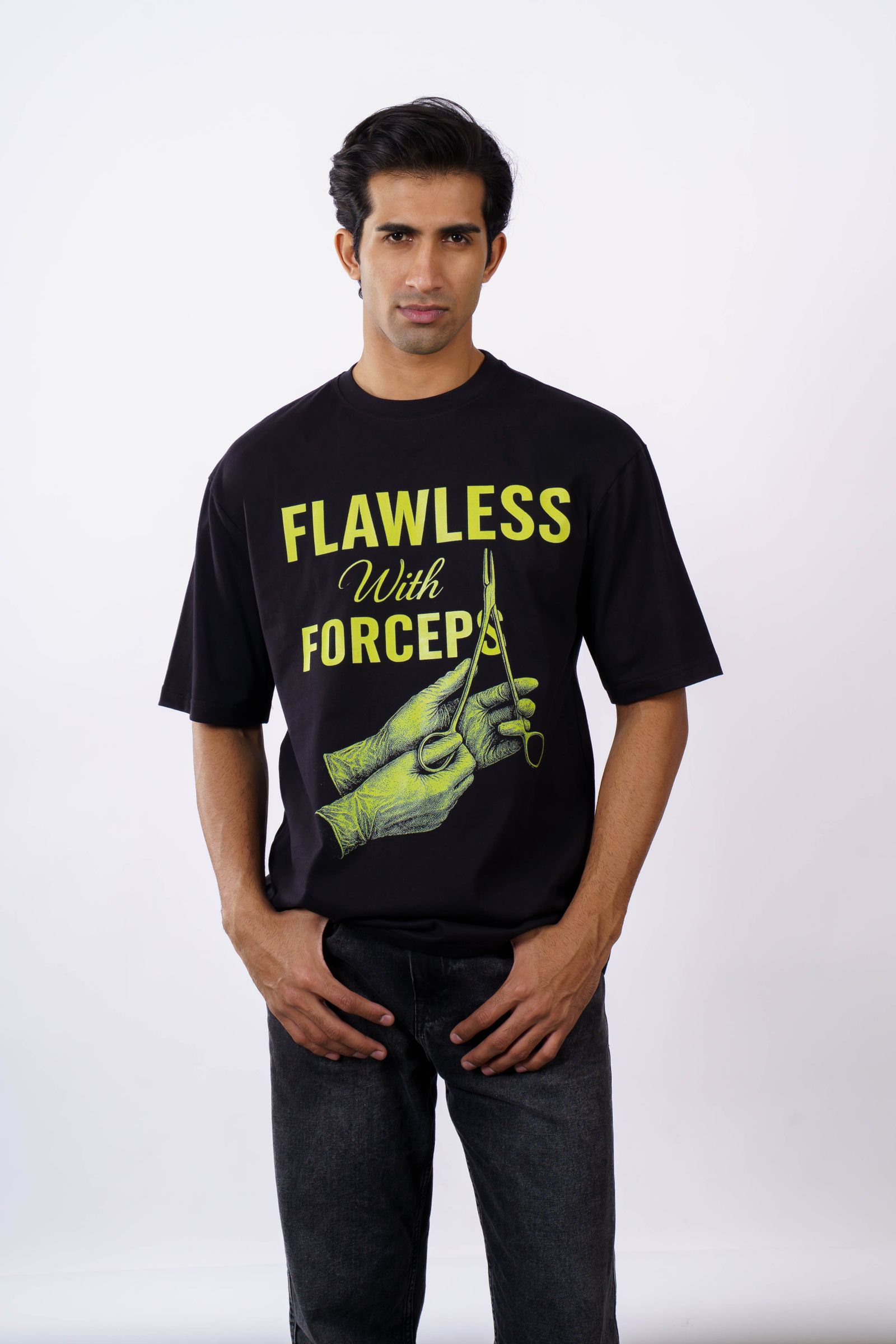
Review symmetry and the relationship with shoulder width. A narrow opening can conflict with a heavily dropped shoulder, while an excessively wide opening can expose the upper chest or distort graphic placement. Use wearer trials to confirm the intended silhouette.
Attachment seam and topstitch choices
Coats identifies several seam classes and notes that stitch and thread should suit the application. Necklines can use superimposed, bound or other constructions. ISO 4915 provides recognised stitch classification for consistent technical communication.
Specify seam allowance, needle rows, topstitch position and any internal neck tape. Turn the shirt inside out to check bulk, loose loops, skipped stitches and rough contact. A clean top view does not prove the seam is comfortable or secure.
Stretch and recovery review
The collar must extend sufficiently for dressing and return toward its intended shape. ASTM D2594 covers stretch and growth measurements for low-power knitted fabrics and explains the importance of controlled loading. Use an agreed method or comparison, not an invented universal percentage.
Record the opening before and after the defined extension and recovery period. Also observe edge curl, rippling and seam strain. If the body and rib shrink differently during care, the neckline can pucker even when both components looked acceptable before washing.
Sample and bulk approval
Approve the oversized t-shirt neck rib on the correct pattern and representative body fabric. Review a base size plus size-range extremes when proportions change materially. Photograph flat and worn views and record dimensions on the sample sheet.
At in-line inspection, compare material identity, shade, width, symmetry, seam quality and recovery with the approved sample. Quarantine uncertain substitutions. If the rib batch or care process changes, decide whether re-sampling is needed before continuing bulk production.
oversized t-shirt neck rib comparison table
| Decision | Specification | Sample method | Risk |
|---|---|---|---|
| Rib material | Fibre, knit and colour | Swatch comparison | Mismatch |
| Neck shape | Opening and drop | Flat measurement | Wrong silhouette |
| Attachment | Seam and stitch | Inside/outside review | Bulk or failure |
| Recovery | Agreed extension method | Before/after record | Wavy neckline |
| Care | Defined wash/dry process | Post-care comparison | Differential shrinkage |
oversized t-shirt neck rib buyer checklist
- Rib material is identified separately.
- Neck opening and drop are measured.
- Collar width is defined at a clear point.
- Attachment seam and stitch are recorded.
- Head clearance is reviewed.
- Stretch and recovery are documented.
- Post-care appearance is approved.
- Bulk rib batch matches the reference.
oversized t-shirt neck rib FAQ
Should a heavyweight T-shirt always use a thick rib?
No. Rib selection should balance design, stretch, recovery, comfort and care behaviour with the actual body fabric.
Why does a neck rib stand away from the body?
Possible causes include component length, material recovery, pattern shape, sewing feed or care change. Measure the sample and investigate the actual combination.
Can the same neck opening be graded for every size?
Brands should define their size strategy and review extremes. A fixed opening or proportional grade can each be appropriate depending on the intended customer and design.
How should a rib substitution be approved?
Compare fibre, knit, shade, dimensions, stretch, recovery and post-care appearance on a new sample before accepting the change.
Oversized t-shirt neck rib development workflow
Start development with the intended body fabric and pattern revision. A neck sample sewn to a different fabric cannot fully represent feeding, shrinkage or visual balance. Label every trial with rib source, collar length, seam construction and date so the team can compare options without relying on memory.
Use annotated photographs to record the front curve, side transition and back neckline. When the brand requests a tighter or wider appearance, convert that request into a measurable opening or collar-length change. Avoid changing several variables in one revision, because the cause of improvement or failure becomes difficult to identify.
After the care review, measure again under the same conditions and note whether the rib twists, flares, rolls or puckers. Check the body fabric at the same time. A stable rib attached to a shrinking body can still create distortion, so approval should cover the complete assembly rather than the rib in isolation.
For repeat production, retain a labelled rib swatch and approved garment. Compare incoming material before cutting and verify the first sewn units. This protects continuity while recognising that nominally similar knit components can vary between batches.
Oversized t-shirt neck rib quality records
A useful approval record combines the tech-pack drawing, actual sample measurements, material identity, wearer comments and post-care photographs. Separate observations from acceptance criteria: for example, record the measured opening and then state whether it matches the agreed requirement. This makes later review clearer than a simple approved stamp.
If a problem appears in bulk production, identify affected sizes, material lots and sewing lines before deciding the response. Do not assume every unit is affected. Controlled sampling and traceability help the brand and supplier choose rework, replacement or acceptance based on evidence and the written order requirements.
Conclusion
A controlled oversized t-shirt neck rib keeps an intentional streetwear silhouette looking clean through wear and care. Explore our custom streetwear products, review our oversized T-shirt measurement guide, and contact Aimer Custom Lab with your tech pack and fabric reference.
Authoritative references: Coats Seam Types, ISO 4915 stitch types, ASTM D2594 knit stretch.