Streetwear Fabric pH Test Guide
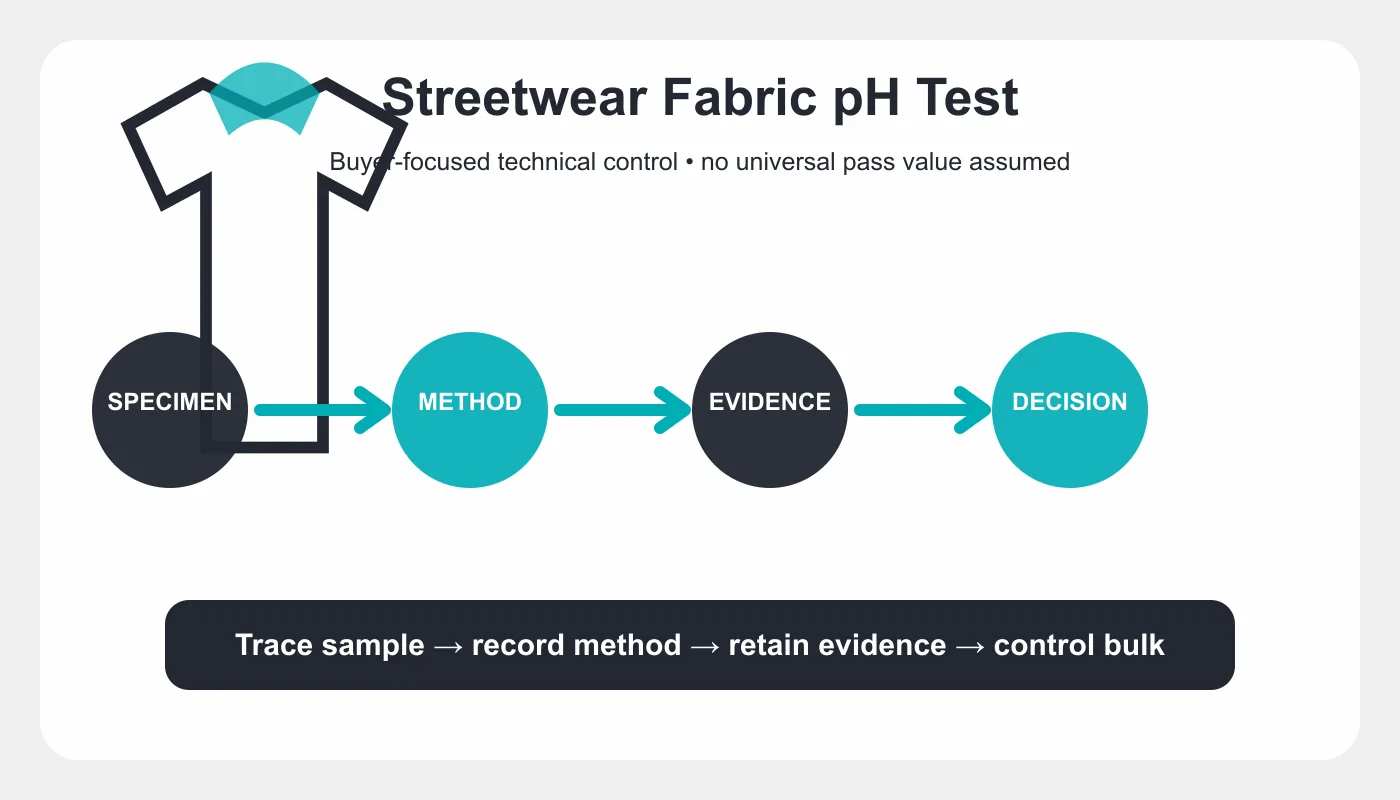
Quick Answer — streetwear fabric pH test: Choose a current textile pH method, submit representative production-intent material, record extraction solution, specimen mass, preparation, conditioning and replicate values, and compare results with the buyer’s confirmed market requirement. Test each risk colour or finish separately and investigate the verified process cause before washing or neutralizing a failed sample for retest.
A streetwear fabric pH test measures the acidity or alkalinity of a textile water extract under a defined method. It can help private-label buyers monitor wet processing, washing and finishing of heavyweight T-shirts, hoodies, tracksuits and jackets. It does not diagnose every chemical residue, prove skin safety by itself or create one worldwide legal limit.
This guide explains how to request useful evidence without inventing a pass range. Connect the test plan with Aimer Custom Lab’s manufacturing capabilities, streetwear product range and final garment approval. The responsible brand should confirm current destination-market requirements and product category with a qualified laboratory or compliance adviser.
What does a streetwear fabric pH test actually measure?
It measures the pH of an aqueous extract prepared from a textile specimen according to a stated procedure.
ISO 3071:2020 applies to textile fibres, yarns and fabrics in different forms. AATCC TM81 addresses pH of the water extract from wet-processed textiles and is listed in AATCC’s current method materials. The result belongs to the extraction procedure and specimen. It is not the same as placing a household test strip on a dry hoodie.
Why can garment processing change textile pH?
Dyeing, bleaching, washing, enzyme treatments, pigment processes, softening and neutralization can leave different extractable conditions.
A greige fabric result cannot automatically cover a pigment-dyed garment. Dark shades, acid or alkaline wash routes, printed areas, ribs, linings and labels may have separate process histories. A final rinse or neutralization step can shift results, while incomplete washing can create variation within a lot. Map the materials and processes instead of testing one convenient offcut.
How should a brand choose its acceptance requirement?
The brand should confirm the applicable market, age group, product type and programme before stating a limit.
Standards describe methods; regulations, customer protocols and voluntary programmes may define different requirements. Do not copy a number from an unrelated children’s product or another market. Keep the method, requirement source, version and approval authority in the testing brief. If no verified requirement has been supplied, request results for review rather than asking the factory to guess a pass value.
What should the streetwear pH request include?
A clear request links every result to the product and process that produced it.
| Field | Buyer instruction | Evidence returned | Risk avoided |
|---|---|---|---|
| Specimen identity | Style, colour, lot, panel and finish | Traceable sample code | Mixed results |
| Method | Standard and current edition | Full method reference | Informal strip reading |
| Preparation | Production-intent washed/printed state | Process record | Raw-fabric substitution |
| Results | Replicates and reporting rule | Individual values | Average hiding variation |
| Requirement | Market-specific source and version | Decision record | Invented universal limit |
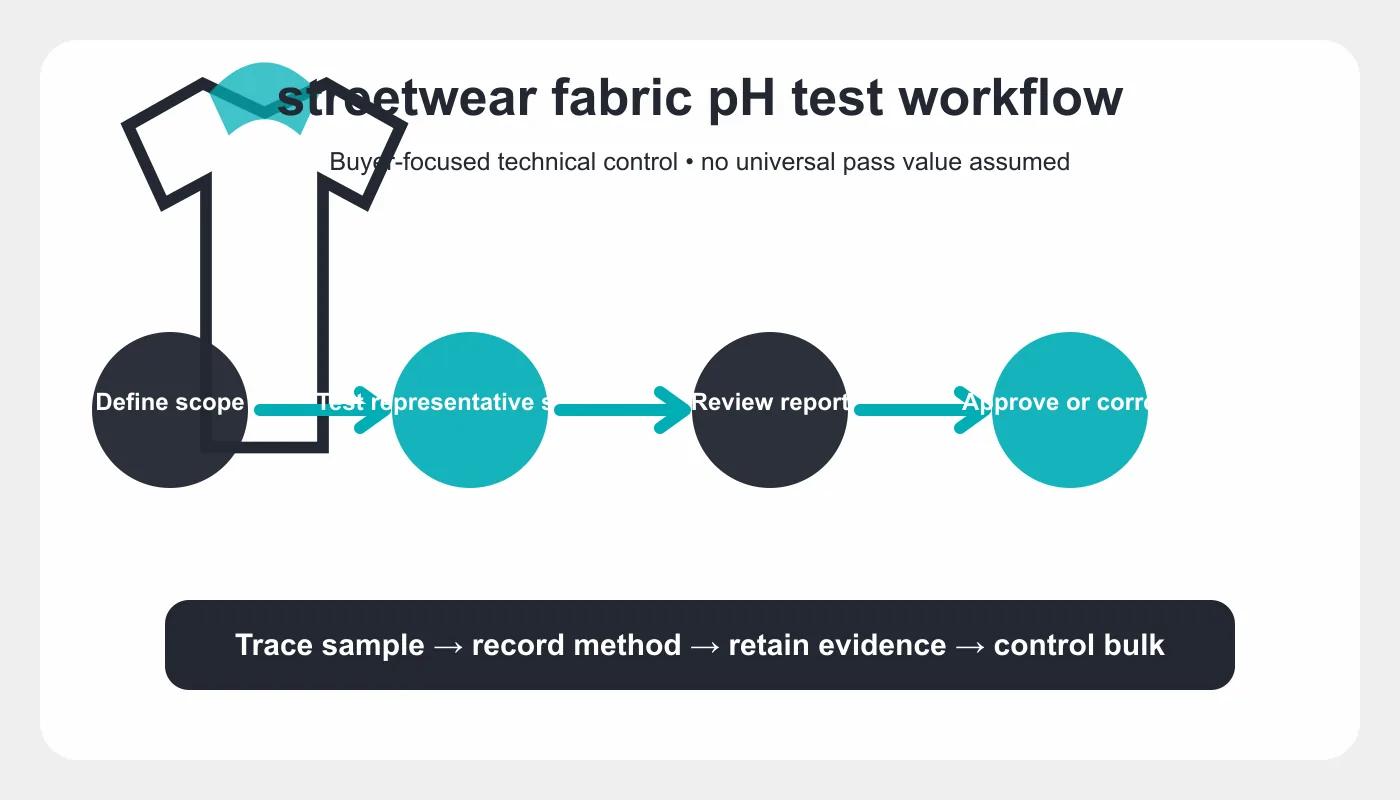
How should buyers run a streetwear fabric pH test workflow?
Use a staged workflow that connects development evidence to bulk decisions.
1. Create a component-and-process map
List shell, rib, lining, labels and printed or washed zones with their supplier and finishing route.
2. Select representative specimens
Cover risk colours, lots and final process states. Use clean tools and controlled identification.
3. Issue the test brief
Name method, requirement source, sampling stage, report fields and action for an outlying result.
4. Review replicates and variation
Look for process or location patterns rather than relying only on a single summary value.
5. Investigate before correction
Trace rinse, neutralization, chemical dosing, water quality, drying and storage records.
6. Retest corrected production-intent material
Use the same method and keep the original report, corrective action and new approval linked.
Which problems can make the result misleading?
Most misleading reports omit context rather than numbers.
| Risk | Why it matters | Control |
|---|---|---|
| One-swatch coverage | Different colours or finishes can have separate process histories. | Use a risk-based sample map. |
| Household measurement | Improvised strips do not reproduce the standard extraction. | Use a competent laboratory. |
| Temporary masking | A superficial rinse may not correct the controlled process. | Verify root cause and repeatability. |
| Threshold copying | Requirements vary by market and programme. | Cite the approved source and version. |
streetwear fabric pH test buyer checklist
- Confirm destination market, wearer group and product type.
- Name the current standard and edition.
- Identify every colour, lot, component and finish tested.
- Use final production-intent specimens.
- Record extraction and preparation information required by the method.
- Retain replicate results and sample IDs.
- Investigate the process before corrective retesting.
- Keep approval, report and material revision together.
How should buyers document evidence and manage change?
Keep a compact evidence pack that another reviewer can understand without relying on memory. Record the product reference, material or component code, colour, size, sample stage, supplier lot, test method and report date. Attach the approved specification, relevant photographs and the decision made. For streetwear fabric pH test, that record is more useful than an isolated pass label because it shows exactly what was examined and which purchasing question the evidence answered.
A development sample does not automatically represent every future production lot. Fibre blend, yarn, knit or weave construction, finish, dye recipe, coating, trim supplier and processing route can change performance. Buyers should therefore define change-control triggers before ordering. A meaningful material substitution, new colour family, new finishing route, new component source or recurring complaint can justify a new risk review and, where appropriate, targeted retesting.
Use the result as one input to approval, not as a substitute for product judgement. Compare laboratory evidence with the approved sample, measurement report, workmanship inspection, wear or handling trial and intended care instructions. If the report does not clearly identify the specimen or method, return it for clarification. If a result is close to an agreed limit, discuss repeatability, conditioning and sampling with a competent laboratory rather than rounding the number into a convenient answer.
Supplier communication should remain specific and neutral. State the observation, cite the agreed requirement, identify the affected lot and request a corrective-action explanation with fresh evidence. Avoid vague instructions such as “improve quality.” A practical corrective plan names the suspected cause, containment action, process change, responsible owner, verification method and approval gate. This makes the streetwear fabric pH test workflow auditable without pretending that one test predicts every use condition.
Finally, retain approved reports with purchase-order and material records for a period appropriate to the buyer’s market and internal policy. Link the evidence to the exact style and revision rather than storing it in an unlabelled folder. When the next order begins, reviewers can see what was previously approved, which variables changed and whether a new test is proportionate to the risk.
Frequently asked questions
Can a streetwear fabric pH test prove a garment is safe?
No. It measures one defined property and should sit within the applicable chemical and product compliance programme.
Can one black hoodie result cover every colour?
Not automatically. Dye and finishing routes can differ, so use a documented risk assessment and lot plan.
Should finished garments or fabric be tested?
Test the state relevant to the decision. Final garment processing should be represented when it can change the result.
Is there one global acceptable pH range?
No universal value should be assumed. Confirm current destination-market and customer requirements.
What should happen after an out-of-range result?
Hold the affected material, verify identity and method, investigate processing, correct the cause and retest representative material under the same procedure.
Conclusion: make the evidence usable
A controlled streetwear fabric pH test is a traceability tool, not a complete safety certificate. It links an aqueous-extract method to exact colours, lots and finishing routes and supports evidence-based corrective action. For a private-label programme, send the product, material, finish and destination-market brief through the Aimer Custom Lab contact page so the required testing route can be confirmed.