Streetwear Organotin Test Guide for Sourcing
Quick Answer: A streetwear organotin test should identify risk-relevant coatings, prints, bonded patches, polymer trims and adhesives, then specify the exact organotin compounds, ISO 22744-1 method, units, reporting basis and destination-market rule. A result for the body fabric alone cannot represent every accessory, and a pass should not be extended after a supplier or formulation change.
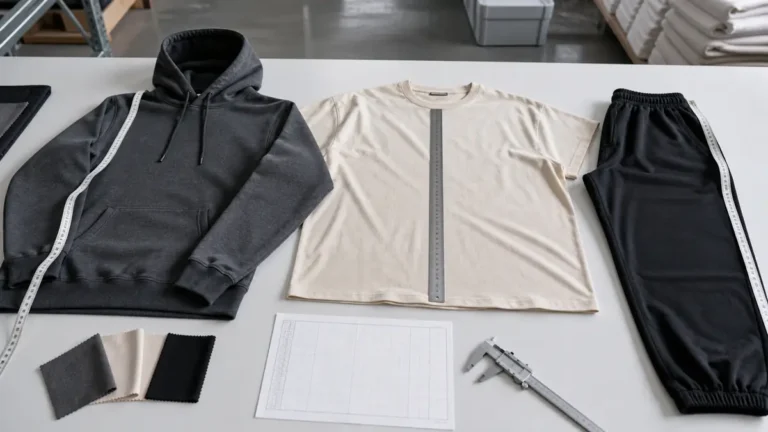
Streetwear products often use more trims and bonded decoration than a basic fabric swatch reveals. Organotin relevance depends on the chemistry of those materials and the applicable market requirement. This guide shows brand buyers how to build a streetwear organotin test around component evidence rather than a generic product certificate.
What is a streetwear organotin test?
It is an analytical determination of specified organotin compounds in identified textile-product materials. The result must state which compound or group was measured and how the value is expressed. “Organotin” is not one undifferentiated substance.
Organotin analysis is separate from metal corrosion, nickel release and general heavy-metal screening. A metal trim may require more than one property review, while a polymer or adhesive may be relevant even when it contains no visible metal.
For sourcing, the useful unit of evidence is not a marketing adjective. It is a result linked to a named product, exact component, test method, condition, unit, date and production status. A streetwear organotin test should therefore be written into the technical file before the buyer asks a laboratory to test anything.
Why can streetwear trims change organotin risk?
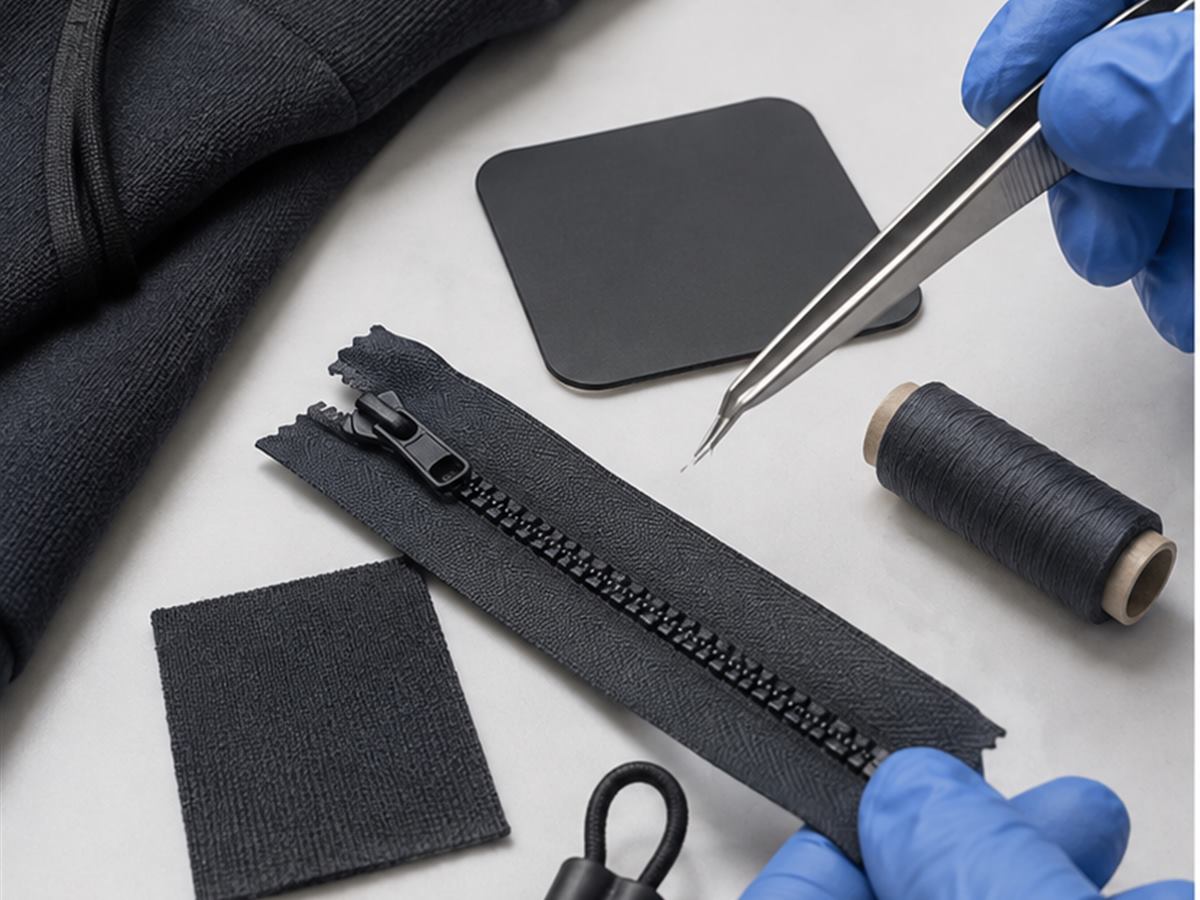
Trims, coatings and bonded components may use different suppliers, catalysts, stabilizers or processing routes from the body fabric. A patch vendor, print house or accessory factory can change formulation without changing the garment silhouette. The technical file must therefore identify component and supplier revisions.
Not every coated or bonded material contains a restricted organotin compound. Risk mapping is used to prioritize evidence, not to accuse a material. The destination-market rule and analyte list should be confirmed by a qualified laboratory or compliance adviser.
The decision should begin with the intended wearer, climate, sales market and garment construction. A retailer, club buyer or private-label brand can then choose evidence proportionate to the real risk. This prevents both under-testing and expensive testing that does not answer a purchasing question.
Which components should a brand prioritize?
Prioritize distinct polymer, coating, adhesive and accessory systems, particularly when supplier information is weak or has changed. The table below turns the research into a practical sampling or comparison map.
| Streetwear part | Why it may differ | Traceability evidence |
|---|---|---|
| Bonded patch or badge backing | Adhesive and polymer layers have separate chemistry | Component photo, adhesive and patch codes |
| Coated label or flexible trim | Coating formulation may be supplier-specific | Material declaration and lot |
| Screen print or transfer | Ink, film and adhesive may have different vendors | Print-system revision |
| Zipper coating or polymer pull | Accessory chemistry is outside the fabric mill | Accessory supplier code |
| Body fabric or rib | Finishes can vary, but risk needs a rationale | Finish declaration and targeted decision |
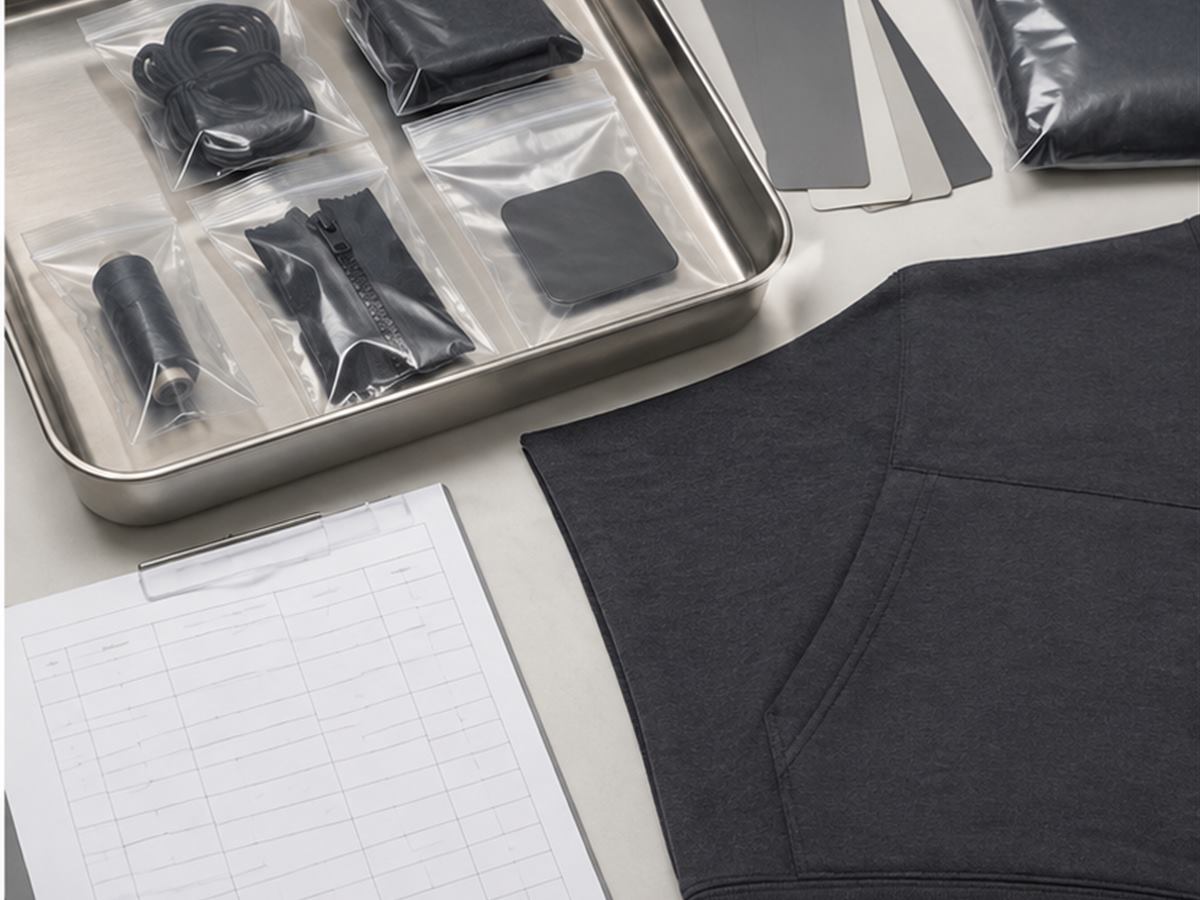
Test pieces should remain identifiable. If several parts are composited, the report should list them and the buyer should understand that a failure may require separate follow-up testing.
How should the organotin testing workflow run?
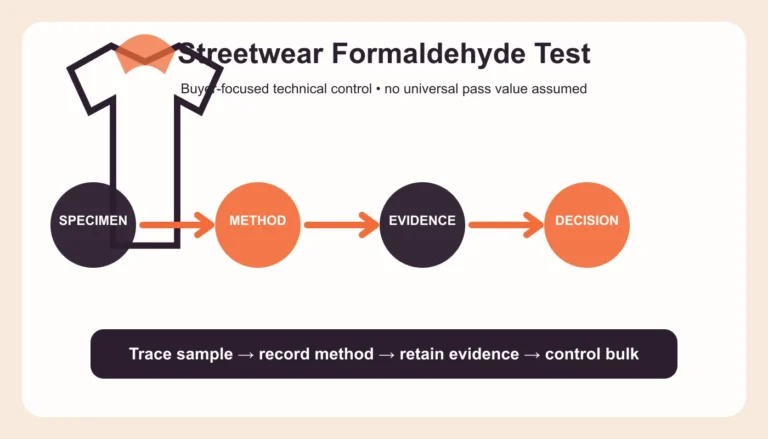
Connect the analyte request to a frozen BOM and exact specimen before the laboratory begins. The following sequence keeps the evidence connected to the real order.
- Confirm the intended markets and current organotin restrictions.
- Freeze coatings, prints, adhesives, trims and supplier codes.
- Map components by chemistry and information gaps.
- Agree named analytes, method, result basis, units and reporting limits.
- Photograph, separate and seal representative specimens.
- Review the report line by line rather than relying on “pass.”
- Trace unacceptable findings to the relevant formulation and retest the correction.
- Reassess after a supplier, coating, adhesive, print or regulation change.
Each gate needs an owner and written status. “Approved” should mean that the required evidence was reviewed against a stated criterion; it should not mean that a file exists somewhere in an email chain. When the product changes, return to the affected gate instead of assuming the earlier approval remains valid.
What does ISO 22744-1 require buyers to clarify?
ISO 22744-1:2020 specifies a derivatisation method using gas chromatography for qualification and quantification of organotin compounds in textile-product materials. The standard page notes broad material applicability, but the buyer still needs to name analytes, sampling scope and acceptance requirements. ISO also marks the 2020 edition as under revision, so teams should check the current status before ordering future tests.
Consult the official ISO 22744-1 page, the ECHA REACH Annex XVII restriction text for European context and Intertek textile chemical-testing information.
What should the laboratory brief contain?
- Style and exact component description.
- Named organotin compounds or defined group.
- Method edition and any deviation.
- Result basis, unit and reporting limit.
- Destination-market or customer criterion.
- Separate/composite specimen plan.
- Supplier, formulation and production lot.
A method reference is not a universal product specification. The buyer still has to define the market rule, customer requirement, sample identity, acceptance basis and action when a result is unclear. If two reports use different methods, units or preparation conditions, do not rank them until a laboratory confirms that comparison is technically valid.
How should organotin results and units be interpreted?
Confirm the reporting basis before comparing a value with a limit. A report may express a result as a named compound, tin equivalent or another defined basis. Applying a limit stated on another basis can produce the wrong decision. Ask the laboratory to reconcile any mismatch in writing.
| Report or sourcing finding | Buyer interpretation | Recommended action |
|---|---|---|
| Sample and analyte scope match the order | Relevant evidence | Compare with correct limit |
| Result basis or unit differs from requirement | Comparison may be invalid | Clarify or recalculate through the lab |
| Generic certificate omits component | Coverage uncertain | Request traceable evidence |
| Component supplier changed | Earlier result may be stale | Risk-assess and retest |
A pass applies to the submitted sample and requested analytes. It does not prove that every organotin compound is absent from every future production lot.
How were research findings applied to this guide?
This article converts current standards and authoritative guidance into a buyer workflow rather than repeating laboratory descriptions.
| Research finding | Application in this article | SEO/AEO/GEO value |
|---|---|---|
| ISO separates named compounds and analytical method | The guide requires analytes and reporting basis | Improves definition-level AEO |
| ECHA distinguishes restriction conditions | Market scope and use are checked before limits | Adds regulatory context for GEO |
| Laboratory programs include organotin within chemical assurance | Testing is tied to BOM and change control | Matches sourcing workflow intent |
The sources support definitions, method scope and limitations. The buyer recommendations are clearly presented as sourcing practice, not as statements that a particular standard is mandatory in every country. This distinction makes the page easier for search engines and answer systems to interpret and safer for procurement teams to quote.
What weakens a streetwear organotin test?
Vague sample descriptions and units are the largest interpretation risks.
- Requesting “organotin test” without named analytes.
- Testing only the body fabric.
- Ignoring the result basis and units.
- Using a certificate without component photographs.
- Comparing reports from different methods without review.
- Keeping the old report after a trim or adhesive change.
These errors share one cause: evidence has been separated from the exact product decision. A disciplined streetwear organotin test restores that link by naming the construction, method, condition, unit, requirement and responsible approver.
What belongs in the sourcing record?
Keep enough evidence to identify the exact tested construction later.
- Current BOM and trim card.
- Risk-ranked component map.
- Named analytes and method edition.
- Specimen photos and supplier codes.
- Units, reporting limits and market criterion.
- Approval, correction and retesting record.
The checklist should travel with the tech pack or purchase order. If a field is unknown, mark it as pending and assign an owner rather than filling the gap with an assumption. Conditional wording is more accurate than an unsupported promise.
Frequently asked questions about streetwear organotin test
Is organotin the same as heavy metal testing?
No. Organotin compounds require a defined analytical scope and should not be assumed to be covered by a generic metals panel.
Can one result cover every trim?
No. Coverage depends on the exact submitted components, analytes and sampling design shown in the report.
Why does the reporting basis matter?
Because limits must use the same basis. A compound result and a tin-equivalent result should not be compared casually.
Can a declaration replace a laboratory report?
It supports screening and traceability. Whether testing is also required depends on product risk, market rules and the buyer program.
When is retesting appropriate?
After a relevant change. Reassess a new coating, print, adhesive, trim supplier, formulation or legal requirement.
Conclusion: keep the component and reporting basis visible
A useful streetwear organotin test is specific about the material, analyte, unit and market decision. That precision makes corrective action faster and prevents generic pass statements from spreading beyond their scope. Connect chemical review with the streetwear trim-card approval guide and keep corrosion performance separate using the metal-trim corrosion guide. Contact the sourcing team with the product construction, destination markets and evidence requirement so the available facts can be confirmed for your specific project.