Streetwear Trim Card Approval Guide
Quick Answer: Streetwear trim card approval is the documented release of every accessory used in a garment, including thread, labels, neck tape, zippers, cords, eyelets, elastics, transfers, hangtags and packaging. Each item should carry an exact supplier reference, colour, dimensions, finish, placement, revision and approval status, supported by an applied sample and relevant performance evidence.
Streetwear trim card approval protects the small details that define a private-label collection. An oversized hoodie can have the correct fabric and fit yet still feel wrong because the drawcord is too shiny, the zipper pull is heavy, the neck label scratches or the thread shade breaks the washed appearance.
A trim card makes these decisions repeatable. It connects the bill of materials, physical reference, artwork, sample, purchase order and incoming inspection. This guide focuses on a buyer-controlled workflow rather than unverified claims about any factory’s standard components. For the wider development sequence, read our streetwear sampling process and use the contact page for style-specific questions.
What is streetwear trim card approval?
A trim card is a physical or hybrid physical-digital record of the accessories approved for one style or coordinated group. It should not be treated as inspiration. Every item must be identifiable enough for purchasing and quality teams to order, receive and compare the correct component.
Typical categories include sewing and embroidery thread, woven and printed labels, care labels, neck tape, zippers, snaps, rivets, drawcords, cord ends, eyelets, rib, elastic, patches, transfer films, hangtags, stickers, polybags and carton marks. Brand marks and artwork require the owner’s authorization; the trim card records the approved production reference but does not create intellectual-property rights.

Why does streetwear trim card approval reduce bulk risk?
Descriptions such as “matte black zipper,” “premium label” or “matching thread” leave room for interpretation. A controlled card adds supplier codes, material, finish, dimensions, colour reference and intended placement. It also shows whether the decision is visual, functional or conditional.
That distinction matters because a component can look correct but fail in use. A cord end can damage a print, a metal finish can change after laundering, a label can curl, or a heat transfer can lift from a washed fleece. A strong streetwear trim card approval links the visual target to the finished-garment test that represents the risk.
Which information belongs on the trim card?
| Component | Identification fields | Applied evidence | Main decision |
|---|---|---|---|
| Thread | Fibre, ticket size, colour and supplier code | Stitched seam on intended fabric | Shade, strength and seam appearance |
| Labels and tape | Material, dimensions, artwork revision and fold | Finished neck or side-seam sample | Comfort, curl, readability and colour transfer |
| Zippers and hardware | Chain, slider, puller, finish, gauge and length | Operational garment sample | Movement, snagging, sharp edges and finish |
| Cords and eyelets | Diameter, weave, colour, end treatment and placement | Threaded hood or waistband | Friction, security, length and appearance |
| Transfers and patches | Artwork, dimensions, construction and application recipe | Applied panel after care trial | Adhesion, migration, cracking and handfeel |
| Packaging | Material, size, warning text and assortment code | Packing trial | Protection, labeling and order accuracy |
How should buyers build the trim card?
Begin with the current bill of materials. Give every component a line number. If the same item appears in several locations, record those locations. If two visually similar threads use different sizes, keep separate lines.
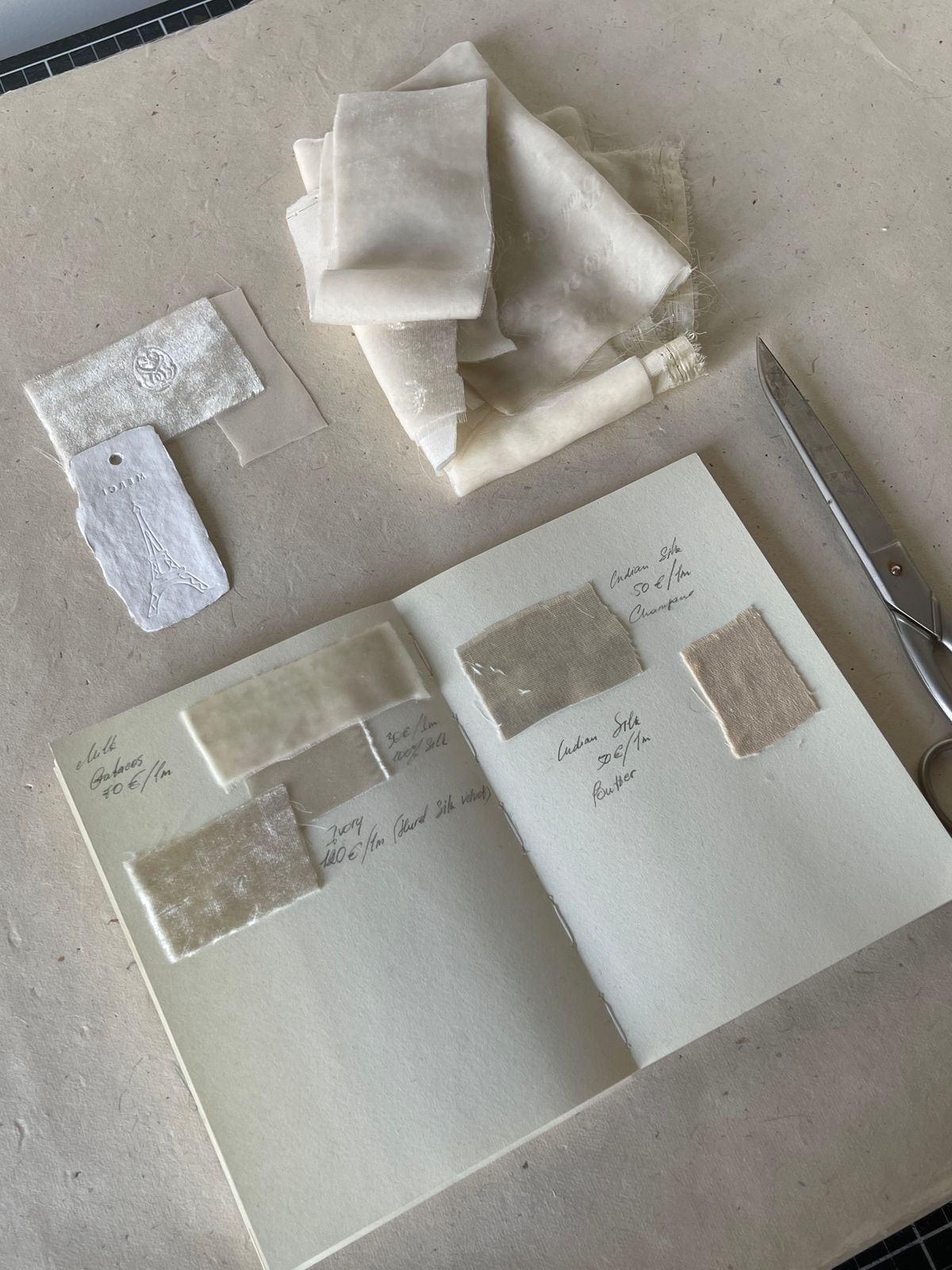
Collect actual references. Attach physical items when practical. For large or safety-sensitive hardware, retain a sealed master and place labelled photographs on the working card. Supplier catalogue images are not approval samples.
Add measurable controls. Record dimensions, tolerance, material, finish, colour system, artwork revision, orientation and placement. State the garment colour because a trim may look different against black, ecru or a garment-dyed shade.
Test in the intended construction. Review thread as a seam, labels at the actual edge, transfers with the planned press recipe, and hardware after the relevant wash. For colour transfer risk, buyers can reference an established method such as ISO 105-X12, while separately defining specimen condition and the project’s acceptance decision.
Sign the revision. The card should show style, season, approver, date and revision. Photograph the signed state and protect the physical master from light, moisture, abrasion and uncontrolled removal.
How should visual and functional approval be separated?
Use separate result fields. Visual review covers shade, gloss, texture, size and placement. Functional review covers attachment, operation, skin comfort, stretch, laundering, heat and interaction with the garment. A component receives final release only when every applicable result is closed.
Conditional approval should name the gap and evidence required. “Use lower-gloss cord after colour confirmation” is specific. “OK with changes” is not. If the condition can affect safety, care performance or customer use, purchasing should remain on hold.
What is the role of an applied trim panel?
An applied panel shows the component on production-representative material. It exposes interactions that a loose trim cannot reveal: seam grin, dye migration, adhesive marks, edge distortion, needle damage and local stiffness. A finished garment sample remains necessary when shape or movement affects the result.
What checklist should be completed before release?
- Confirm the current style, colourway and artwork revision.
- Match every accessory to a bill-of-material line.
- Record supplier reference, material, size, finish and colour.
- Review loose trim, applied panel and finished garment as applicable.
- Check placement, orientation, skin contact and movement.
- Link wash, rubbing, adhesion or recovery evidence to the card.
- State approval status, conditions, approver and date.
- Define the substitution and reapproval rule.
- Retain a protected master for incoming and bulk comparison.
How does streetwear trim card approval control substitutions?
A supplier’s “equivalent” is not automatically equivalent for the design. Compare material, dimensions, finish, colour and function with the approved master. Repeat only the tests affected by the change, but do not waive an affected check for schedule convenience.
Incoming trims should be identified by lot and purchase line. Sample the delivery according to the agreed plan, compare it with the card and quarantine mismatches. The streetwear trim card approval record supplies the reference; the purchase specification supplies the quantity, sampling level and acceptance rule.
Frequently asked questions
Is a trim card the same as a bill of materials?
No. The bill of materials lists what the style needs, while the trim card shows the approved physical references and supporting evidence for those lines.
Can one trim card cover several colourways?
Yes, if every colour-specific component is clearly separated and identifiable. Ambiguous shared cards should be avoided when shades, finishes or artwork differ.
When should streetwear trim card approval be reopened?
Reopen it after a supplier, material, colour, finish, dimension, artwork, placement or application-process change, or when bulk no longer matches the master.
Can digital photos replace physical trim masters?
Photos improve access and revision control, but they do not reliably represent colour, thickness, texture or flexibility. Keep physical masters when those attributes matter.
Who owns the final approval?
The brand or buyer should define the commercial approver. Technical staff should confirm the relevant performance evidence, and the factory should control purchasing against the signed revision.
Conclusion: treat each accessory as a controlled specification
Streetwear trim card approval turns design details into traceable release criteria. It helps creative, sourcing and production teams discuss the same component, exposes changes early and gives incoming inspection a reliable master. To prepare a trim review for a private-label hoodie, T-shirt, tracksuit or jacket, send the current tech pack and intended processes through our streetwear enquiry form.