Streetwear Snap Button Specification Guide
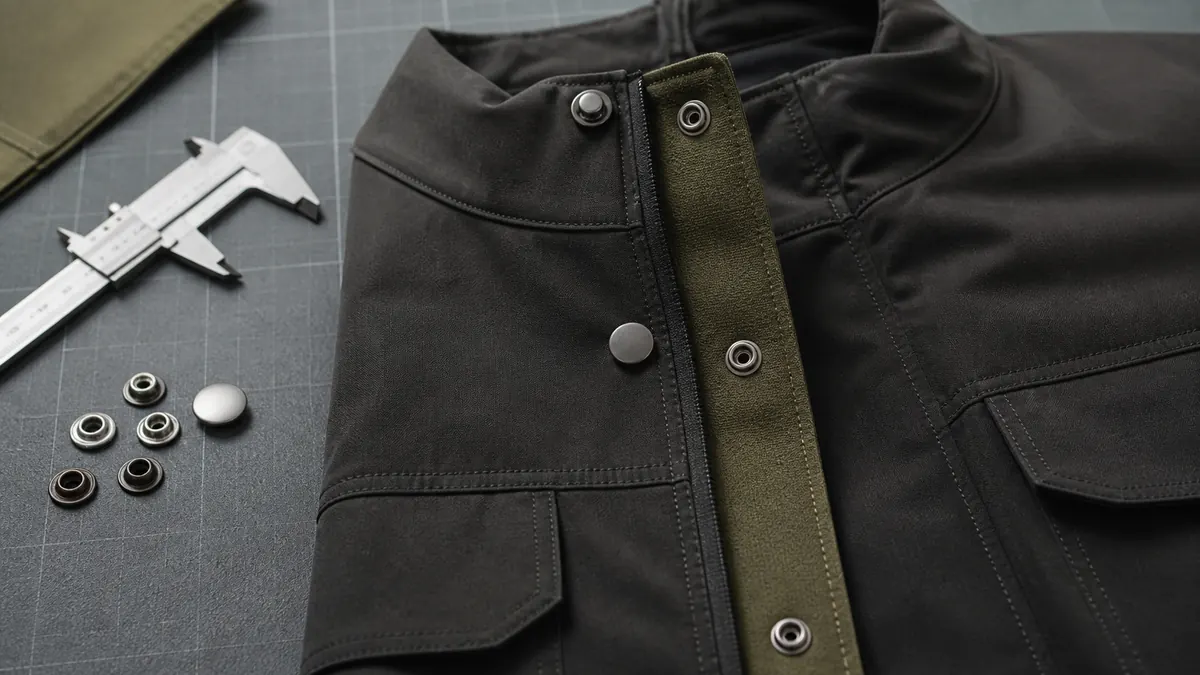
A snap can define the look of a streetwear jacket, overshirt or convertible pocket, but it also concentrates force in a small area of fabric. A dependable streetwear snap button specification must coordinate the cap, socket, stud, post or prong, fabric layers, reinforcement, attachment die, opening force and pull-test requirement. Choosing a finish from a trim card without validating the complete assembly creates avoidable bulk risk.
Quick answer: what belongs in a streetwear snap button specification?
A streetwear snap button specification should identify the fastener system, component material and finish, size, post or prong length, fabric stack, reinforcement, location, attachment tooling, opening-force expectation and pull-test method. Approve the complete assembly on production-equivalent fabric, then verify appearance, function, laundering and attachment strength before bulk release.
What is a snap button system?
A snap fastener normally uses matched male and female components that engage by pressure and separate when pulled. Depending on the system, those parts may include a decorative cap, socket, stud, post, tack, washer or prong ring. Components are engineered as a set; substituting one part can change engagement, appearance or holding strength.
Prym distinguishes S-spring, ring-spring, prong-ring and plastic systems for different materials and opening-strength needs. A buyer does not need to adopt a specific supplier, but should define the functional category before selecting finish and branding.
Which snap type belongs in a streetwear snap button specification?
The answer depends on fabric thickness, stiffness, stretch, opening frequency and desired hand feel. Ring-spring systems can provide a robust appearance and stronger engagement for firm layers. S-spring systems can sit flatter on appropriate fabrics. Prong-ring designs spread attachment across several points and may suit selected knitted or lighter assemblies. Plastic systems reduce weight and provide different chemical and color options.
| Snap family | Useful characteristics | Key validation question |
|---|---|---|
| S-spring | Flat profile and smooth opening on suitable layers | Does the socket remain stable without printing through? |
| Ring-spring | Robust engagement for thicker or firmer streetwear | Can the user open it without overloading the fabric? |
| Prong-ring | Multiple prongs distribute attachment around the ring | Do all prongs roll or set correctly through the stack? |
| Plastic snap | Light weight and broad color possibilities | Does it meet heat, laundering and repeated-use needs? |
| Sew-on snap | No press-setting operation and flexible placement | Are thread, stitch pattern and attachment security controlled? |
Why must a streetwear snap button specification define the fabric stack?
The setting tool compresses all layers between the snap components. The stack may include shell fabric, facing, seam allowance, interlining, tape or a reinforcement patch. If the stack is too thin for the selected post, the snap can rotate or feel loose. If it is too thick, the post or prongs may not form correctly and can damage the textile.
Record the production-equivalent stack at each location. A chest placket, cuff and pocket flap may need different configurations even when the visible cap is identical. Coordinate the choice with the streetwear fusible interlining guide.
How should a streetwear snap button specification control reinforcement?
Reinforcement should stabilize the immediate attachment area without creating a hard, visible island. Woven support, knit-compatible interlining, seam allowance, tape or an additional patch may be appropriate depending on the shell. Test the reinforced and unreinforced options after the intended fusing, washing and finishing processes.
The objective is controlled load transfer. A stronger snap is not automatically safer if it tears the surrounding fabric. Define whether the preferred failure mode is hardware separation, fabric tear or another response, and consult the relevant technical team when safety requirements apply.
Which strength tests belong in a streetwear snap button specification?
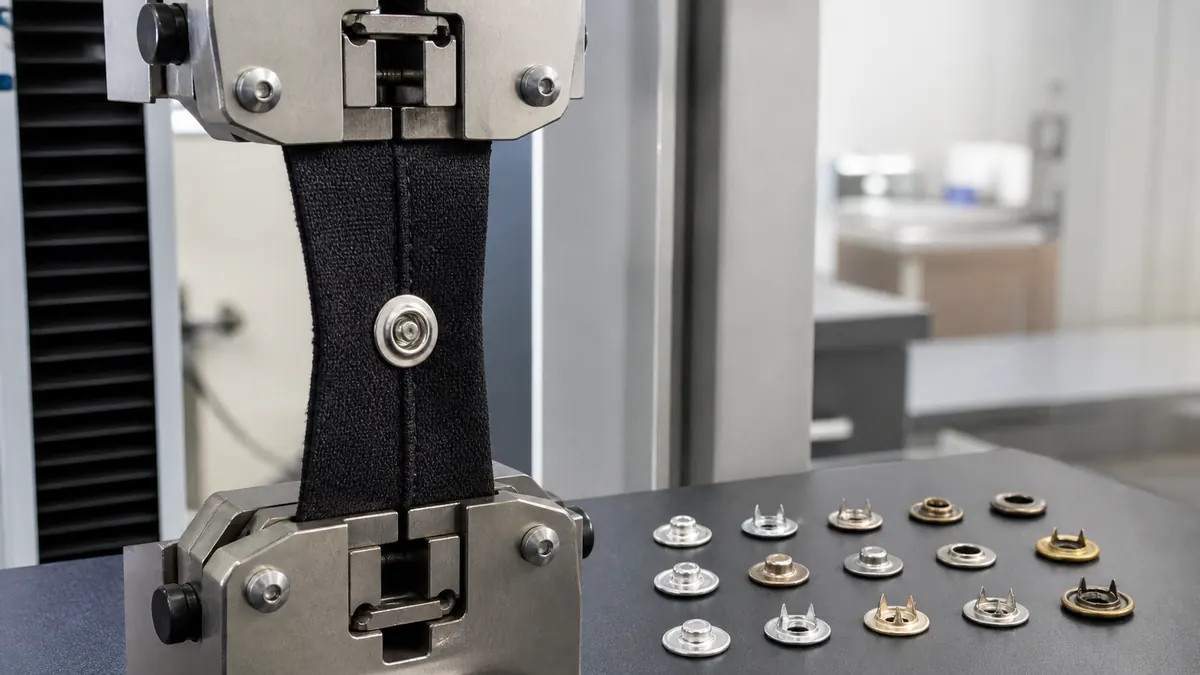
ASTM D7142 covers holding strength of prong-ring attached snap fasteners using a tensile machine or manual test stand. ASTM D4846 addresses resistance to unsnapping for snap fasteners. YKK describes direct-pull and peel-off arrangements in which force is applied until components separate or the fabric tears. These sources show why “pull test” must be more specific.
- Name the test standard or buyer procedure.
- Identify the component or direction being pulled.
- State the grip arrangement and rate when required.
- Condition the complete attached specimen consistently.
- Record maximum force and the failure mode.
- Compare the result with the product-specific acceptance rule.
- Retain failed samples for root-cause review.
Should opening force be the same as attachment strength?
No. Opening force describes the effort required to disengage the functional snap. Attachment strength concerns the security of the snap to the fabric or the integrity of its components under a pull. A snap can be firmly attached yet too difficult for the user to open, increasing stress during every use.
Test both on the actual garment assembly. Consider location and leverage: a pocket flap, center-front placket and small cuff tab may feel different with the same nominal snap.
How should a streetwear snap button specification control finish?
Specify base material, plating or coating, color reference, gloss level, approved sample and permitted variation. Check visible caps for dents, scratches, double strikes, off-center setting and inconsistent orientation. If a logo or custom mark is authorized, approve artwork, depth and rotation separately; do not assume the attachment process will preserve a decorative surface.
Evaluate finish after the intended garment wash. Chemical exposure, abrasion and contact between metal parts can change appearance. For washed products, integrate trim approval with the streetwear garment wash shade control guide.
What should be approved during sampling?
Use production-equivalent shell, reinforcement and wash state. Hand-setting a development sample with different tooling does not validate the bulk press process. The approval should include closed appearance, open appearance, component back, alignment, opening feel, repeated operation, pull-test evidence and surrounding-fabric condition.
| Sample checkpoint | Evidence to retain | Reason |
|---|---|---|
| Component match | Supplier codes for every cap, socket, stud and post | Prevents mixed incompatible parts |
| Setting trial | Machine, die, pressure and fabric stack | Makes bulk setup repeatable |
| Function | Opening-force or operation check | Protects user experience and fabric |
| Strength | Method, result and failure mode | Shows attachment security |
| Aftercare | Washed appearance and retest where required | Reveals finish or attachment change |
Streetwear snap button specification checklist
- Matched component system and supplier codes are listed.
- Material, finish, size and visible orientation are approved.
- Post or prong length matches each fabric stack.
- Reinforcement type, size and location are documented.
- Setting machine, die and setup reference are controlled.
- Opening force and attachment test are distinguished.
- Failure mode and corrective-action rules are recorded.
- Bulk first-off and in-line inspection frequency are defined.
Frequently asked questions
Can the same snap be used on every garment location?
Not automatically. Different fabric stacks, leverage and opening frequency may require another post length, reinforcement or system.
Why does a snap rotate after attachment?
Possible causes include an unsuitable post length, insufficient setting, compressed or unstable layers, incorrect dies or a damaged component.
Is a higher opening force always better?
No. Excessive force can harm usability and repeatedly overload the fabric even when the snap itself remains secure.
Should washed streetwear be tested before or after washing?
Use both when washing is part of production or expected care. The finished washed state is essential for commercial approval.
What should a pull-test report include?
It should include the method, specimen assembly, direction, result, failure mode, component codes and test date.
Where can buyers verify prong-ring holding strength?
ASTM D7142 describes a test method for holding strength of prong-ring attached snap fasteners.
Conclusion
A complete streetwear snap button specification connects the hardware system to the real fabric stack, reinforcement, tooling, function and test method. Approve the assembly—not just the decorative cap—and verify the washed bulk state. To develop a snap-fastened jacket, overshirt or pocket sample, contact Aimer Custom Lab with your tech pack, fabric stack and trim requirements.