Streetwear Screen Print Underbase Guide
A streetwear screen print underbase is the foundation printed beneath selected colors so artwork stays readable on a dark or difficult garment. It can improve brightness and color consistency, but an underbase that is too heavy can create a stiff, raised hand. Buyers should therefore approve opacity, color, edge registration, cure performance and feel as one print system.
Quick Answer: Build a streetwear screen print underbase for the actual artwork, fabric color, composition and ink system. Define which areas need a base, control artwork choke and print order, test the production-intent garment, verify cure and wash performance, then retain an approved strike-off and settings record for bulk comparison.
What is a streetwear screen print underbase?
A streetwear screen print underbase is an initial ink layer placed below some or all top colors. On a dark garment, it reduces the influence of the fabric color so overprinted inks look closer to the approved artwork. White is common, but gray or low-bleed systems may be selected for particular substrates and color goals.
The base is not automatically a solid copy of the complete image. Separations can place it only where brightness is required, reduce it under dark tones or change its value to help the final color. Avient’s technical discussion of gray underbases explains how substrate color affects perceived print color and why different base strategies can help printers reach the target hue.
When does a streetwear screen print underbase help?
An underbase is usually considered for dark garments, bright graphics, pastel colors and artwork where repeatable color matters. Polyester and blended garments add a separate concern: dye migration. The selected ink system must be compatible with the fabric and expected curing conditions. A method that works on black cotton may not produce the same result on a sublimated polyester panel.
Not every image needs the same coverage. Vintage artwork may intentionally allow the shirt color to influence the print. A distressed graphic may use a reduced base to preserve texture and softness. The buyer should state whether the target is solid retail opacity, a soft washed appearance or a deliberate tonal interaction.
| Underbase approach | Best used when | Buyer check | Main risk |
|---|---|---|---|
| Full white base | High brightness is required on a dark cotton garment | Opacity, edge alignment and hand feel | Excess thickness or visible halo |
| Selective white base | Only light or bright colors need support | Separation map and tonal balance | Unexpected shirt color in unbased areas |
| Gray or low-bleed base | Color control or polyester bleed resistance is required | Test after cure and aging | Color shift if the overprint is not adjusted |
| No underbase | Soft tonal or vintage result is intentional | Appearance on the exact garment color | Weak or inconsistent color |
How should artwork be prepared for an underbase?
The separation should define where the base prints, how it meets adjacent colors and how fine details remain open. A controlled choke slightly reduces the base boundary so a small registration variation does not show as a white outline. The correct value depends on artwork, mesh, ink deposit and press control; it should be established by the printer rather than copied from an unrelated job.
ScreenPrinting.com’s underbase guide highlights the interaction of mesh, emulsion, coating and garment type. These are production variables, so the buyer’s role is to define the visual target, require a production-relevant strike-off and retain approved evidence.
What belongs in the print specification?
- Artwork file version and final physical dimensions.
- Garment style, color, composition, knit structure and finish.
- Print location measured from stable garment references.
- Underbase color and the artwork areas it supports.
- Required opacity, texture and hand-feel reference.
- Print order, flash points and compatible ink family.
- Edge registration and acceptable visual standard.
- Strike-off code, cure record and approved wash result.
How does a streetwear screen print underbase affect hand feel?
Every added ink deposit can increase thickness. A heavy base plus multiple opaque top layers may produce a rigid patch that changes how an oversized T-shirt drapes. Finer mesh, controlled stencil thickness, smoothing methods and selective base coverage can reduce unnecessary build, but each change also affects opacity and production stability.
Avient’s white ink guidance notes that thinner layers and higher mesh strategies can support a softer surface while preserving opacity. Buyers should describe the target through a physical reference and compare the strike-off on the intended fabric, not by looking only at a digital color proof.
How should a streetwear screen print underbase be tested?
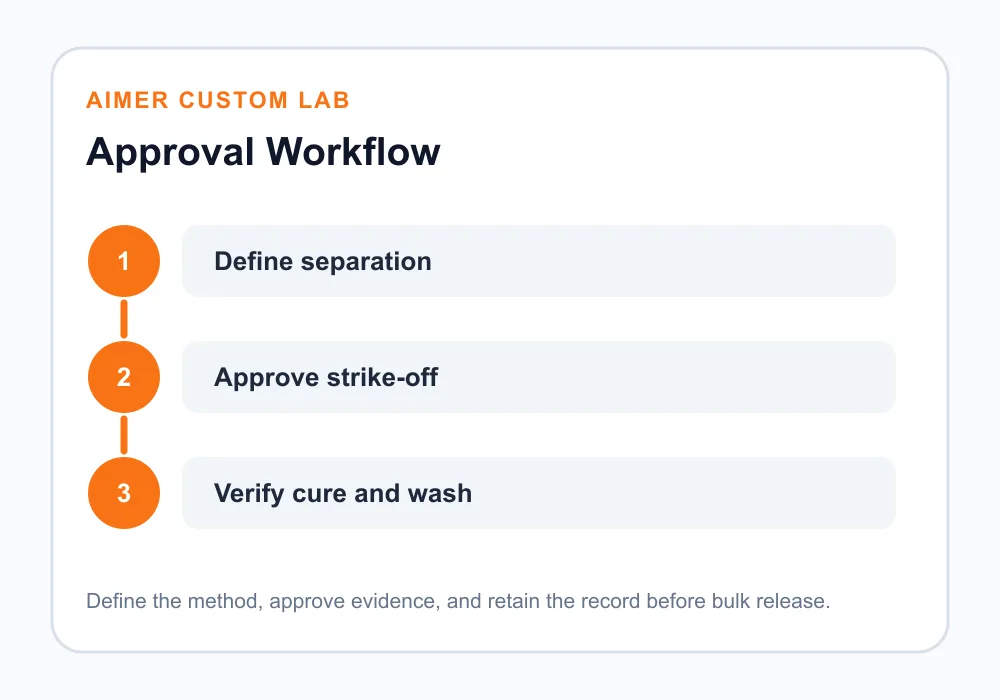
- Confirm the substrate: Use the actual garment color, composition, finish and production fabric lot where possible.
- Approve dimensions: Measure the complete graphic and critical details against the artwork specification.
- Inspect registration: Look for a light halo, exposed fabric gaps and blurred edges at normal viewing distance and close range.
- Compare color: Review under controlled lighting against the approved physical standard.
- Evaluate hand: Bend, drape and wear the sample; do not judge softness only by touching a flat print.
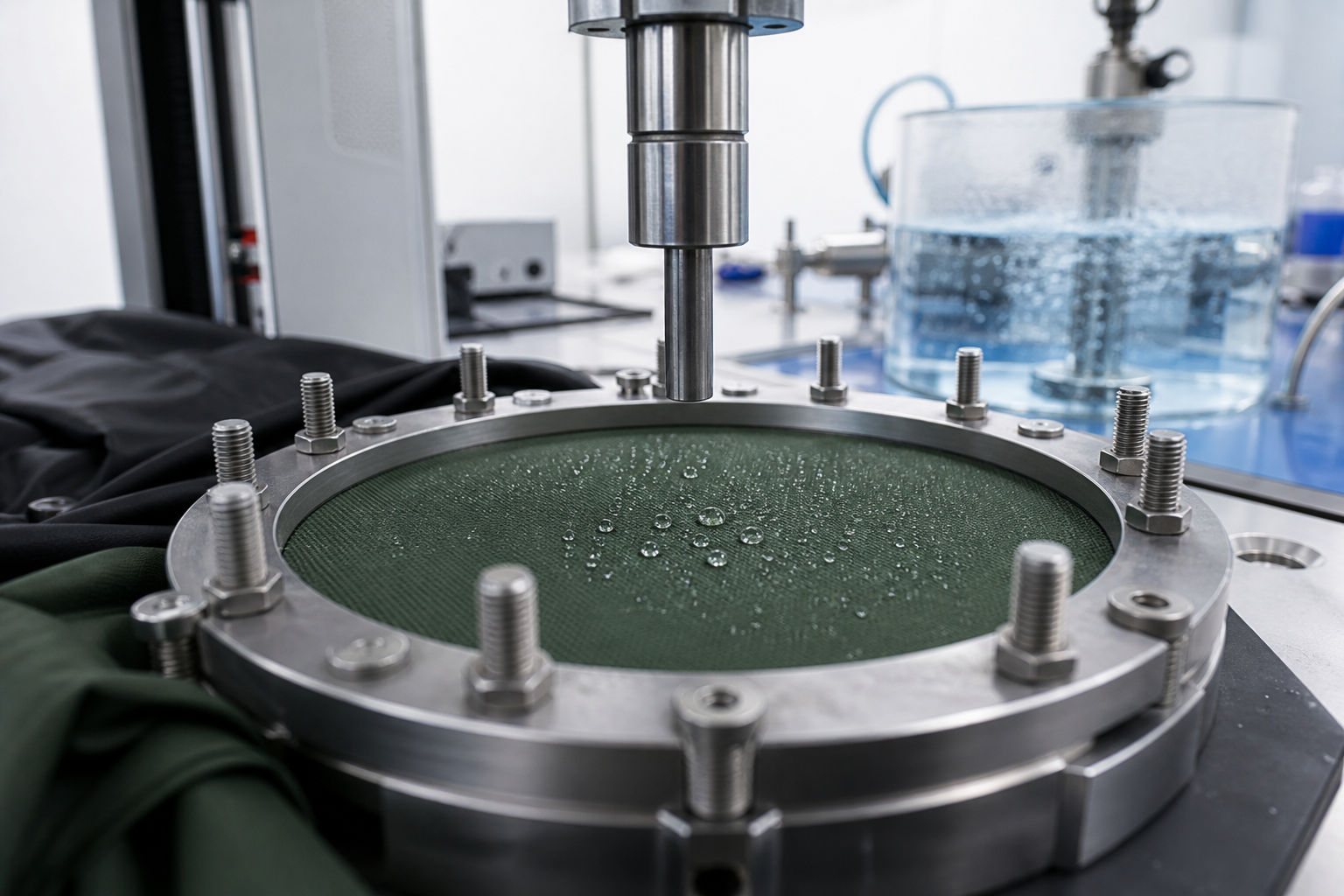
- Verify cure: Follow the ink supplier’s procedure and confirm the full ink film, not only air temperature.
- Run care tests: Wash under the agreed method and inspect cracking, adhesion, color change and migration.
- Retain evidence: Keep a signed strike-off, artwork revision and production settings record.
Connect the result to the existing streetwear screen print curing guide, because an attractive underbase is not acceptable if the complete ink stack is under-cured. For graphics used across a size range, use the streetwear print size grading guide to coordinate print scale and placement.
What defects should bulk quality control catch?
- A white or gray halo visible outside the top-color edge.
- Fabric showing through areas intended to be fully opaque.
- Blocked fine detail caused by excessive ink deposit.
- Color that changes from the approved strike-off.
- Stiffness that alters garment drape or feels inconsistent.
- Cracking, flaking or poor adhesion after the agreed care test.
- Dye migration or color contamination on polyester blends.
- Print location or scale varying between sizes or batches.
Inspect pieces from the beginning, middle and end of a run. Registration and ink deposit can drift as screens warm, platens accumulate lint or settings change. Record the garment lot and press stage when a defect appears so corrective action addresses the cause rather than only the symptom.
How should buyers approve color without over-specifying the process?
State the final visual and performance requirements, then allow the printer to propose the production method. A buyer can require an approved physical color, opacity level, hand-feel reference, wash result and no visible halo without dictating a universal mesh count or flash time. Equipment, ink and artwork differ between factories.
If a method is critical to the brand, document it with the supplier after testing. Avoid inserting generic temperature, pressure or mesh values into a tech pack unless they have been validated for the selected ink and substrate. Conditional language protects both quality and technical accuracy.
Frequently asked questions
Does every print on a black T-shirt need an underbase?
No. It depends on the intended opacity, artwork and ink system. Tonal or vintage designs may deliberately use no base or selective coverage.
Why is a white outline visible around the artwork?
The base may not be choked appropriately, or registration may have shifted. Compare separations, screen alignment and the approved strike-off.
Can an underbase stop polyester dye migration?
Only a compatible low-bleed or blocking system tested on the actual polyester should be relied on. A standard white base is not automatically a migration barrier.
Why does the print feel too thick?
Possible causes include a heavy stencil, low mesh, multiple strokes or a full base where selective coverage would work. Rebalance opacity and hand through a new strike-off.
Should the underbase be the same for every garment color?
Not necessarily. Substrate color and composition influence the final appearance, so each material and color group may need its own tested setup.
What proof should be retained?
Keep the approved strike-off, artwork and separation version, garment lot, color reference, cure record and after-care result.
Conclusion: approve the complete print stack
A reliable streetwear screen print underbase balances opacity, color, registration, softness and durability. Define the visual target, test the exact garment, verify cure and wash performance, and retain a physical approval standard for bulk. Send Aimer Custom Lab your artwork, garment color, fabric specification, print dimensions and hand-feel reference so the sampling route can be confirmed before quotation and production planning.