Streetwear Size Label Verification Guide
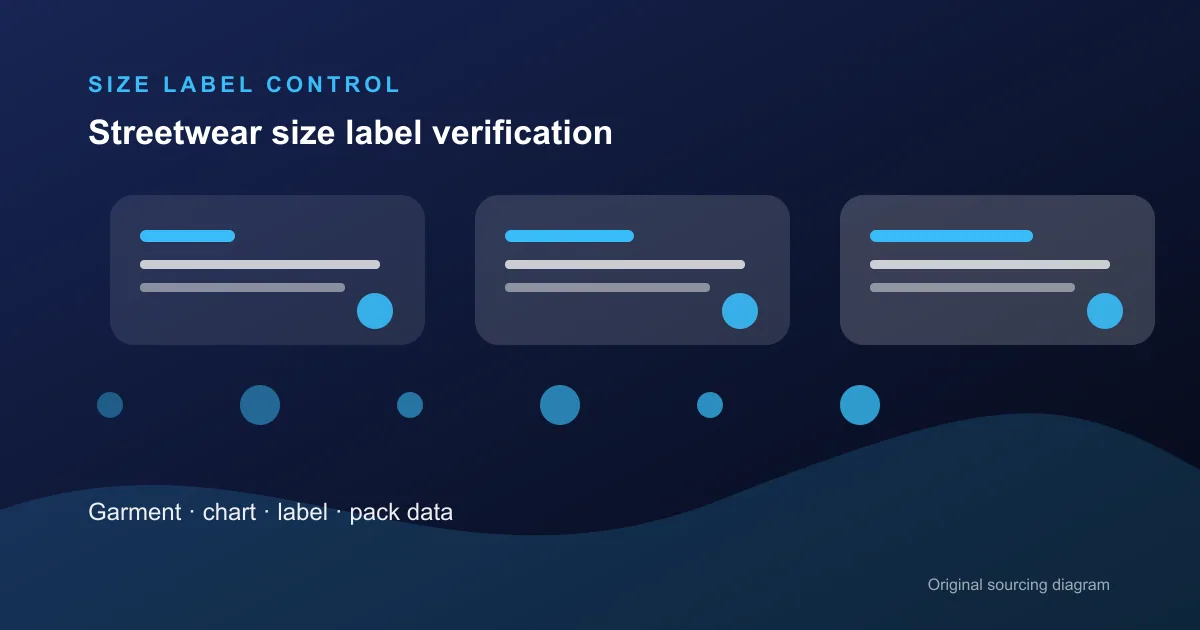
Quick Answer: Streetwear size label verification checks that each finished garment matches the approved measurement specification and carries the correct visible size across neck label, care label, hangtag, barcode, polybag and carton data. Verify every style-colour-size variant with a controlled matrix, then sample physical units before packing and archive the approved revision for reorders.
Streetwear size label verification is not a quick glance at an S, M or L tag. It is a reconciliation between the garment’s measured identity and every label or data carrier attached to it. One mixed label roll can make correctly sewn hoodies impossible to receive, sell or reorder accurately.
Before building the matrix, buyers can review the streetwear sampling process and Aimer Custom Lab’s custom menswear product range. The order-specific fit, grade rules and label set should then be confirmed through approved samples.
What is streetwear size label verification?
It is the controlled check that a garment, its approved size chart and all related labels point to the same size variant. The process begins with pattern and measurement records, continues through label artwork and application, and ends with packing and shipment data.
The size word itself is not universal. An oversized medium can have larger garment measurements than another brand’s large, while two styles in one collection can use different grade rules. Verification therefore uses the style-specific specification rather than assumptions based on a letter code.
Begin streetwear size label verification with the approved fit architecture and variant list.
Which records must agree?
| Record | What it identifies | Verification point | Failure if mismatched |
|---|---|---|---|
| Pattern and grade | Geometry for each size | Approved pattern revision | Wrong body shape under a correct label |
| Measurement chart | Finished points of measure and tolerances | Physical garment readings | Size cannot be objectively checked |
| Neck or size label | Customer-facing size | Applied label and orientation | Mislabelled saleable unit |
| Care label | Style, size or batch data when included | Printed variant | Conflicting internal information |
| Hangtag and barcode | Retail and inventory variant | Text and encoded value | Receiving or checkout error |
| Polybag and carton | Packed size and assortment | Sticker, ratio and count | Warehouse picks the wrong units |
How should the master size matrix be built?
Create one row for every active style, colour and size combination. Include a stable variant ID, pattern revision, measurement-chart revision, neck-label file, care-label file, hangtag file, barcode or SKU, bag sticker and carton code. Add status columns for artwork approval, trim approval, first-piece check and bulk release.
Do not merge cells or use colour alone to communicate status. Values should be exportable and sortable. If a field is not used, write “not applicable.” If data is unknown, stop the affected release and assign an owner; do not enter zero.
Lock the approved matrix as a dated revision. The production acknowledgment should repeat the number of active variants and units. For a collection with five sizes and three colours, verify all fifteen combinations even when the label design looks identical.
How do measurements connect to the label?
Define finished-garment points of measure, measurement method, base size, grade increments and tolerances. Measure the garment in the agreed state, such as relaxed after conditioning, and use the specified tools and placement. The label check cannot rescue a garment that was cut from the wrong pattern.
The ISO 8559-1 size-designation reference describes anthropometric definitions that support consistent body measurements. It does not dictate an Aimer Custom Lab size chart or a universal streetwear fit. Brands still need a market and style-specific fit strategy, approved garment measurements and physical fit review.
How should label artwork variants be generated?
Build a locked master layout with controlled variable fields. The size, style code, origin, fibre, care, responsible-party and language data may vary by product or market, so identify which fields come from which approved source. Export filenames with style, size, language and revision.
Proof the complete set rather than approving one sample size and assuming the rest. Small text can shift, wrap or disappear when a long size description or multilingual block is inserted. Check front and back orientation for folded labels and verify that cutting or folding does not cover the size.
What should be checked at incoming trim inspection?
- Supplier item code, purchase reference and artwork revision
- Size variant and quantity by roll, bundle or pack
- Finished dimensions, fold, edge and orientation
- Text, symbols, colour and small-copy legibility
- Printed style, origin, fibre and care data where applicable
- Barcode or SKU values linked to the master matrix
- Physical durability appropriate to the approved care route
- Separation and identification that prevent size mixing
Quarantine labels that do not match the current revision. A mixed bag of two visually similar size labels is not a minor housekeeping issue; it can contaminate the sewing and packing stages.
Record incoming streetwear size label verification by supplier lot and purchase reference.
How is the correct size label applied on the line?
Keep garment bundles identified from cutting through sewing. Issue label variants against the bundle ticket and return unused quantities. At the first-piece stage, compare the garment bundle size, key measurements, applied size label and care-label data with the matrix.
- Scan or read the bundle identity before label issue.
- Select the label revision and size from the controlled store.
- Apply at the approved position and orientation.
- Measure and inspect the first garment.
- Record operator or line, date and decision.
- Sample the label-to-garment match during production.
- Reconcile issued, used, rejected and returned labels.
If a label is replaced during repair, repeat the identity check. Do not assume the removed label was correct.
How should packing verification close the loop?
At packing, compare the garment label with the hangtag, barcode, bag sticker and packing-list line. Scan the code in the intended system where relevant, and ensure the human-readable style, colour and size match the garment. Then audit carton assortments against the purchase order.
Use a deliberate error check: select units from different sizes and confirm that each adjacent pair has distinct labels and codes where expected. This helps detect a copy-forward file in which every tag accidentally carries the same size.
Close streetwear size label verification only after garment, retail and packing identities agree.
What destination-label issues require separate review?
Size information is only one part of the label set. Fibre, country of origin, responsible-business identity and care instructions may be regulated for the destination. For U.S. products, the FTC textile labelling guide explains core disclosures and placement considerations. Care labels must reflect supported care instructions.
The brand or importer should confirm its markets and legal data. A manufacturer should apply the approved information accurately, but should not invent an origin statement, fibre percentage or business identity. If the actual material or manufacturing route changes, reopen the label artwork before release.
How are reorders protected from size-label drift?
Archive the approved measurement chart, pattern, label artwork, physical trim sample, garment sample and variant matrix under one season or style record. At reorder, compare every active file and verify whether fit, materials, wash, supplier, market or barcode data changed.
Do not automatically reuse leftover labels. Confirm their revision, condition, quantities and accuracy for the new production. Retire obsolete files and separate obsolete stock physically.
Repeat streetwear size label verification before every reorder release.
Frequently asked questions
Does a correct size label prove correct fit?
No. It only identifies the intended variant. Measure the garment against the approved specification and conduct the planned fit review.
Can one size chart cover every oversized style?
Only if the brand has deliberately approved that architecture. Tees, hoodies, jackets and tracksuits can require different base measurements and grade rules.
Should every label variant be sampled?
Yes for data verification. The physical inspection depth can be risk-based, but every exported variant should be checked against the master matrix before bulk.
What if the garment measures between sizes?
Use the approved finished-measurement tolerance and escalation route. Do not relabel a garment to make the measurement appear acceptable without technical approval.
Can the barcode be checked visually?
Visual review can confirm printed text, but a physical scan is needed when the code supports retail or warehouse operations. Also reconcile the encoded and human-readable values.
Who approves the size label set?
The brand should name an authorised data owner and fit or technical reviewer. The supplier confirms production feasibility and applies the approved revision.
Conclusion: verify one size identity across the whole unit
Streetwear size label verification connects the pattern, finished measurements, garment label, hangtag, barcode, bag and carton. A controlled matrix and physical first-piece check prevent a correct garment from becoming the wrong inventory item. Share the style list, size chart, grading status, label files and destination markets through the Aimer Custom Lab contact page to confirm order-specific sampling and label-control steps.