Streetwear Crocking Colorfastness Test Guide
Streetwear crocking colorfastness measures how readily color transfers from a dyed or printed textile surface to another material during rubbing. It is especially relevant to dark T-shirts, pigment-dyed hoodies, garment-washed jackets, denim-like fabrics, and high-contrast trims. A garment may look excellent in the sample room yet stain a white undershirt, bag, sneaker, label, or adjacent panel when friction and moisture are introduced.
Quick Answer: Test both dry and wet rubbing on production-representative fabric, identify the tested face and color, use the agreed method and rating scale, and review staining against the correct grey scale. Check washed and unwashed conditions when finishes or garment dyes are involved. Do not treat dry and wet grades as interchangeable.
Streetwear Crocking Colorfastness Is a Transfer Test
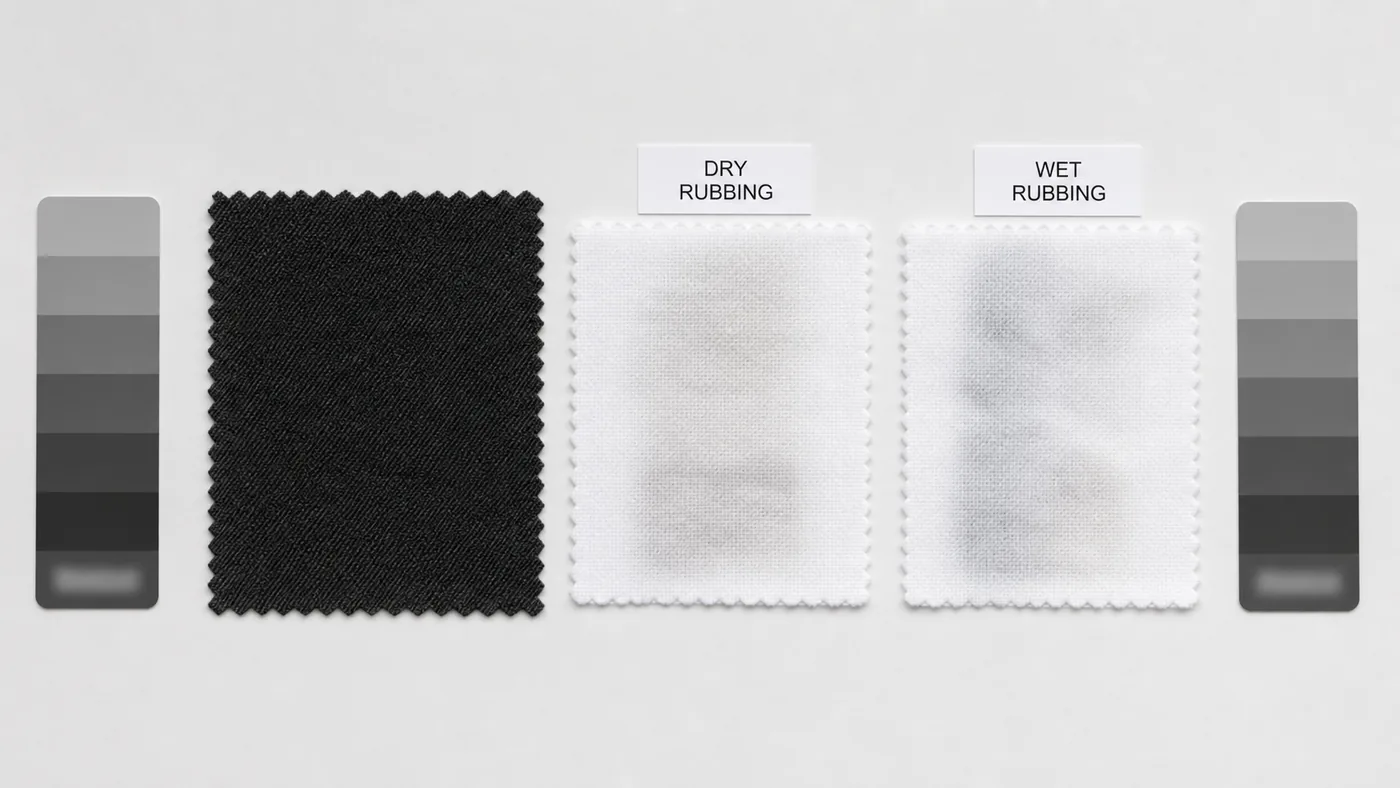
Crocking is not the same as fading. The main question is whether color rubs off and stains a standard cloth. A dark garment can retain much of its visual depth while still transferring enough color to cause complaints. Wet rubbing is often more severe because moisture can mobilize unfixed colorants, surface pigment, or residue.
Surface character matters. Brushed fleece, peached jersey, pigment coatings, discharge effects, overdyed seams, and raised prints can behave differently from a smooth reactive-dyed knit. Test the actual face that will contact other products, not an unrelated lab dip. If a garment combines black body fabric, cream rib, and a light lining, include contact points in the approval review.
Streetwear Crocking Colorfastness Test Standards
ISO 105-X12:2016 covers color fastness to rubbing and allows dry and wet tests. AATCC TM8 is the Crockmeter method widely referenced in apparel programs. ISO 105-X16 addresses small areas when the normal test area is impractical. The buyer and supplier must agree on one method, edition, equipment setup, wet pickup, number of strokes, and rating procedure.
| Test decision | What to record | Buyer relevance |
|---|---|---|
| Dry or wet | Condition of rubbing cloth | Results are usually different |
| Test face | Outer, inner, print, wash effect | Surface chemistry changes transfer |
| Direction | Length and width when required | Texture and yarn orientation can matter |
| Rubbing cloth | Specified standard material | Maintains comparability |
| Rating | Grey scale, lighting, evaluator | Visual grading needs control |
| Care state | Before and/or after washing | Removes residues or weak finish |
Plan Streetwear Crocking Colorfastness by Product
A heavyweight black tee may contact light trousers or a canvas tote. A hoodie can rub against a pale lining, drawcord, neck tape, or embroidered backing. A jacket may transfer color at collar, cuff, pocket edge, and bag-contact zones. Map likely friction interfaces and submit the actual dyed, washed, printed, or coated surface.
For garment-dyed products, include seams, rib, and mixed-fiber trims because components can absorb dye differently. For screen prints and puff prints, determine whether the test applies to the textile color, the printed surface, or both. A print that intentionally distresses should still meet the agreed transfer requirement for its end use.
Streetwear Crocking Colorfastness Approval Workflow
- Define colorway, fabric, finish, and intended care instructions.
- Select the method and dry/wet requirements.
- Mark the tested face, direction, and product zone.
- Condition specimens and standard rubbing cloths.
- Run the specified strokes and loading consistently.
- Dry wet cloths as the method requires before rating.
- Grade staining under controlled light with the correct scale.
- Retain cloths, photos, and lot traceability for bulk review.
Connect the result to the site’s cut-and-sew, printing, embroidery, and private-label capabilities and the streetwear garment wash guide. Dye route, print chemistry, wash recipe, fabric structure, and finishing must be reviewed together.
How to Read Crocking Grades
Visual scales typically move from heavy staining toward little or no staining. The exact acceptance grade must be written into the buyer specification and tied to the method. Do not invent a universal pass level for all colors and products. Deep shades, special washes, and fashion effects may need separate risk decisions, but customer-use consequences must still be considered.
Use at least the specified number of specimens and keep dry and wet ratings distinct. If graders disagree, control the viewing environment and use trained evaluation or agreed instrumental support where applicable. Photographs are useful for communication but screens and camera exposure can alter perceived contrast, so the retained physical cloth remains important.
Improve Streetwear Crocking Colorfastness
When transfer is excessive, investigate dye fixation, pigment binder, curing, washing-off, rinsing, neutralization, surface residues, and compatibility with softeners or washes. More chemistry is not automatically the answer. A change can affect hand feel, shade, printability, shrinkage, or regulatory requirements. Run a controlled development trial and repeat the full relevant test sequence.
Production consistency matters as much as the best sample. Confirm recipe control, bath loading, temperature, time, pH where applicable, washing and drying, and lot separation. If bulk color or handle differs from the approved sample, hold the lot for review instead of relying on a previous report.
Streetwear Crocking Colorfastness Reporting Checklist
- Method, edition, equipment, and operator are identified.
- Fabric code, color, lot, finish, and care state are traceable.
- Test face, direction, and product zone are marked.
- Dry and wet results are reported separately.
- Wet pickup and conditioning follow the method.
- Rating scale and viewing conditions are stated.
- Physical cloths and photographs are retained.
- Any deviation or unusual surface change is explained.
Evaluate High-Contrast Streetwear Assemblies
Fabric-only testing cannot reveal every contact-staining risk. Build a small assembly containing the dark body, light rib, lining, drawcord, label, embroidery backing, and any pale print that will touch during packing or wear. Condition and rub likely interfaces under the approved method or an agreed development protocol, then inspect the light components.
Packaging also matters. A damp garment, compressed fold, or long transit period can create contact that a flat swatch does not represent. Products must be fully dry before packing, and light tissue, labels, or accessories should be assessed when they touch deep shades. This assembly review complements streetwear crocking colorfastness data without replacing the standard test.
Common Mistakes
- Calling general fading a crocking result.
- Reporting one grade without saying dry or wet.
- Testing a lab dip instead of the finished garment surface.
- Ignoring light trims that contact a dark body.
- Comparing different methods or rating procedures.
- Changing the wash or binder after approval without retesting.
FAQ
Why is wet crocking often lower?
Moisture can mobilize surface color or residue and increase transfer. The extent depends on dye, fiber, finish, process control, and method conditions.
Is crocking the same as wash colorfastness?
No. Crocking evaluates rubbing transfer, while laundering tests evaluate color change and staining during a defined wash process.
Should prints be tested?
Yes when the printed surface will experience contact or when the buyer specification requires it. Identify whether the result refers to print or base fabric.
Can garment washing improve results?
It may remove loose surface color, but it can also expose another issue. Verify with controlled tests before and after the actual process.
When should retesting occur?
Retest when colorant, supplier, fabric, binder, curing, wash recipe, softener, print, or production lot changes according to the quality plan.
Conclusion: Control Transfer Before Launch
A disciplined streetwear crocking colorfastness program identifies the surface, tests dry and wet conditions, controls grading, and connects results to the real wash and decoration route. Send the tech pack, colorways, fabric, finish, quantity, and required method through the inquiry form before approving a dark or washed streetwear collection.