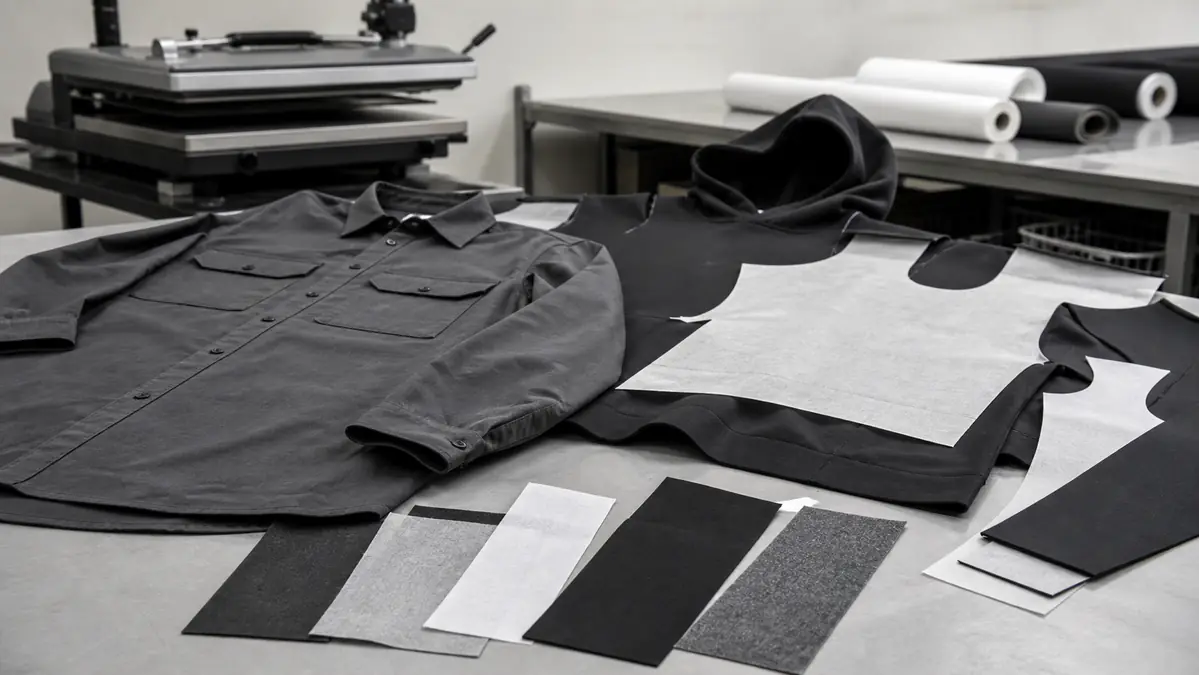
Streetwear Fusible Interlining Guide
Streetwear fusible interlining is a hidden support layer bonded to selected garment areas with heat, pressure and time. It can stabilize a jacket front, collar, placket, pocket opening or label zone without adding a visible seam. The correct choice must match the shell fabric, stretch, weight, wash process and desired hand feel.
Quick Answer: How should buyers choose streetwear fusible interlining?
Choose by the complete fabric-and-garment system, not by weight alone. Compare woven, nonwoven and knit interlinings on the actual shell, then run controlled fusing, appearance, peel and care tests. Approve the supplier’s recommended temperature, pressure and dwell-time window only after confirming that the shell does not shine, shrink, bubble or become too rigid.
What is fusible interlining?
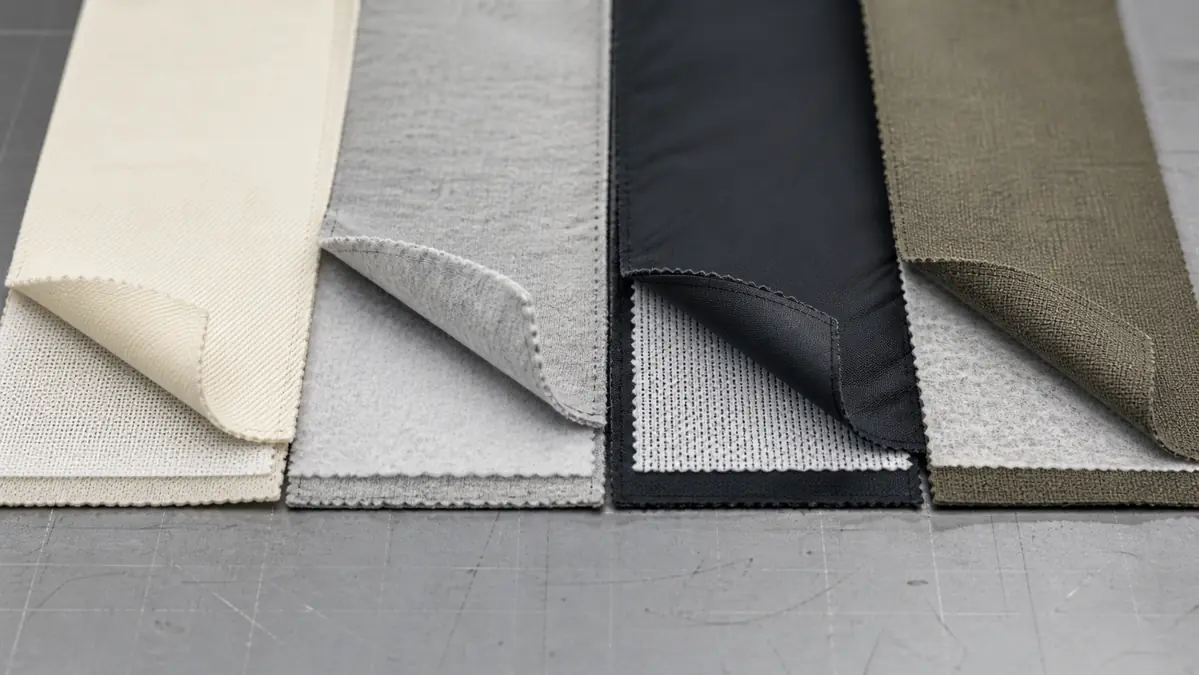
Fusible interlining contains a base material and a heat-activated adhesive. During pressing, the adhesive softens, contacts the shell and forms a bond as the assembly cools. The support may be woven, nonwoven or knitted. Adhesive particles may be applied in different patterns and quantities to control coverage, hand and strike-through risk.
Streetwear fusible interlining is different from a garment lining. A lining covers interior surfaces for comfort or appearance; an interlining reinforces a specific component. Some styles use both. The hidden interlining still influences drape, thickness, edge sharpness and how the garment ages, so it belongs in the technical specification and sample approval.
Where is interlining used in streetwear?
Common locations include shirt or jacket collars, button and snap plackets, pocket welts, zipper guards, waist tabs, cuff openings, embroidered logo zones and selected front panels. Oversized silhouettes may need local support while preserving a relaxed body. The aim is controlled structure, not uniform stiffness across the whole garment.
Mark the exact piece, orientation and coverage on the pattern. A support layer that extends too far can create a visible boundary; one that stops short may leave the seam or fastener unsupported. When only one side is fused, confirm that left and right components remain symmetrical after cooling and washing.
Which streetwear fusible interlining construction fits the product?
| Construction | Typical behavior | Potential streetwear use | Buyer risk to check |
|---|---|---|---|
| Woven | Defined warp and weft, directional stability | Structured collars, plackets and jacket details | Grain direction and differential shrinkage |
| Nonwoven | Uniform sheet structure, available in many weights | Small reinforcements and economical support zones | Paper-like hand, tearing or edge visibility |
| Weft-inserted or knit | More conformable, can retain controlled stretch | Knit jackets, hoodies and soft oversized shapes | Excess stretch or distortion during fusing |
| Specialty support | Designed for a specific application or process | Embroidery zones, heavy hardware or washed effects | Compatibility must be verified for the actual operation |
No category is automatically “premium.” A soft knit support may be better for a flexible hoodie, while a stable woven can give a jacket placket the intended line. The decision should follow the approved design and verified performance rather than a generic material ranking.
How should shell fabric affect the selection?
Weight and surface
Light shells can reveal adhesive dots, color change or a hard edge. Thick brushed fabrics may prevent even adhesive contact. Textured or coated surfaces can require a specialized product and supplier guidance. Test the face under direct and angled light because shine may appear only from one viewing direction.
Stretch and recovery
The support must allow the intended movement. A rigid interlining on a stretch panel can create a hinge line or concentrate stress at its edge. A highly extensible support may fail to control a placket. Record stretch direction and orient both shell and interlining consistently.
Shrinkage and heat sensitivity
Shell and support should respond compatibly to heat, steam and laundering. Streetwear fabric with special coating, pigment treatment or synthetic content may have a narrow heat tolerance. Confirm the interlining supplier’s instructions and reduce risk through a fusing trial; do not copy settings from another material.
What streetwear fusible interlining parameters must be controlled?
Temperature activates the adhesive, pressure creates contact, and dwell time allows heat to reach the bond line. Cooling then stabilizes the assembly. These variables interact. A high top-plate reading does not prove the bond line reached the required condition, and excessive heat can damage the shell before it improves adhesion.
- Temperature: use the interlining supplier’s recommended range and verify the actual machine.
- Pressure: confirm even contact across the component, including near seams or thickness changes.
- Dwell time: record the time under heat and pressure, not only conveyor speed.
- Cooling: support the fused part until the adhesive sets; avoid stacking hot, soft components.
- Machine condition: check belt cleanliness, pressure uniformity and temperature distribution.
A documented setup card should name shell, interlining code, adhesive side, orientation and approved machine window. If equipment changes, the trial should be repeated because identical panel settings may produce different bond-line conditions.
How is the sample tested?
Begin with a small matrix of candidate supports and settings. Evaluate face appearance, hand, drape, edge show-through and dimensional change after cooling. Then prepare test strips or components for bond evaluation using the agreed method. ASTM D2724 provides recognized procedures for bonded, fused and laminated apparel fabrics, including aspects of appearance and performance; buyers should confirm the current edition and relevant sections with their laboratory.
Test the finished garment through the intended care sequence. Inspect for bubbling, delamination, adhesive migration, discoloration, stiffness change and component distortion. A strong initial bond can still fail after repeated laundering or garment washing. Record conditions and failure mode rather than writing only “pass.”
What problems indicate a poor match?
- Bubble or blister: local bond loss, contamination, moisture or incompatible shrinkage.
- Strike-through: adhesive becomes visible on the face or penetrates the shell.
- Shine or shade change: the shell reacts to heat, pressure or surface contact.
- Boardy hand: support is too heavy, dense or highly bonded for the desired drape.
- Edge impression: the cut boundary shows through the face.
- Peel loss after care: the assembly cannot tolerate the specified laundering or finishing.
- Warping: shell and support shrink or stretch differently.
The correction depends on the failure. Lowering temperature alone may reduce shine but also weaken bonding. Consider adhesive type, support construction, cut shape, shell conditioning and machine uniformity before changing settings.
How should the pre-production workflow run?
- Define the design need. State whether the area needs shape, edge support, fastener support or embroidery stability.
- Record the shell. Confirm composition, construction, weight, stretch, finish, color and intended care.
- Select candidates. Obtain supplier data for support and adhesive system.
- Run a fusing matrix. Use realistic settings on production-representative shell.
- Assess appearance and hand. Review face, reverse, drape, dimensions and symmetry.
- Test bonding and care. Use agreed procedures and inspect after cooling and washing.
- Seal the reference. Keep the approved component, settings, material code and report.
Our streetwear clothing sampling process explains how component trials connect to fit, decoration and full sample approval. Measurement stability can also be tracked with the streetwear garment measurement tolerance guide.
How should bulk quality control be organized?
Confirm interlining identity at receiving and keep rolls traceable. At line start, test the first fused pieces after complete cooling. Compare hand, appearance and dimensions with the sealed sample. Check machine readings, but also use temperature verification methods recommended by the equipment or interlining supplier.
Repeat checks after roll, color, operator, machine or setting changes. Production pieces should be stored flat until stable. Inspect selected garments after the specified care sequence when the risk is significant. AQL-style visual inspection can find bubbles and distortion, but it does not replace scheduled bond verification.
What belongs in a streetwear fusible interlining technical pack?
- Interlining supplier code, construction, color, weight or range and adhesive description.
- Pattern piece, coverage, seam allowance, grain or stretch direction and cut method.
- Approved shell-interlining pairing by color or fabric lot.
- Machine type and verified temperature, pressure, dwell and cooling window.
- Appearance, hand, dimensional and bond acceptance requirements.
- Care or garment-wash sequence used for validation.
- Sealed sample, test report, retention rule and bulk recheck frequency.
Frequently Asked Questions
Is heavier interlining always stronger?
No. Weight affects body, but bond quality and durability also depend on adhesive, shell surface, fusing conditions and care. A heavy support may damage the intended drape.
Can one interlining work for every color?
Not automatically. Dark, light and translucent shells can show adhesive or support differently. Approve representative colors and any different finishing lots.
Should stretch fabric use stretch interlining?
Often some compatibility is needed, but the required extension depends on the location and design. Test the complete assembly in the intended direction.
Can a household iron reproduce production fusing?
No. It cannot reliably control and document industrial pressure, temperature distribution and dwell time. Use representative production equipment for approval.
What causes bubbling after washing?
Possible causes include incomplete bonding, contamination, moisture, incompatible shrinkage, heat damage or an adhesive unsuitable for the care process. Diagnose before changing settings.
Does interlining replace seam reinforcement?
No. It can stabilize an area, but seams, bartacks, fasteners and edge construction still need their own specifications and testing.
Conclusion: Approve the bonded system, not a loose swatch
Streetwear fusible interlining succeeds when shell, support, adhesive, machine settings, cooling and care behavior are approved together. The ASTM D2724 standard page provides a useful reference for bonded and fused apparel fabrics, while the exact procedure should be agreed with the laboratory and material supplier.
Developing a private-label streetwear style? Contact Aimer Custom Lab with the shell fabric, garment sketch, target hand and care process. We can align the interlining trial and sample checklist before bulk approval.