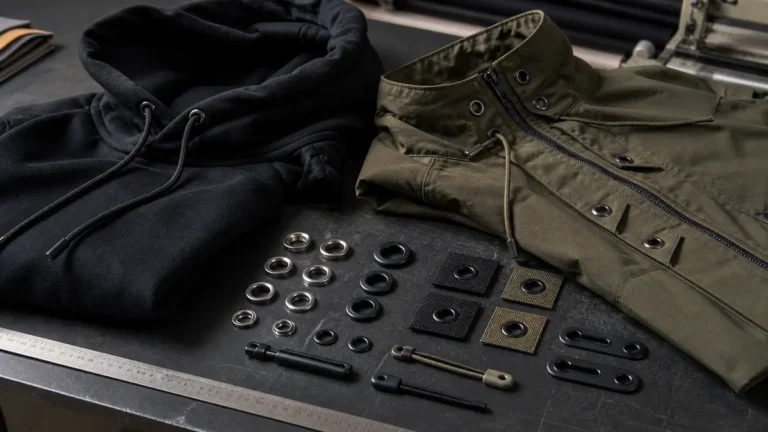

Streetwear Zipper Strength Test Guide
A streetwear zipper strength test evaluates the load resistance of zipper chains, sliders, stops, pullers and separable units under defined procedures. It helps private-label buyers move beyond appearance when selecting closures for jackets, hoodies, cargo pants and tracksuits. Zipper size, material and finish are important, but strength must be linked to the actual component and loading direction.
Quick answer: identify the zipper type and supplier lot, select the relevant component tests, condition representative specimens, use controlled fixtures and loading, record failure modes and compare results with buyer-approved requirements. Do not summarize every zipper property with one “strength” number.
What a streetwear zipper strength test can cover
ASTM D2061 includes test methods for zipper and zipper-part strengths. The listed procedures address chain and element strength, stop holding, separable-unit holding, slider compression and recovery, slider-pull resistance, pull-off and twist, and slider-lock holding strength. Not every method suits every zipper type.
A buyer should therefore define the component risk. A zip-up hoodie may prioritize chain crosswise strength and bottom-stop security, while a detachable jacket closure also needs separable-unit review.
| Test area | Risk addressed | Typical observation | Buyer follow-up |
|---|---|---|---|
| Chain or element strength | Elements separate under transverse load | Chain opening or tape damage | Review size, element and tape |
| Top/bottom stop holding | Slider escapes the chain | Stop pull-off or tape tear | Review stop setting and reinforcement |
| Separable unit holding | Box-and-pin assembly fails | Box, pin or tape failure | Review component and insertion |
| Slider lock holding | Slider moves under load | Lock slip or slider damage | Review slider type and fit |
| Puller resistance | Pull tab detaches or twists | Pull-off, bend or fracture | Review material and geometry |
| Slider compression/recovery | Slider deforms during use | Deflection or poor running | Review slider and chain compatibility |

How to plan a streetwear zipper strength test
1. Freeze the zipper specification
Record supplier, model, nominal size, chain type, tape material, slider, puller, stops, finish, length, color and lot. Photographs prevent a later replacement from being mistaken for the approved component.
2. Map garment loading
Identify whether the zipper separates, carries pocket loads, runs around a curve or sits under a tight rib hem. Mark high-stress locations at the bottom stop, top stop, pocket corners and seam transitions.
3. Choose relevant methods
Do not order every possible method without purpose. Select tests that match the component and end use. The streetwear zipper strength test plan should name the procedure, fixture, loading direction, test speed and failure definition.
4. Test representative components
Sample across production lots and colors where coatings or finishes differ. Use specimens in the required state and avoid pre-damaged samples unless investigating a defect.
5. Record force and failure mode
A maximum force has limited meaning without the failure location. Note element separation, tape tear, stop pull-off, slider distortion, puller fracture or fixture slippage. Retain photographs and individual results.
6. Validate the sewn application
Component testing does not replace garment inspection. Sewing too close to elements, uneven tape feeding, insufficient reinforcement or an obstructed slider path can create failures even when the loose zipper meets its requirement.
Construction factors affecting zipper performance
- Zipper size and element material.
- Tape strength and compatibility with the shell.
- Slider and chain dimensional fit.
- Stop attachment and box-pin setting.
- Seam allowance and stitch placement.
- Interlining or reinforcement at the base.
- Garment wash, coating and heat exposure.
- Curves, pocket loads and tight garment fit.
- Corrosion or finish damage under care conditions.
Buyer workflow from development to bulk
- Issue a complete zipper component specification.
- Approve color, finish, running feel and dimensions.
- Select strength tests based on garment risk.
- Test the production-intent component lot.
- Sew a representative sample with actual reinforcement.
- Run practical opening, closing and stress reviews.
- Repeat after garment washing where relevant.
- Inspect early bulk pieces and retain references.
Use the streetwear hoodie zipper guide for construction and selection details, then add the test requirements during the sample approval process.
Common zipper-testing mistakes
- Calling one chain result total zipper strength.
- Using a method unsuitable for the zipper type.
- Ignoring stops, puller or separable unit.
- Testing a loose zipper but not the sewn garment.
- Changing slider or tape after approval.
- Reporting fixture slippage as component failure.
- Using an average that hides a severe low result.
- Skipping retesting after garment wash or finish.
Practical garment checks beyond laboratory strength
After component testing, operate the sewn zipper through repeated full opening and closing while observing alignment, slider hesitation and fabric trapping. Load pockets or hems in the intended direction and inspect the base reinforcement. This is not a substitute for a named durability standard, but it reveals construction issues that a loose-component fixture cannot reproduce.
Check the zipper on more than one garment and across relevant sizes. A longer zipper, curved seam or tighter graded size can change stress. Confirm that lining, facing and storm flaps do not enter the slider path. Compare left and right pocket zippers where the sewing operation is mirrored.
Interpreting results and managing substitutions
Review each failure mode separately. A strong chain with a weak bottom stop is not a balanced approval. If one specimen fails unusually low, trace its lot and inspect it rather than deleting the value. Retesting should follow a documented sampling rule.
Zipper substitutions are common when color, length or stock changes. Require the proposed replacement to match the controlled specification and repeat the relevant tests. A visually similar slider from another series may not fit the approved chain geometry. Record exactly which component combination was tested.
When supplier and buyer results disagree, compare conditioning, fixture design, jaw position, loading rate, specimen preparation and failure definition. Use material from the same lot for comparative work before reaching a commercial conclusion.
Streetwear zipper strength test checklist
- Zipper supplier, model, size, finish and lot are identified.
- Garment loading and high-risk points are mapped.
- Relevant component methods are named.
- Fixtures, direction, speed and failure rule are controlled.
- Representative specimens are used.
- Individual forces and failure modes are retained.
- The sewn application is separately evaluated.
- Wash or finish effects are considered.
- Substitutions trigger new approval.
- Bulk pieces match the retained standard.
Frequently asked questions
Is a larger zipper always stronger?
Not automatically. Size, element, tape, slider compatibility, stops, finish and construction all affect performance.
Can one strength test cover the entire zipper?
No. Chains, stops, sliders, pullers and separable units have different failure modes and test procedures.
Should the zipper be tested after garment washing?
Yes when wash, dye, enzyme, abrasion or heat may affect finish, tape, stops or slider operation.
What if the component passes but the jacket fails?
Review sewing, reinforcement, alignment, seam allowance and garment loading. A component result does not approve the full construction.
What should a supplier report include?
Include identification, method, specimen count, fixtures, loading, individual values, failure modes and photographs.
Keep approved and failed samples together so production teams can see both the required construction and the unacceptable failure pattern.
Conclusion
A useful streetwear zipper strength test separates chain, slider, stop and puller risks. Select only relevant methods, record failure modes and confirm the component inside the production-intent garment.
Explore our custom streetwear products and contact Aimer Custom Lab with your zipper specification and garment drawing. Buyers should confirm final acceptance requirements.
Authority reference: ASTM D2061 zipper strength methods.