Streetwear Fabric Handfeel Specification Guide
Quick Answer: Streetwear fabric handfeel is the controlled tactile character of a fabric or finished garment: softness, dryness, fullness, drape, surface texture, elasticity and recovery. Buyers should define it with named attributes, approved swatches, finished garment samples, wash state and comparison rules, because phrases such as “premium” or “soft” cannot support repeatable bulk decisions.
Streetwear fabric handfeel affects how an oversized T-shirt hangs, how a hoodie feels against the neck and how a washed jacket communicates quality. Yet handfeel is often approved through informal messages. That creates risk when the mill, dye lot, finishing route or garment wash changes.
This guide shows private-label buyers how to convert a subjective impression into a practical approval system. It does not claim that one touch profile is best for every collection. The correct target depends on silhouette, fabric structure, weight, season, decoration and care method. Review the wider development sequence in our streetwear clothing sampling process, then use the contact page to confirm details for a specific style.
What does streetwear fabric handfeel mean?
Handfeel is the sensory response created when a person touches, compresses, bends, rubs or drapes a textile. It combines surface and structural properties. Two fabrics with the same fibre content and GSM can feel different because yarn type, knit density, brushing, enzymes, softeners, compacting, garment dyeing and washing change the result.
A useful streetwear fabric handfeel profile names the attributes instead of relying on one adjective. “Dry with medium body, low surface hairiness and fluid drape” is more actionable than “luxury feel.” The profile should also state whether assessment occurs before wash, after the approved garment wash, after conditioning or after repeated care.

Why is handfeel important for oversized streetwear?
Silhouette and touch are connected. A heavy oversized tee may need enough body to hold a dropped shoulder without becoming board-like. A fleece hoodie may need a soft inner face while keeping rib openings stable. A tracksuit fabric may need smooth movement without an oily finish or noisy friction.
The same finish can also affect downstream processes. Excess softener may reduce print or adhesive consistency. Aggressive brushing can increase visible fibre movement. A garment wash can soften the shell but change dimensions, shade or seam appearance. Therefore, streetwear fabric handfeel approval should never be isolated from fit, decoration and care testing.
Which tactile attributes should buyers specify?
| Attribute | What the assessor feels | Streetwear application | Possible trade-off |
|---|---|---|---|
| Surface softness | Low resistance or gentle touch | Necklines, inner hood and skin-contact zones | Too much finish may feel oily or affect printing |
| Dryness | Crisp, non-slippery surface | Vintage tees and structured jersey | Excess dryness may feel harsh |
| Fullness or body | Thickness and resistance to compression | Boxy tees, hoodies and jackets | More body can reduce fluid drape |
| Drape | How easily fabric bends and falls | Wide-leg tracksuits and relaxed tops | Too much drape may collapse the intended shape |
| Surface hairiness | Visible or tactile fibre lift | Brushed fleece and washed effects | Higher hairiness can increase pilling risk |
| Elastic response | Stretch, snap-back and residual growth | Ribs, cuffs and performance-influenced streetwear | Strong recovery may increase pressure |
How can a brand create a repeatable handfeel standard?
Define the use case first. State the garment, season, intended silhouette, skin-contact zones and decoration route. A target for a pigment-dyed tee is not automatically suitable for a transfer-printed tracksuit.
Create a vocabulary. Select five to eight attributes that matter to the style. Define the direction of each term and use a simple intensity scale. Avoid overlapping language such as “soft,” “smooth” and “silky” unless each has a separate definition.
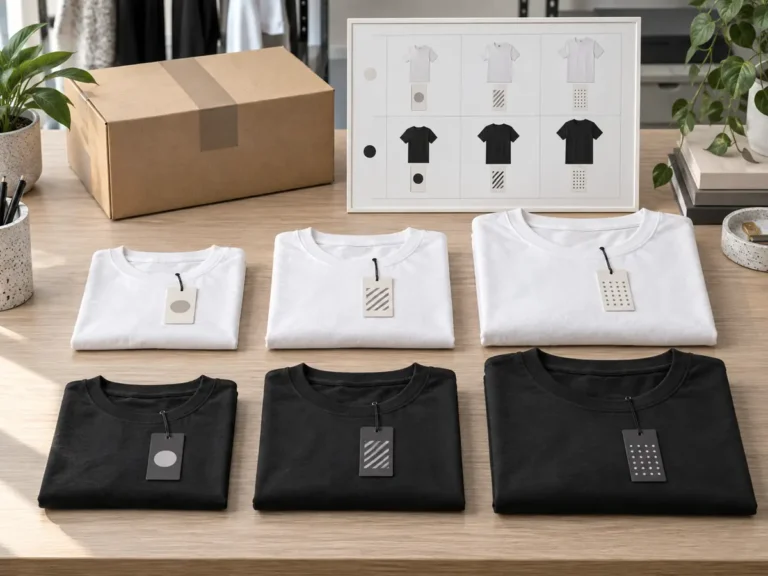
Prepare controlled references. Keep an approved fabric swatch and an approved finished garment. Record supplier, article number, colour, lot, GSM, finish, wash recipe revision and approval date. Protect physical references from contamination, sunlight and repeated uncontrolled handling.
Standardize assessment. Compare specimens at the same stage, size and conditioning state. Use a consistent sequence of touch actions and more than one trained assessor when the decision is commercially important. ISO publishes ISO 13299 for developing sensory profiles; buyers can use that framework to improve vocabulary and panel discipline without pretending the standard supplies a universal streetwear pass level.
Connect the result to measurable evidence. GSM, thickness, bending, surface friction, stretch, recovery and dimensional change can help explain differences. Measurements support the sensory record; they do not replace the approved tactile reference.
How should samples be compared?
Blind or coded comparison reduces expectation bias. Present the approved reference, candidate and control under the same conditions. Ask assessors to rate each named attribute separately before discussing an overall preference. Record both the direction and size of a difference.
A practical streetwear fabric handfeel decision can use three statuses: approved, conditionally approved or rejected. Conditional approval must state the exact gap and closure action. For example, “reduce surface oiliness and resubmit after decoration trial” is actionable; “make it better” is not.
Should the buyer approve fabric or a finished garment?
Approve both when processing can change the result. The fabric reference controls sourcing, while the garment reference captures cutting, sewing, steaming, washing and decoration. The final approval state should match the condition in which customers will experience the product.
What should the handfeel approval checklist include?
- Style number, fabric code, colour, lot and supplier identity.
- Fibre declaration, structure, nominal GSM and finishing route.
- Approved sensory terms and intensity descriptions.
- Reference swatch and finished garment sample identifiers.
- Assessment stage, environment and specimen conditioning.
- Wash, dye or enzyme process revision where applicable.
- Print, embroidery or transfer interaction check.
- Named approver, decision date, status and open conditions.
- Substitution rule and triggers for repeat approval.
How do bulk lots stay aligned with the approved handfeel?
Incoming fabric should be compared by lot, not only by colour name. Review lot identity, surface appearance, GSM or other agreed measurements, and a tactile comparison with the protected master. Sample locations should represent the roll or lot rather than one convenient cut.
If the streetwear fabric handfeel shifts, quarantine the affected material and investigate before cutting. Check whether the cause is a different finish, moisture condition, dye route, compacting level or raw material. Reopen related print, wash or fit checks when the change can affect them.
Frequently asked questions
Can GSM define streetwear fabric handfeel?
No. GSM describes mass per area. It influences body but does not capture yarn, structure, finish, surface friction, drape or recovery.
Should handfeel be checked before or after washing?
Use the stage that matches the approval purpose. If garment washing changes the product, retain both pre-wash process control and post-wash commercial approval references.
How many assessors are needed?
There is no universal number. Use enough trained assessors to reduce reliance on one person, and document who participated. Higher-risk decisions deserve more controlled comparison.
Can a supplier substitute a softener without reapproval?
Only if the agreed change-control rule permits it and evidence shows no relevant change. Otherwise the finishing change should trigger a comparison and any affected performance tests.
What if two assessors disagree?
Return to the named attributes, coded specimens and protected reference. Record the disagreement and repeat the controlled review instead of averaging vague preferences.
Conclusion: make touch a controlled product attribute
A good streetwear fabric handfeel specification combines precise language, protected references, consistent comparison and traceable change control. It respects the creative target while giving sourcing and production teams evidence they can repeat. To discuss the desired silhouette, finish and sampling stage for a private-label project, send the relevant information through our streetwear development enquiry.