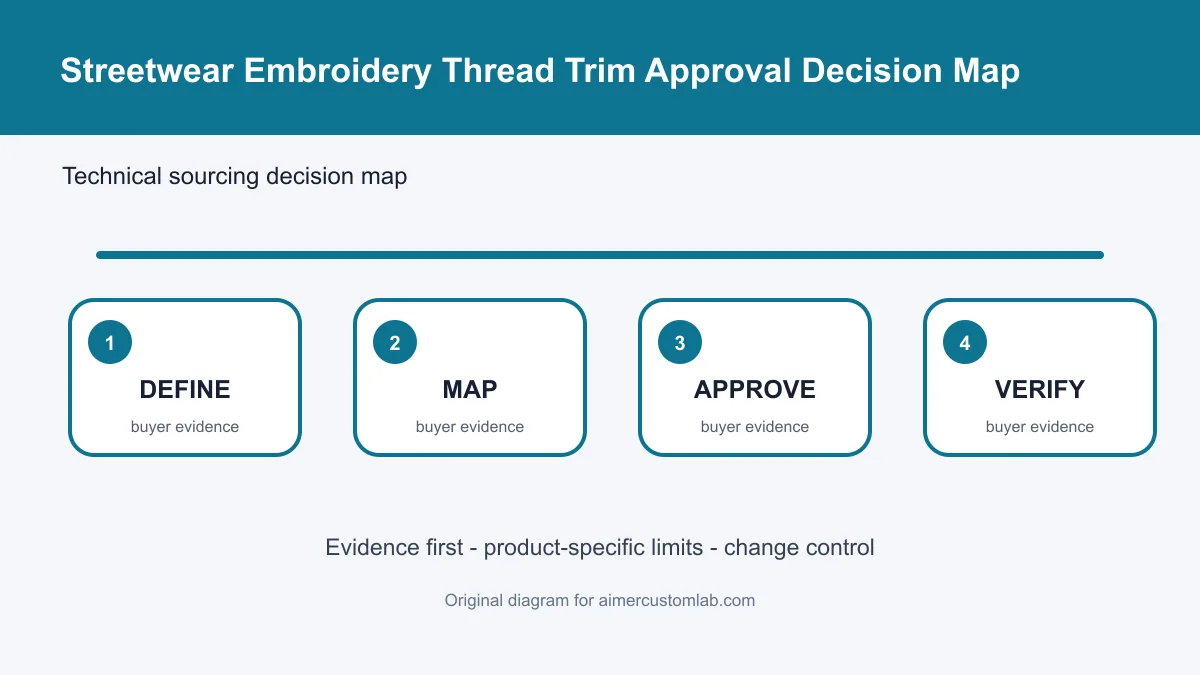
Streetwear Embroidery Thread Trim Approval Guide
A clean front can hide loose ties, birdnesting, long reverse-side jumps, sharp backing corners or manual cuts that nick the garment. Conversely, aggressive trimming can weaken stitches, open small lettering or damage brushed and knitted surfaces. Streetwear buyers need a visible finishing standard that protects both the intended appearance and the embroidery structure across repeated production. For OEM, ODM, wholesale, teamwear and private-label buyers, streetwear embroidery thread trim approval is a product-control decision, not a marketing label. This guide makes no unsupported claim about price, MOQ, capacity, lead time, certification, licensing or factory qualification; those facts require confirmation for the exact order.
Quick Answer
Streetwear embroidery thread trim approval should define where trims occur, how tie-ins and tie-offs are secured, acceptable visible tails, back appearance, jump-thread removal, fabric protection, and final cleaning. Inspect the exact design on the production garment from front, back, edge, and worn views. Record machine, needle, thread, backing, tension, finishing method, and any manual repair.
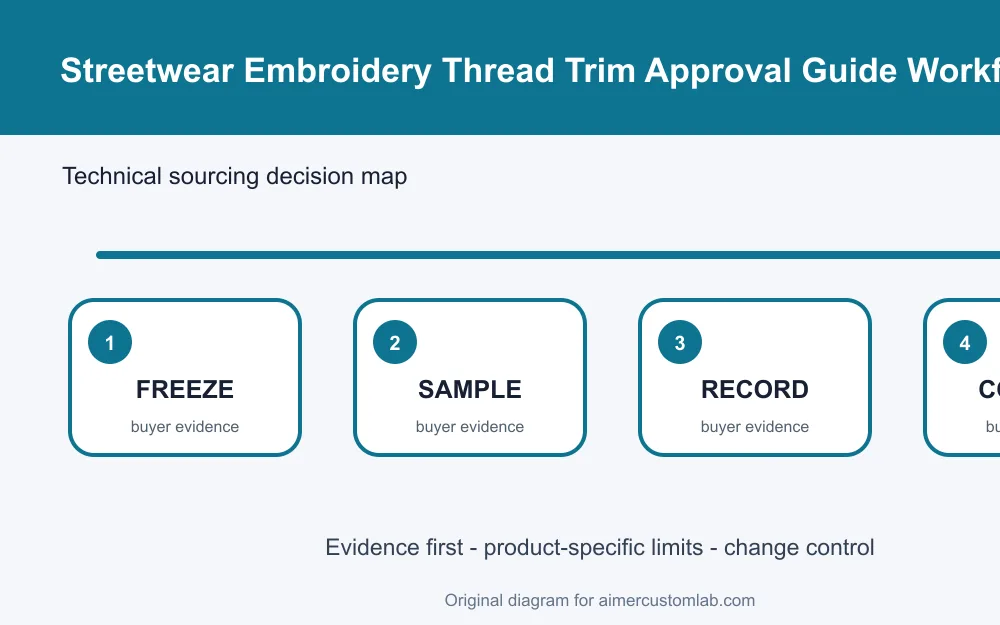
What is streetwear embroidery thread trim approval?
Embroidery thread trim approval is the controlled sign-off for automatic and manual thread removal and the resulting finish around an embroidered design. It includes trim commands in the digitized file, machine trimming behavior, tie-in and tie-off security, jump threads, visible tails, bobbin exposure, reverse-side finish, backing cleanup and protection of the garment. It is not a request to cut every visible thread as close as possible.
What should buyers compare for streetwear embroidery thread trim approval?
Direct answer: Compare the variables that can change both the visible outcome and the sourcing decision. The matrix below converts a subjective discussion into named inputs, evidence and common failure risks.
| Decision point | What to define | Why it matters | Common mistake |
|---|---|---|---|
| Design path | Color changes, jumps, trim commands, sequence, tie-ins and tie-offs | Digitizing controls where the machine stops and secures thread | Treating every tail as an operator problem |
| Machine condition | Trimmer type, knife, hook, thread path, clamp, maintenance and settings | Worn or incorrect components can create incomplete or inconsistent trims | Hiding machine faults with manual scissors |
| Material system | Garment knit, nap, thread, needle, bobbin, backing and topping | The assembly affects security, visibility and risk of damage | Approving on a flat woven test piece |
| Finishing method | Front and back cleanup, tools, tail length, backing edge and repair rule | Consistent finishing prevents damage and visual variation | Cutting against the garment face without support |
| Approval evidence | Front, back, edge and worn views before and after care | One front photograph cannot prove secure and safe finishing | Ignoring reverse-side bulk and wearer contact |
How should buyers build the approval workflow?
Direct answer: Freeze the question and inputs, use production-representative garments and files, record the method and intermediate behavior, inspect the finished product, and connect approval to a controlled revision.
- Map every intended jump, color change, automatic trim, tie-in and tie-off in the approved digitized file and identify high-risk small details.
- Record the production garment, thread, needle, bobbin, backing, topping, hooping and machine head before running representative samples.
- Inspect machine trimming behavior for incomplete cuts, pullouts, birdnesting, skipped stitches, loose loops or repeated manual intervention.
- Define front and back finishing with suitable tools, garment support, acceptable visible tails, backing cleanup and a rule that prevents fabric nicks.
- Photograph the finished design from front, reverse, edge and worn views under consistent light and record every manual repair or exception.
- Complete the agreed care and gentle handling checks, then inspect tie security, unraveling, tails, puckering, comfort and surface damage.
- Lock the digitizing revision, machine route, finishing standard, approved sample, defect language and change triggers for bulk QC.
How should common failures be diagnosed?
Short thread tails pull to the front after handling: what should be checked first?
Direct answer: Review tie-off security, tension, trim timing, thread path and design sequence before simply cutting the visible tail again. Preserve the original symptom, product identity and settings before correction. Change one controlled variable at a time and repeat the same inspection, because a cosmetic adjustment without a traceable cause cannot support reliable bulk production.
Manual trimming leaves tiny holes in a knit hoodie: what should be checked first?
Direct answer: Stop cutting against unsupported fabric, assess tool and backing-removal practice, and quarantine garments with structural damage. Preserve the original symptom, product identity and settings before correction. Change one controlled variable at a time and repeat the same inspection, because a cosmetic adjustment without a traceable cause cannot support reliable bulk production.
One machine head leaves long jumps while others pass: what should be checked first?
Direct answer: Compare trimmer, knife, hook, clamp, thread path, settings and maintenance on that head using the same approved design and materials. Preserve the original symptom, product identity and settings before correction. Change one controlled variable at a time and repeat the same inspection, because a cosmetic adjustment without a traceable cause cannot support reliable bulk production.
What belongs in the purchase specification?
Direct answer: The specification must let another qualified person reproduce the approved product without guessing. For streetwear embroidery thread trim approval, include the following controlled fields and link each field to the relevant sample or record.
- digitized file and trim-command revision
- garment, thread, needle, bobbin and backing identities
- machine, head, trimmer and maintenance status
- tie-in, tie-off and jump-thread rules
- front and reverse finishing method and tools
- visible-tail and manual-repair acceptance language
- post-care security, comfort and damage evidence
- approved sample, exception log and reapproval triggers
How should sampling cover size and production risk?
Direct answer: Choose samples by variation and consequence, not convenience. Include justified small, middle and large sizes, risk colors, artwork geometries, placements, material lots or wearer configurations that can change the decision. State whether each result covers only one specimen, a controlled family or a defined production lot.
How should bulk inspection and change control work?
Direct answer: Convert the approved target into measurable checkpoints, inspection timing, sample selection, defect language, disposition and escalation. Preserve the sealed sample or approved visual standard and train inspectors on the same landmarks and terminology used during development.
What evidence should accompany the approval?
Direct answer: Retain product and specimen identities, source files, revisions, conditions, raw observations, measurements, photographs, individual results, failure modes, corrective actions, owner, date, disposition and approved sample.
What are the evidence boundaries?
Barudan identifies unbalanced tension, flagging and hook issues as causes of birdnesting and documents thread-path, needle, burr, clamp and trimmer-related troubleshooting. Printful distinguishes embroidery from screen printing by process and use, while The Couture Club presents a mixed embroidery and print hoodie with concrete garment entities. These sources support diagnosis but do not define one universal tail length, trim count, machine setting or acceptance tolerance for every design.
Results apply to the specimens, files, methods and conditions evaluated. They do not automatically cover every size, color, lot, factory line, climate, wearer, competition, care behavior or destination. Confirm current external rules and intellectual-property permissions with the responsible authority for the exact market and use.
Which related products can this guide support?
- Review custom hoodie sets with branding and packaging when applying this control to a specific sourcing brief.
- Review custom zip hoodie sets for private labels when applying this control to a specific sourcing brief.
- Review custom oversized private-label T-shirts when applying this control to a specific sourcing brief.
These descriptive internal links show relevant product categories only. They do not assert a fixed construction, price, MOQ, capacity, certification or delivery time. Send the actual specification for order-specific confirmation.
Buyer checklist
Use this checklist to keep streetwear embroidery thread trim approval aligned from development through final inspection.
- Trim map and digitizing revision approved
- Machine and trimmer condition recorded
- Exact garment and embroidery system sampled
- Front and back finishing defined
- Fabric protected during cleanup
- Manual repairs traceable
- Post-care security checked
- Approved sample and defects controlled
Which sources informed this guide?
The following current peer and authority pages informed the information architecture, entity definitions and decision boundaries. Their wording was not copied, and commercial or product claims were not transferred to this supplier.
- Printful embroidery versus screen printing guide
- The Couture Club Padel and Palomas hoodie page
- Barudan America embroidery troubleshooting FAQ
Research-to-page evidence map
This table shows how qualified high-traffic or fast-growth peer learning changed the public article and where the result is visible.
| Research finding | Specific application | Visible evidence |
|---|---|---|
| The peer defines the decoration processes and explains where embroidery suits a product before showing the production route. | SEO: organized streetwear embroidery thread trim approval around a buyer decision matrix and explicit failure risks. | |
| What should buyers compare for streetwear embroidery thread trim approval? | ||
| The peer connects embroidery and print methods with a specific hoodie fabric, fit, weight and construction. | ||
| AEO: placed a direct 40–70 word answer before detail and followed it with a controlled approval route. | Quick Answer | |
| Peer content names product entities, use cases and constraints instead of treating decoration as one generic choice. | GEO: defined the core entity, named conditions and limits, cited current sources, and separated verified facts from order-specific decisions. | What are the evidence boundaries? |
Frequently asked questions
Should every thread visible on the back be removed?
Answer: No. Define security, comfort and appearance requirements without cutting structural stitches or damaging the garment.
Can manual trimming replace machine maintenance?
Answer: No. Repeated incomplete trims or birdnesting should trigger root-cause review of the machine, thread path, tension, needle, hook and design.
Why inspect the reverse side?
Answer: It can reveal loose ties, long jumps, bobbin problems, backing hazards, bulk and potential wearer discomfort hidden from the front.
When is a manual repair acceptable?
Answer: Only under a documented method that restores the approved appearance and security without concealing garment damage; record the exception.
What changes require reapproval?
Answer: Reapprove digitizing, thread, needle, bobbin, backing, garment, machine, trimmer, tension, hooping or finishing changes that may affect the result.
Conclusion: what should a buyer do next?
streetwear embroidery thread trim approval should finish as a documented, product-specific approval rather than a generic promise. Keep the controlled files, measured target, representative sample, method, raw observations, photographs, corrective action and change triggers together. That record makes repeat orders faster and reduces disputes caused by incomplete specifications.
Inquiry CTA: Send your tech pack, intended market and use, size range, pattern or garment reference, material and component details, artwork or roster, care route, packaging route and requested evidence. Ask the team to confirm feasibility, sample details, MOQ, lead time, capacity and available supporting records for the exact order.