Oversized T-Shirt Sleeve Pitch Guide
Oversized T-shirt sleeve pitch determines how a sleeve hangs from the dropped shoulder and how it follows the wearer’s resting arm. It is a pattern relationship, not simply a sleeve angle drawn for appearance. When pitch, armhole, shoulder drop and sleeve cap do not work together, the garment can twist, form diagonal drag lines, lift at the hem or feel restrictive despite a generous chest width.
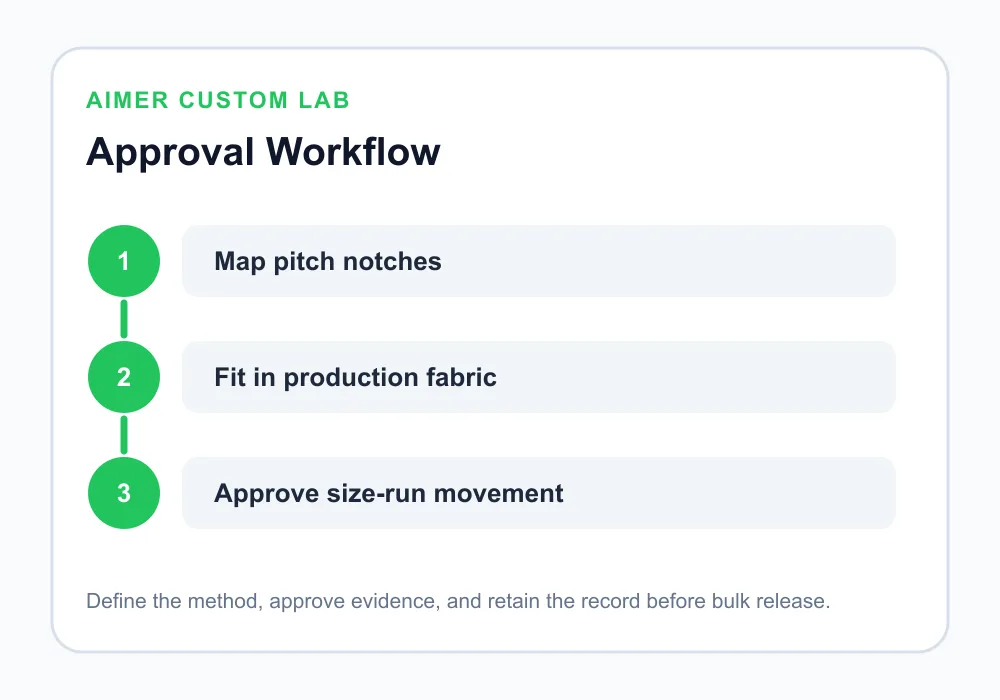
Quick Answer: Specify oversized T-shirt sleeve pitch as part of the complete body-and-sleeve block. Match front, back and shoulder notches, walk the sleeve seamline against the armhole, test the production fabric on a representative wearer, and approve movement plus the intended relaxed silhouette across the size range before bulk cutting.
What is oversized T-shirt sleeve pitch?
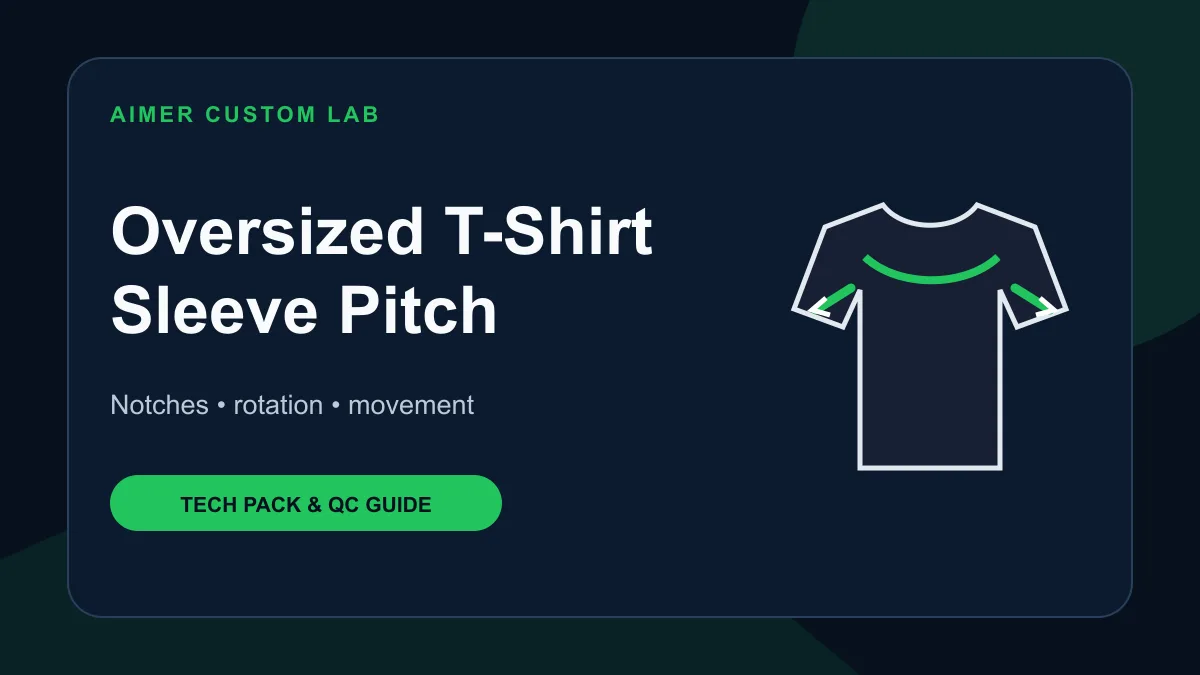
Oversized T-shirt sleeve pitch is the rotational orientation of the sleeve in relation to the garment body. The front and back pitch notches help the sewing team position the sleeve cap in the armhole. Correct pitch lets the sleeve fall in the intended direction when the wearer stands naturally. Incorrect pitch often produces front or back drag lines even when sleeve width and length meet the measurement chart.
Pitch differs from sleeve slope, cap height and bicep width, although all four interact. A low cap may support a relaxed shape, while a high cap can look cleaner but reduce easy movement if the armhole and bicep are not balanced. The Threads sleeve-cap and armscye guide explains that pitch notches locate the sleeve to match the natural arm angle and that changes to the armhole must be reflected in the sleeve.
Why does sleeve pitch matter in an oversized fit?
An oversized block moves the shoulder seam away from the anatomical shoulder. That design choice changes the point from which the sleeve appears to hang. If a factory simply enlarges a regular-fit T-shirt without rebalancing the sleeve, the sleeve may rotate, the underarm may collapse or the hem may rise excessively during reach. Heavy jersey can make these defects more visible because it holds folds instead of falling softly.
The intended wearer posture also matters. A sleeve pitched too far forward may crease behind the arm; a sleeve pitched too far back may create drag lines at the front. Streetwear buyers should describe the desired stance and silhouette with fit photos, but the approved pattern and measurement method remain the production record.
| Observation | Possible pattern cause | Sample check | Buyer response |
|---|---|---|---|
| Diagonal folds at front sleeve | Sleeve may need forward rotation or rebalance | Compare neutral posture and arms-forward view | Mark drag direction and request pattern review |
| Folds behind upper arm | Sleeve may be pitched too far forward | Check back view without pulling fabric | Review notch placement and sleeve rotation |
| Hem rises strongly with arm lift | Armhole, cap and sleeve width may be unbalanced | Use a repeatable overhead movement test | Assess the whole block, not pitch alone |
| Twisted sleeve seam | Pitch, grain or sewing alignment may be wrong | Compare flat garment and on-body hang | Check pattern grain, notches and sewing feed |
How should the tech pack define oversized T-shirt sleeve pitch?
A finished-garment chart cannot fully define pitch because rotation is built into pattern geometry. The tech pack should combine measurements, construction diagrams and an approved sample reference. State whether the style uses a set-in sleeve, dropped shoulder or another construction, then identify the exact points of measure.
What should be recorded?
- Front, back and shoulder sleeve notches and their matching body notches.
- Shoulder drop, armhole depth and front/back armhole seamline information.
- Sleeve cap height, bicep width, sleeve opening and underarm length.
- Grainline direction and any intended sleeve seam rotation.
- Fabric composition, knit structure, weight, stretch direction and finish.
- Fit model or body reference, styling posture and intended layering.
- Approved sample code, pattern version and wash condition.
- Photo views that show front, side and back sleeve hang.
Use the oversized T-shirt measurement guide to define measurement landmarks consistently. A pattern annotation such as “rotate sleeve forward” is not sufficient unless it is connected to a revised pattern version and approved physical sample.
How do you inspect sleeve pitch during sampling?
Inspect the sample after it has rested and, where specified, after the agreed wash process. First confirm the correct size, fabric lot and pattern revision. Lay the garment flat without stretching to see whether the sleeve seams, hems and grain appear symmetrical. Then move to an on-body review.
- Neutral stance: Let both arms hang naturally. Photograph front, side and back views without styling the sleeve by hand.
- Arms forward: Check upper-back comfort, front drag lines and whether the sleeve rotates.
- Arms overhead: Record hem lift and underarm restriction using the same movement for every size.
- Cross-body reach: Observe the back armhole and whether the sleeve seam pulls toward the elbow.
- Layering test: If the T-shirt is designed as a pump cover or outer layer, test over the intended base garment.
- Repeat after care: Recheck pitch after laundering because shrinkage or torque can change the apparent sleeve hang.
Do not correct the visual problem by stretching the sample, steaming it into place or shifting the shoulder seam for photography. Record the natural result and send annotated images with a concise correction request through the streetwear sampling process.
How do fabric and construction change sleeve pitch?
A lightweight jersey can mask small imbalances because it collapses softly. A dense, heavyweight single jersey may show sharper diagonal folds. Rib, interlock and fabrics with elastane recover differently, while garment washing can alter seam torque and length. Evaluate the same pattern in the intended production material rather than approving pitch on a substitute fabric.
Sewing also affects the result. Uneven differential feed, stretched armhole edges, mismatched notches or inconsistent seam allowance can create symptoms that resemble a pattern error. Separate pattern diagnosis from sewing diagnosis by checking paper seamlines, a clean sewing trial and the finished sample.
How should sleeve pitch be graded across sizes?
Grading must preserve the design relationship rather than add the same amount to every point. Shoulder drop, chest width, armhole depth, sleeve cap and bicep width should form a coordinated rule. Extended sizes may need a split rule if the standard progression creates excessive underarm depth or changes the sleeve angle.
Review at least representative smaller, base and larger sizes when the range is broad. Overlay pattern pieces where possible and compare the same movement sequence. A base sample can approve the creative direction, but a size set confirms that oversized T-shirt sleeve pitch remains stable throughout the range.
What should a buyer include in the approval checklist?
- Confirmed fabric, wash and finishing condition.
- Current body and sleeve pattern revision.
- Matching notch and grainline check.
- Flat measurements for armhole, sleeve and shoulder points.
- Neutral, forward-reach and overhead movement photographs.
- Comments separated into pattern, sewing and styling issues.
- Representative size-set review and written tolerance method.
- Signed approval sample retained for bulk comparison.
Frequently asked questions
Is sleeve pitch the same as sleeve angle?
Not exactly. The visible angle is an outcome. Pitch describes how the sleeve is rotated and positioned in relation to the armhole, not just how the sleeve edge looks on a sketch.
Can sleeve pitch be controlled with one measurement?
No. It is a pattern relationship supported by notches, seamline balance, grain direction, measurements and an approved sample.
Why does an oversized sleeve twist after washing?
Possible causes include knit torque, uneven shrinkage, seam feeding, grain misalignment or pitch imbalance. Compare before-and-after measurements and inspect fabric skew before changing the pattern.
Should every oversized T-shirt have a forward sleeve pitch?
No. The correct direction depends on the block, wearer posture and design intent. Approve it through a production-intent sample rather than using a universal rule.
Can a dropped shoulder use a regular-fit sleeve?
It may be a starting reference, but it must be rebalanced for the new shoulder position, armhole and intended volume before approval.
When is sleeve pitch ready for bulk production?
When the pattern version, fabric, movement test and representative size set are approved and the sewing team can reproduce the same notch alignment consistently.
Conclusion: approve how the sleeve hangs and moves
Reliable oversized T-shirt sleeve pitch comes from coordinated pattern geometry, production fabric and repeatable fit review. Define the notches, test natural posture and movement, separate sewing faults from pattern faults, and confirm the size rule before cutting. Send Aimer Custom Lab your tech pack, target fabric, size range and annotated fit photos so the sampling requirements can be reviewed before quotation and production planning. A documented oversized T-shirt sleeve pitch reference also helps the sewing team reproduce the approved result.