Streetwear Sample Comment Sheet Guide
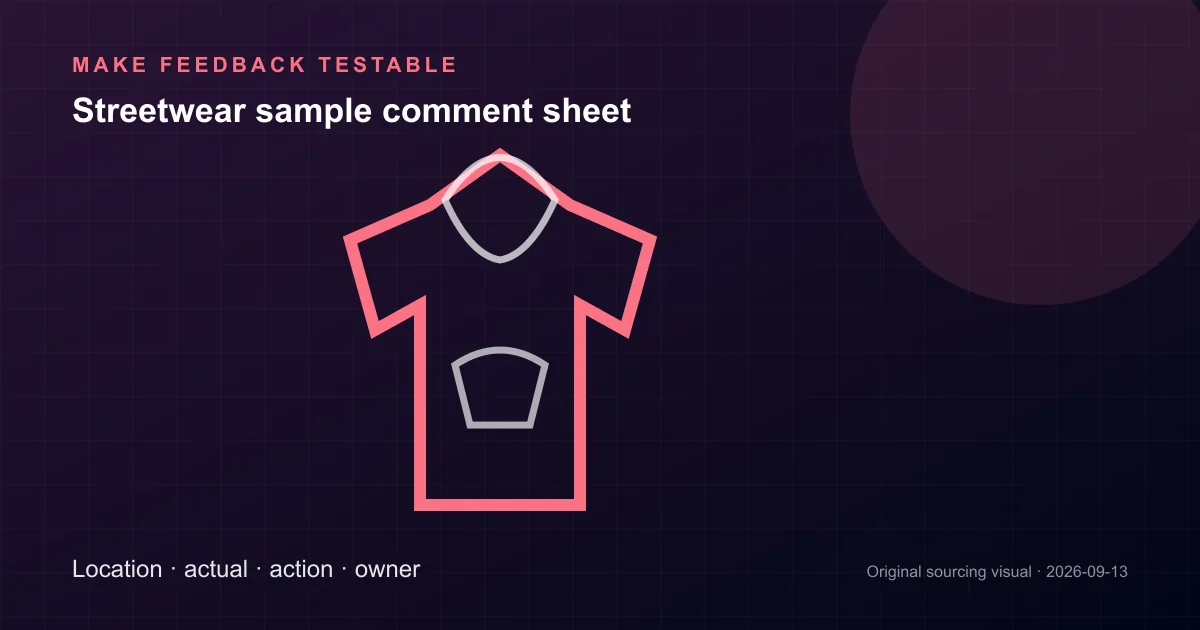
Quick Answer: A streetwear sample comment sheet converts sample observations into controlled corrections. Give each issue an ID, garment location, requirement, actual result, photo or measurement, severity, requested action, owner, due date and decision. Link accepted comments to the next tech-pack revision, then verify each correction on the next sample before approval.
A streetwear sample comment sheet is most valuable when it removes interpretation. “Make the hoodie boxier” expresses direction, but it does not tell a pattern maker which measurement or shape to change. A measurable, photographed and prioritised comment creates an action that can be checked.
Use the sheet within the streetwear clothing sampling process and connect its accepted changes to the garment measurement tolerance guide. The physical sample, approved tech pack and comment record should tell one consistent story.
What is a streetwear sample comment sheet?
It is a structured review record for one identified sample. It compares intended requirements with observed fit, measurement, material, construction, artwork, trims, labels and packaging. It also records the decision and what evidence will close each issue.
The sheet is not only a defect list. It can approve features that should remain unchanged, distinguish buyer preference from nonconformity and show whether another physical sample is required.
Which fields make a sample comment actionable?
| Requirement | Approved specification or visual standard | Memory of an earlier sample |
How should the physical sample be identified?
Photograph the whole front, back and relevant interiors with an identity card showing style, colour, size, sample type and tech-pack revision. Record condition, wash history and whether measurements were taken after conditioning. A washed sample cannot be directly compared with an unwashed one unless that difference is intentional.
Keep one sample-review session tied to one controlled file. If multiple reviewers work separately, consolidate comments before sending them to the supplier and resolve conflicts internally.
How are fit comments made measurable?
State the pose, wearer or form, layer underneath and intended silhouette. Then connect the visual issue to points of measure, balance, pitch or shape. For example, excess sleeve twist may require review of sleeve pitch and armhole geometry, not simply a smaller sleeve width.
The fit-sample feedback guide from Huilin Fashion recommends comparing the physical garment with documented targets and using photos as support while retaining physical inspection and measurement. Apply that approach without copying its wording or assuming its commercial claims.
How should photos and annotations be used?
Use one overview photo and close-ups that preserve orientation. Place a ruler only when its position and zero point are visible. Add arrows, circles and comment IDs without covering the feature. State whether a line shows a requested new position or the current defect.
Do not rely on screen colour for shade approval. Lighting, camera settings and displays can shift colour. Link the comment to an identified swatch, lab dip, strike-off or other agreed physical standard.
Which comment categories help the factory respond?
- Identity: wrong style, colour, size or revision
- Fit and measurement: POM, balance, ease and grading
- Material: fabric, rib, lining, hand feel and shade
- Construction: seam, stitch, pocket, hood and reinforcement
- Artwork: print, embroidery, placement, scale and colour
- Trims: zipper, drawcord, eyelet, snap and label
- Packaging: fold, hangtag, barcode, bag and carton
- Compliance/test: missing evidence or failed requirement
How should severity and decisions be separated?
Severity describes impact; the decision describes the next action. A minor cosmetic issue may still require correction before photography, while a severe safety or legal issue can stop the sample. Define categories in the review procedure rather than applying labels inconsistently.
| Accept | Requirement is met | Carry reference into release | ||
| Revise and resample | Physical effect must be reviewed | Next sample linked to comment ID | ||
What is the review-to-revision workflow?
- Confirm sample identity and review conditions.
- Measure required POMs using the agreed method.
- Inspect fit, construction, artwork, trims and labels.
- Assign one ID and evidence set to each issue.
- Agree the correction, owner, priority and due date.
- Resolve conflicting buyer comments before release.
- Update the affected tech-pack fields and revision log.
- Verify every open comment on the next sample or production gate.
How should the supplier response be recorded?
Add a response column for feasibility, proposed method, expected evidence and questions. The supplier should not silently reinterpret a request. If increasing chest width affects print placement, pocket position or fabric consumption, that impact should be visible before the next sample is cut.
The buyer then accepts, modifies or rejects the proposed action. Freeze that decision with the comment-sheet revision and incorporate it into the tech pack. This two-way record is more reliable than separate chat threads and gives the next reviewer a clear reason for every visible change.
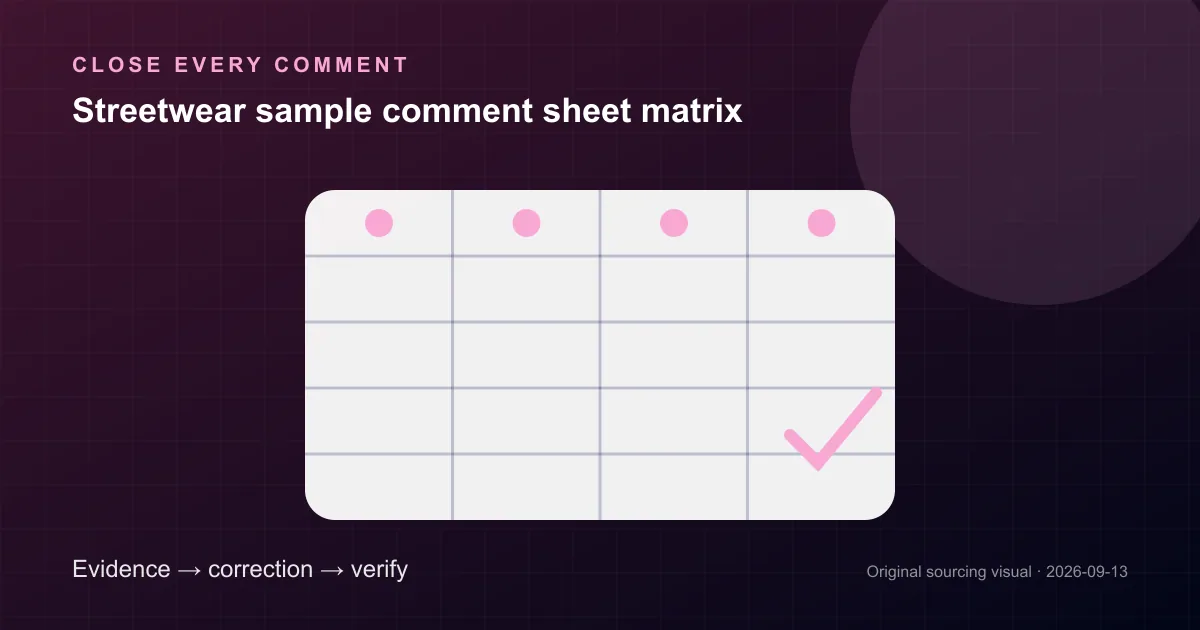
Set one status vocabulary for all comments: open, answered, accepted, incorporated, verified or closed. A comment is not closed merely because the supplier replied. Closure requires the agreed evidence, such as an updated pack page, measurement record, decorated panel or next physical sample, reviewed by the authorised owner.
Streetwear sample-review checklist
- Correct style, colour, size, stage and revision
- Front, back and detail photos with identity card
- Conditioning and wash history recorded
- Measurements compared with targets and tolerances
- Fit assessed in the intended wearing context
- Fabric, trims, artwork and labels matched to approvals
- Each issue has one ID, owner and decision
- Accepted changes entered into the tech pack
- Next-sample verification plan complete
Frequently asked questions
Can video replace a physical sample review?
Video can clarify movement and construction, but it may not prove measurements, hand feel, colour or hidden details. Use it as supporting evidence when a physical review is required.
Should comments say how to fix the pattern?
The buyer should define the required result and critical method where necessary. The pattern maker can propose the technical correction, which should then be documented and verified.
Can several issues share one comment?
Separate them when they have different locations, owners or closure evidence. Atomic comments are easier to track.
What if a measurement passes but fit looks wrong?
Check balance, pitch, shape, measurement method and whether the specification captures the intended silhouette. A numeric pass does not prove all aspects of fit.
Who signs off the sample?
The brand should name authorised reviewers for fit, design, technical and commercial decisions. The supplier confirms feasibility and records its response.
When can a correction skip another sample?
Only when the risk and verification route are explicitly accepted. Colour, fit, structural construction and major placement changes commonly need physical evidence.
Conclusion: turn feedback into verifiable instructions
A streetwear sample comment sheet should identify the sample, locate each issue, show evidence, define the correction and close the loop in the next revision. This protects both design intent and factory execution. Share the garment type, current tech pack, sample stage, photos and open decisions through the Aimer Custom Lab contact page to confirm an order-specific development route.