Golden PP Sample Release Checklist for Streetwear
Quick Answer: A golden PP sample release checklist confirms that the pre-production garment and the active production files describe the same streetwear product. Freeze fit, measurements, fabric, colour, wash, decoration, construction, trims, labels and packaging; record every open condition; and do not authorise bulk cutting until the required evidence and approvals are linked.
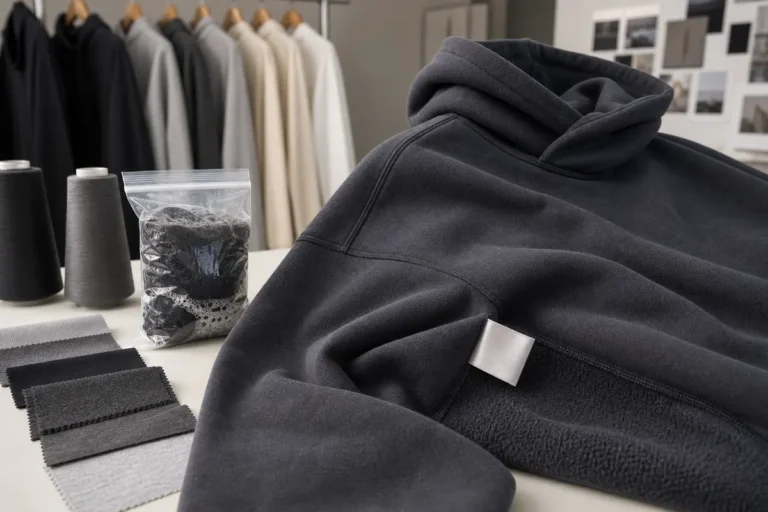
A pre-production sample may look excellent while still carrying a sample-only fabric, temporary label or artwork placed from an outdated file. Streetwear adds silhouette-sensitive details such as dropped shoulders, oversized ease, hood balance, heavyweight handfeel and wash variation. The golden sample becomes useful only when its identity and limits are documented and the factory can reproduce the same approved route.
What is golden PP sample release checklist?
A golden PP sample release checklist is the final controlled review that identifies which pre-production sample and technical records may serve as the production reference. It records style, sample ID, size, colourway, tech-pack revision, pattern, measurement chart, BOM, fabric and trim references, wash or decoration route, label and packaging versions, reviewer, decision date, open conditions and change triggers.
“Golden” does not mean a sample is universally perfect or certified. It means the named sample is the approved comparator for a defined production scope. The checklist does not invent MOQ, price, sampling time or performance claims; confirm those project-specific details with the supplier.
Why should buyers control golden PP sample release checklist?
The checklist converts visual approval into a reproducible and limited production instruction. Apparel PP guidance consistently treats measurements, fabric, colour, decoration, labels and packing as separate approval fields. Educational apparel material also describes pre-production samples as using intended fabrics, trims and tags before actual production. Linking those fields prevents a photographed sample from being mistaken for approval of details that were never represented.
If a component is temporary or an approval remains conditional, say so. A conditional PP sample can sometimes proceed to a defined next action, but it should never silently become evidence that every production input was final.
Which decisions belong in the control record?
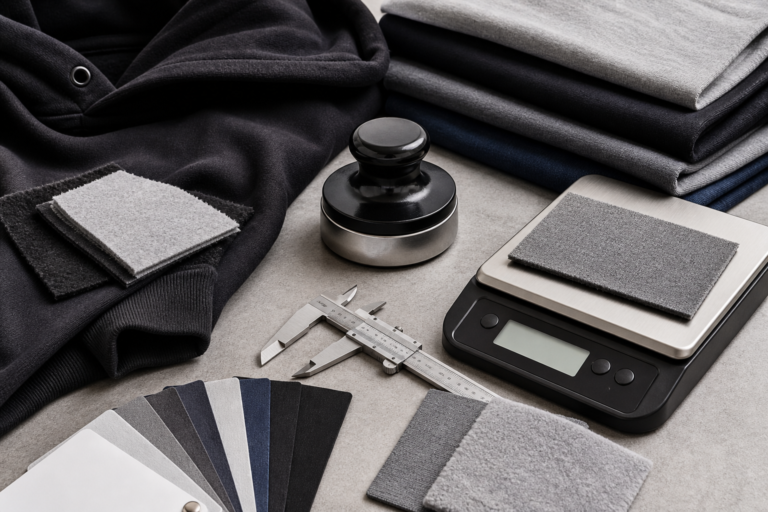
Review the garment as a system and state which evidence proves each decision. The matrix separates the decision, the evidence needed to support it and the action that follows.
| PP block | Release question | Required evidence |
|---|---|---|
| Identity and fit | Is this the intended style, base size, silhouette and measurement revision? | Sample ID, POM report and fit decision |
| Material and handfeel | Are fabric, GSM, colour, rib and trims production-intent? | BOM references, swatches and applicable tests |
| Wash or decoration | Does the sample use the intended process and approved artwork? | Recipe or process ID, proof and garment result |
| Construction | Do seams, openings, pockets, hood and hardware match the active pack? | Construction review and defect record |
| Labels and packaging | Are brand, care, size, hangtag, bag and pack method represented? | Approved assets or explicit open-condition list |
| Release state | Who authorised bulk and what changes reopen approval? | Signed decision, conditions and trigger list |
A blank cell is not approval. Mark approved, rejected, conditional, not represented, not applicable or awaiting evidence and identify the owner of any open condition.
Which sources define the evidence boundary?
Use current apparel PP checklists, sample-stage guidance and documented-information principles. Meiting’s PP checklist separates measurements, materials, decoration, labels, packing and written approval. Arcus distinguishes PP samples from earlier fit samples and frames the decision as bulk readiness. An Indian vocational textile source states that PP samples use intended fabrics, trims and tags and precede actual production. These are structural inputs, not proof of this factory’s commercial facts.
Review the Meiting PP sample checklist, Arcus apparel sample approval guide and the PSSCIVE apparel training text. Confirm the production route with the selected manufacturer.
How should buyers run the golden PP sample release checklist workflow?
Identify the sample and files, inspect the complete garment, close comments and release one frozen evidence set. Each step should create a dated record tied to the style, colourway, size range, active revision, owner and decision.
- Confirm the style, colourway, PP sample ID, sample date and represented size.
- Verify the active tech pack, pattern, measurement chart and change log.
- Measure the agreed POMs and assess the intended oversized or structured silhouette.
- Confirm fabric, GSM, colour, handfeel, rib, trims and production availability.
- Review wash, print, embroidery, applique or other decoration against approved files.
- Inspect construction, symmetry, seam quality, openings, pockets, hood and hardware.
- Check labels, care content, hangtags, folding, bag and carton references.
- List every item not represented or approved only with a condition.
- Consolidate final comments, update the controlled pack and obtain written release.
- Seal or identify the approved sample, distribute the release and define change triggers.
Keep one retained reference with the buyer where practical and one controlled factory reference. Photographs support identification but do not replace a physical sample where handfeel, fit, wash or construction is part of the decision.
How should the result be interpreted?
The release is valid only for the named sample, files, materials, processes and colourways reviewed. A fabric substitution, artwork change, wash adjustment, measurement revision or new packaging component may reopen only the affected blocks, but the record must show which evidence remains valid.
| Finding | Meaning | Buyer action |
|---|---|---|
| All required fields represented and approved | The sample supports the defined production release | Authorise bulk with named references |
| Fit approved; bulk fabric not represented | The physical reference is incomplete | Keep material approval open |
| Conditional label or pack change remains | Product may be ready but pack release is not | Hold affected downstream action |
| Relevant input changes after approval | The golden reference no longer covers that field | Repeat impacted review |
Do not stamp “approved” over unresolved comments. Use a release status that preserves conditions and prevents the production team from guessing which parts were final.
What common failure modes should be prevented?
The biggest risk is approving the appearance of one sample while its underlying production inputs remain ambiguous.
- Using sample-yardage fabric without recording the difference.
- Approving fit from photos without measurements.
- Leaving wash or print recipes unidentified.
- Treating temporary labels as final.
- Ignoring packaging until production is complete.
- Mixing comments from different sample revisions.
- Changing the tech pack after sign-off without reopening review.
- Keeping the golden sample where it can be used or damaged without control.
A sample identity label, signed checklist and linked files make the reference reproducible rather than ceremonial.
What belongs in the buyer checklist?
A factory team should be able to reproduce the approved product without relying on memory or private messages.
- Sample identity and revision are visible.
- Fit and measurements are signed off.
- Fabric, GSM and colour are production-intent.
- Wash or decoration evidence is linked.
- Construction matches the active pack.
- Trims and hardware are identified.
- Labels and care content are approved or conditional.
- Packaging scope is explicit.
- Open items have owners and deadlines.
- Change triggers and release authority are recorded.
Store the checklist with the PP sample photos, measurement report, BOM, artwork, label and packaging approvals so later inspection can compare like with like.
How were research findings applied to this guide?
The sources were converted into an original procurement control for this product category. No competitor wording, protected artwork, branded image or unsupported commercial claim was reused.
| Research finding | Specific application | Visible evidence |
|---|---|---|
| Meiting separates PP approval into measurable product blocks | Built six independent release blocks | PP control matrix |
| Arcus distinguishes fit and PP sample purposes | Prevented early-sample approval from becoming bulk approval | Definition and interpretation |
| PSSCIVE describes intended materials and trims in PP samples | Added production-intent material and component checks | Workflow steps four through seven |
| Prior site learning called for a golden-sample gate | Added open conditions and change triggers | Checklist and decision table |
The short direct answer, question headings and FAQ support AEO. Explicit entities, evidence limits and reproducible decision states support GEO without suggesting that the name “golden” is a certification.
Frequently asked questions about golden PP sample release checklist
Is a fit sample the same as a PP sample?
No. A fit sample focuses on fit and pattern development, while a PP sample should represent the intended production configuration as closely as the agreed process requires.
Can the PP sample be approved from photographs?
Only for fields that photographs can actually prove. Fit, handfeel, measurements and some construction or wash characteristics normally need stronger evidence.
What if one label is still temporary?
Record a conditional release or hold that field. Identify the final label proof and first-piece check required before bulk use.
Does every colourway need a PP sample?
The required representation is project-specific. Define which colours, washes and processes need separate evidence rather than assuming one sample covers all.
When is approval reopened?
After a change that can affect approved evidence. Typical triggers include fabric, fit, artwork, wash, construction, trim, label, packaging or production-route changes.
Conclusion: freeze one reproducible streetwear reference
A golden PP sample release checklist works when the physical garment and every active production record tell the same story. By separating fit, material, decoration, construction, labels, packaging and open conditions, brands can authorise bulk with clear limits and preserve the evidence needed for inline and final inspection.
Use this checklist with the streetwear sampling process, tech-pack version control guide and project enquiry page. Contact the sourcing team with the product type, intended market, active revision and required evidence so project-specific options can be confirmed.