Streetwear Change Propagation Matrix Guide
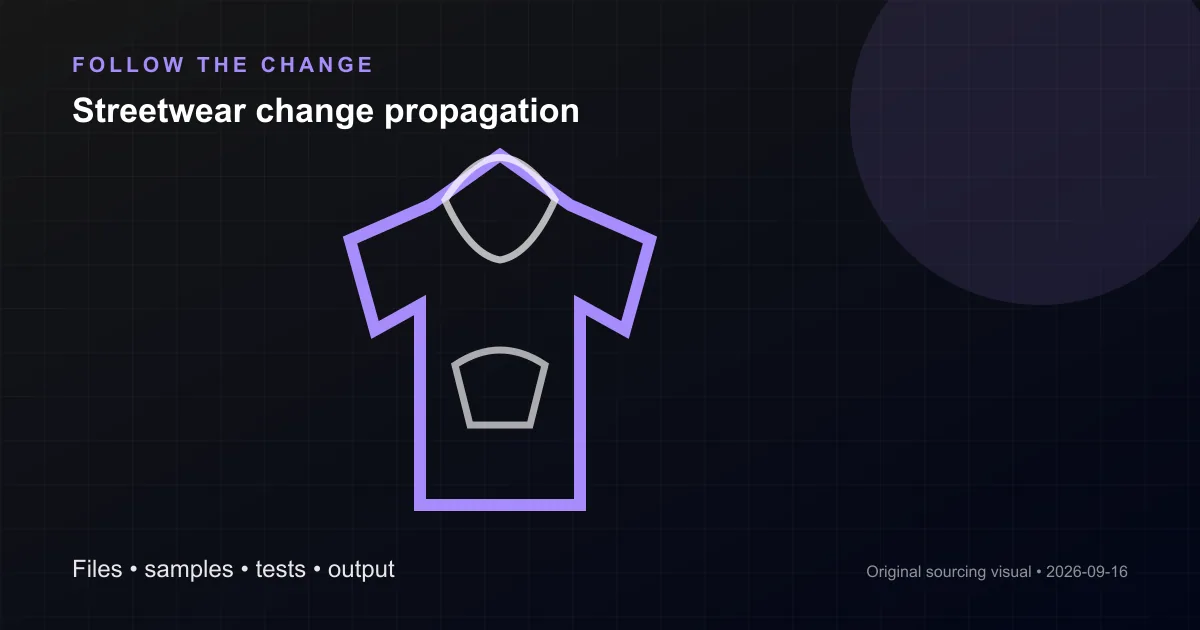
Quick Answer: A streetwear change propagation matrix shows which files, samples, tests, costs and production steps must be reviewed after one product decision changes. Start from the approved baseline, trace direct and downstream effects, assign reapproval requirements, issue a new controlled revision and obtain supplier acknowledgement before the changed instruction reaches bulk production.
Changing a hoodie fabric from one weight or finish to another is not only a BOM edit. It may affect shrinkage, fit, needle choice, print cure, hood drape, care text, cost and sample evidence. A propagation matrix prevents a “small” change from being updated in one file while obsolete assumptions remain everywhere else.
What is streetwear change propagation matrix?
A streetwear change propagation matrix is a dependency map that links a proposed or approved product change to every record, sample, process and decision it can affect. Rows identify change types; columns cover tech pack, pattern, grading, BOM, artwork, wash or decoration, labels, packaging, tests, costing, timing, purchase order, samples, inspection and factory acknowledgement.
The matrix does not mean every change requires every reapproval. It forces an explicit affected or not-affected decision with a reason. Commercial and timing effects must be confirmed rather than estimated, and any compliance conclusion should come from an authorised source for the destination market.
Why should buyers control streetwear change propagation matrix?
The matrix stops partial updates and makes the release impact visible before production acts. ISO change guidance calls for planned implementation, assigned responsibility, document control and review of unintended consequences. Apparel tech-pack guidance also treats the pack as a dynamic record that changes during development. Translating those principles into dependencies helps a streetwear team avoid mismatched patterns, artwork and BOMs.
A matrix is only as reliable as its baseline and owners. If the current production pack is unknown, pause release and rebuild document identity before evaluating the change.
Which decisions belong in the control record?
Trace the most common streetwear changes beyond their obvious first document. The matrix separates the decision, the evidence needed to support it and the action that follows.
| Change | Direct records | Possible reapproval |
|---|---|---|
| Fabric, GSM or finish | BOM, material spec, cost and supplier reference | Fit, shrinkage, wash, decoration, care and PP sample |
| Silhouette or measurement | Spec sheet, pattern, grading and consumption | Fit sample, size set, placements and packaging size data |
| Print or embroidery | Artwork, placement map, colour and process | Strike-off, garment sample, wash durability and cost |
| Wash treatment | Recipe, fabric state, measurements and care | Appearance standard, shrinkage, handfeel and repeatability sample |
| Trim or hardware | BOM, construction, colour and supplier | Functional sample, safety or performance check and cost |
| Label or packaging data | Artwork, SKU map, barcode and destination | Proof, first piece, pack sample and PO references |
Add a column for “reviewed—no change” and record the reviewer. An empty cell cannot distinguish a deliberate no-impact decision from a missed dependency.
Which sources define the evidence boundary?
Combine formal change-control guidance with apparel tech-pack and version-management practice. ISO auditing guidance highlights planned changes, roles, documented-information control and consequences. A PSSCIVE apparel text states that tech packs are dynamic and should be updated after product changes. Onbrand describes the tech pack as a production source with version history across development and approval. The matrix converts those observations into an original streetwear impact tool.
Review ISO change-control guidance, the PSSCIVE technical-package guidance and Onbrand tech-pack guidance. Confirm actual reapproval requirements with the factory and buyer.
How should buyers run the streetwear change propagation matrix workflow?
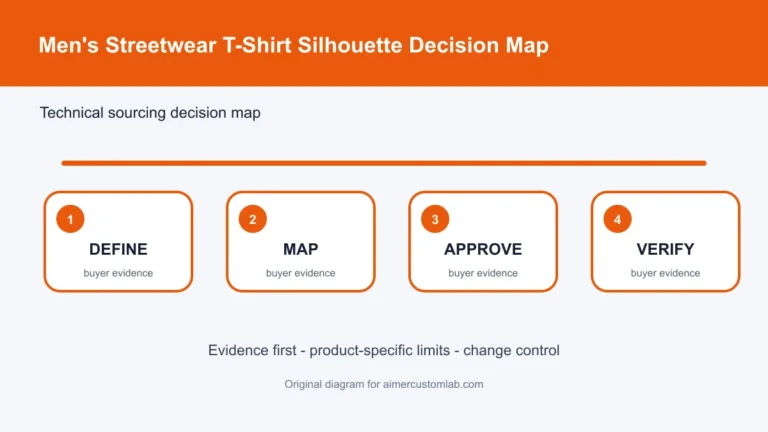
Freeze the baseline, evaluate dependencies, approve the change and release a new coherent evidence set. Each step should create a dated record tied to the style, colourway, size range, active revision, owner and decision.
- Record the change request, reason, requester and exact current baseline.
- Identify affected styles, colourways, sizes, orders and production states.
- Classify the change as proposed, approved, rejected or awaiting evidence.
- Review every matrix column and mark affected, unaffected with reason or unknown.
- Obtain verified technical, quality, commercial and timing impacts from owners.
- Define which samples, proofs, tests or inspections must be repeated.
- Approve or reject the change through the authorised roles.
- Update each affected record with one effective revision and change summary.
- Withdraw superseded production files and obtain supplier acknowledgement.
- Verify the first changed output and close the propagation record with evidence.
When cutting, decoration or packing has already started, add work-in-progress disposition and quantity fields. A change that is simple before bulk can require segregation, rework or split release later.
How should the result be interpreted?
Approval of the change request is not the same as completing propagation. The record should separately show decision approved, documents updated, files distributed, factory acknowledged and changed output verified. Production should not treat the first state as proof of the last four.
| Finding | Meaning | Buyer action |
|---|---|---|
| Change proposed; impacts unknown | The current baseline remains active | Collect evidence and contain premature use |
| Change approved; records partly updated | Propagation is incomplete | Hold release of the changed instruction |
| All affected records issued and acknowledged | Teams share one active version | Verify first output |
| First output fails a reopened criterion | Change implementation is not proven | Correct, revise or reject |
Do not delete superseded files; archive them away from active production use. The audit trail should show what changed, why, who approved it and when the new state became effective.
What common failure modes should be prevented?
The largest risk is assuming that editing the tech pack automatically updates every dependent record and physical process.
- Changing a measurement without reviewing grading.
- Changing fabric without reviewing shrinkage or print cure.
- Updating artwork but not colourway or size placements.
- Changing a zipper without updating construction and BOM.
- Approving a wash from one colourway for all colours without evidence.
- Editing care text without reviewing destination and material data.
- Leaving old attachments in chat or shared folders.
- Skipping first-output verification after release.
A disciplined dependency map reduces both overreaction and underreaction: teams repeat only checks that can be affected, but they do not miss hidden links.
What belongs in the buyer checklist?
Every approved change should end with one current production state and a traceable archive.
- Baseline and change request are identified.
- Affected styles and production state are scoped.
- Every dependency is reviewed.
- Unknowns remain visibly open.
- Commercial and timing impacts are verified.
- Required reapprovals are assigned.
- All affected files receive new revisions.
- Superseded copies leave active use.
- Supplier acknowledges the exact release.
- Changed output is verified before closure.
Use the matrix with the tech-pack revision log and sample-comment trail. The matrix shows impact; those records carry the detailed new instruction and evidence.
How were research findings applied to this guide?
The sources were converted into an original procurement control for this product category. No competitor wording, protected artwork, branded image or unsupported commercial claim was reused.
| Research finding | Specific application | Visible evidence |
|---|---|---|
| ISO requires planned change and review of consequences | Added scope, owners, unintended-impact review and effective state | Workflow and decision table |
| PSSCIVE describes tech packs as dynamic after changes | Added revision updates across technical records | Definition and checklist |
| Onbrand emphasises version history and a shared production source | Added withdrawal, acknowledgement and archive steps | Workflow steps eight and nine |
| Streetwear materials and silhouette create linked dependencies | Built fabric, fit, decoration, wash, trim and label rows | Propagation matrix |
Direct definitions and answer-first headings support AEO. Explicit dependency entities, state transitions and source boundaries support GEO without claiming that one matrix is a universal apparel standard.
Frequently asked questions about streetwear change propagation matrix
Does every change require a new PP sample?
No. Review the affected evidence and define proportionate reapproval; do not assume either that everything or nothing must be repeated.
What if the supplier says there is no impact?
Request the reasoning and applicable evidence. Mark reviewed—no change only when an authorised reviewer can support it.
Can the old tech pack be deleted?
No. Archive it outside active use so the approval and production history remain traceable.
When should the factory acknowledge a change?
After the complete affected release is issued and before acting on it. The acknowledgement should identify the exact revision.
What proves propagation is complete?
Updated records, withdrawn superseded files, supplier acknowledgement and verified changed output. Approval of the request alone is insufficient.
Conclusion: follow every change to its physical result
A streetwear change propagation matrix prevents one revision from leaving a trail of obsolete assumptions. By mapping dependencies, assigning reapproval, updating controlled records and verifying the first changed output, brands can improve a product without disconnecting fit, material, decoration, labels, cost and production evidence.
Use the matrix with the streetwear tech-pack version control guide, streetwear BOM guide and sample comment sheet guide. Contact the sourcing team with the product type, intended market, active revision and required evidence so project-specific options can be confirmed.