Streetwear Tech Pack Version Control Guide
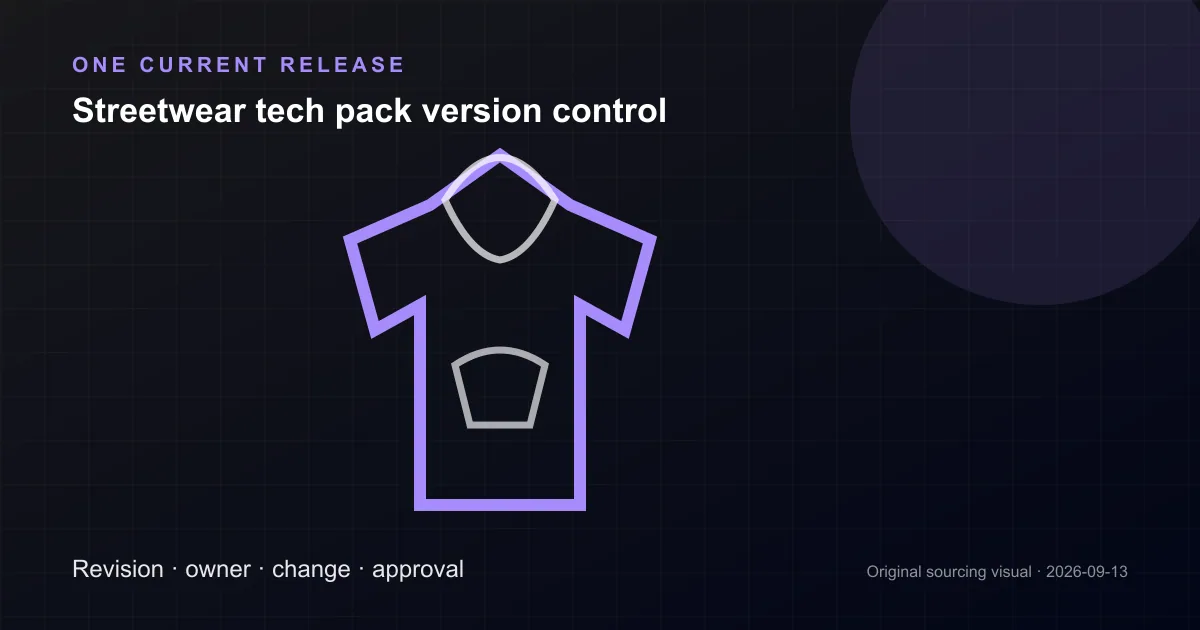
Quick Answer: Streetwear tech pack version control gives every approved specification a unique revision, release state, date, owner and change log. Put the identifier on every page, send one consolidated pack, remove superseded files from active use, link sample comments to the next revision, and require the factory to acknowledge the exact version before sourcing or production.
Streetwear tech pack version control protects an oversized tee, hoodie, tracksuit or jacket from being made with yesterday’s measurements and today’s artwork. It is not merely a filename convention. It is a release system connecting design changes, sample evidence, approvals and supplier actions.
Review the streetwear sampling process and Aimer Custom Lab’s custom menswear product range before defining the pack. Each product category needs its own measurements, construction and component detail even when the collection shares branding.
What is streetwear tech pack version control?
It is the practice of identifying, recording, approving and distributing revisions to a garment’s manufacturing specification. The current release must be easy to recognise; earlier files must remain traceable without remaining available for accidental production.
A tech pack usually covers product identity, technical flats, measurements, tolerances, bill of materials, colourways, construction, artwork, labels, packaging, testing and revision history. Version control tells users which combination of those pages is authorised.
Why is “FINAL-v7-new” not a control system?
Informal filenames do not explain what changed, who approved it or whether a supplier acknowledged the update. They also encourage teams to send isolated pages, creating hybrid packs in which measurements come from one date and labels from another.
The Wave PLM version-control guide defines the practice as tracking who changed what, when and why. A buyer can apply that principle in a PLM, controlled spreadsheet or document system, provided the release gate and history are explicit.
FieldExample logicPurposeStyle IDStable code, not marketing name alonePrevents cross-style confusionRevisionSequential approved identifierOrders changesRelease stateDraft, review, sample, bulk, obsoleteControls permitted actionEffective dateDate/time with time zoneSeparates closely timed updatesChange ownerNamed function or personCreates accountabilityApproval referenceDecision record and approverShows authorityAffected sectionsMeasurements, BOM, artwork, labelsDrives impact review
Which identifier belongs on every page?
Use the style ID, revision, release state, page number and effective date in a consistent header or footer. A page exported or printed on its own should still identify its parent pack. Include colourway or market scope when a page is not universal.
Keep the filename human-readable and sortable, such as style-revision-date-release. Do not put sensitive commercial data in a filename. The revision inside the document is the primary check because files can be renamed after download.
How should a revision log be structured?
One row should state revision, date, request source, reason, exact change, affected pages, sample impact, costing impact, compliance impact, owner, approver and release state. Link to photos, measurements or test evidence rather than pasting ambiguous screenshots.
Write changes at the decision level. “Fit updated” is weak. “Increase base-size chest width at POM B by approved amount; apply stated grade rule; new fit sample required” tells downstream users what to verify. Actual values must come from the buyer-approved specification.
What changes require an impact review?
ChangeLikely affected recordsPossible reapprovalFabric or GSMBOM, fit, shrinkage, print, care, costFabric, wash and garment sampleOversized fitPattern, measurements, grading, artwork placementFit and size-set samplePrint sizeArtwork, placements, grading, curingPrint proof and garmentZipper or hardwareBOM, construction, tests, colourwayTrim and functional sampleLabel dataArtwork, market scope, packingLabel proof and first piecePackagingBOM, barcode, fold, cartonPack-out sample
How should sample comments update the pack?
Do not leave approved comments in an email while the pack remains unchanged. Each accepted correction needs a destination: measurement chart, construction callout, artwork, BOM, label or test plan. The next revision should show the change and link back to the comment ID.
When a comment is not adopted, record the reason and approver. This prevents the same proposal from reappearing without context. Close a sample round only after every mandatory comment is incorporated or explicitly waived.
What is the safe release workflow?
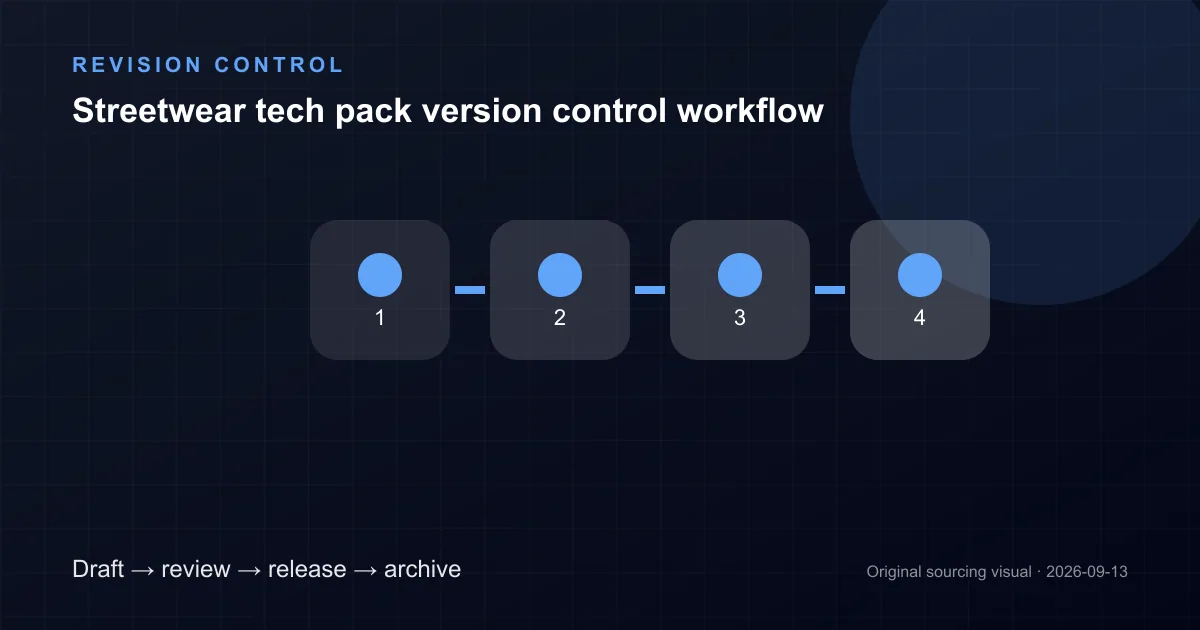
- Clone the last approved pack into a controlled working revision.
- Record the change request and affected sections.
- Edit source pages and update cross-references.
- Run measurement, BOM, artwork, label and compliance checks.
- Generate one review file and collect decisions against it.
- Update the revision log and obtain authorised approval.
- Publish one locked release package and archive sources.
- Withdraw superseded copies and obtain supplier acknowledgment.
How are obsolete files prevented from returning?
Move old releases to a read-only archive clearly marked obsolete. Remove them from active supplier folders and shared links. If physical printouts exist, stamp or destroy them according to the organisation’s document policy. Retain history for traceability without allowing production use.
When the supplier receives a new release, request confirmation of the style, revision, page count, open conditions and affected work. Ask whether fabric was ordered, patterns were changed or production began under the earlier revision. Acknowledgment is evidence of receipt, not proof that every action was completed.
How should access and approval authority be assigned?
Define who can draft, review, approve, release and archive a pack. A designer may approve visual intent but not measurement tolerance; a technical reviewer may approve fit but not legal label data. Separate responsibilities make the release stronger and keep informal comments from becoming manufacturing instructions.
Limit editing access to controlled source files and provide suppliers with the released package through a stable channel. If a new collaborator joins, give access to the current release and change log, not an uncontrolled folder of past attachments. Record emergency corrections with the same discipline as planned changes.
Streetwear version-control checklist
- Stable style ID and product category
- Revision and release state on every page
- Single consolidated review and release file
- Dated change log with reason and owner
- Measurement, BOM, artwork and label cross-check
- Sample comments linked to changed fields
- Superseded files removed from active folders
- Supplier acknowledgment of exact revision
- Reorder review for materials, markets and claims
Frequently asked questions
Does every draft need a new production revision?
No. Working drafts can use internal identifiers. A production revision should change when an approved release changes, with the organisation’s convention defined in advance.
Can different pages have different revision dates?
They can, but the consolidated pack must clearly state which page versions belong to the release. A single effective release date reduces ambiguity.
Should factories edit the buyer’s master pack?
The workflow should define ownership. Suppliers can propose corrections, but authorised changes should enter the controlled master with an audit trail.
What if only a care label changes?
Assess destination, fibre, care, packaging and inventory impacts. Even a one-page change needs a new traceable release if production instructions change.
Can cloud links replace version numbers?
No. A link can point to changing content. The document itself should identify the revision and release state.
How should a reorder be handled?
Start with the last approved pack, verify current materials, artwork, labels, market rules and process conditions, then issue or reconfirm a reorder release.
Conclusion: release one source of production truth
Streetwear tech pack version control makes every change visible and every release identifiable. Put revision data on each page, connect sample comments to specifications, quarantine obsolete files and require supplier acknowledgment. To discuss an order, share the product type, current pack, sample stage and open decisions through the Aimer Custom Lab contact page; order-specific sampling, minimums and timing should be confirmed before commitment.