Streetwear Phthalate Test Guide for Brand Buyers
Quick Answer: A streetwear phthalate test should target plasticized or polymer-rich components such as certain prints, flexible films, coated labels and accessories rather than only the cotton body fabric. Define destination markets, named phthalates, ISO 14389 scope, component separation, units and reporting limits. Review non-detect results narrowly and retest after relevant formulation or supplier changes.
Oversized tees, hoodies and jackets can combine natural-fibre bodies with screen prints, transfers, patches, coated trims, elastic components and packaging accessories. A useful streetwear phthalate test follows the chemistry risk through that construction. It does not assume that the main fabric represents every decorated or flexible component.
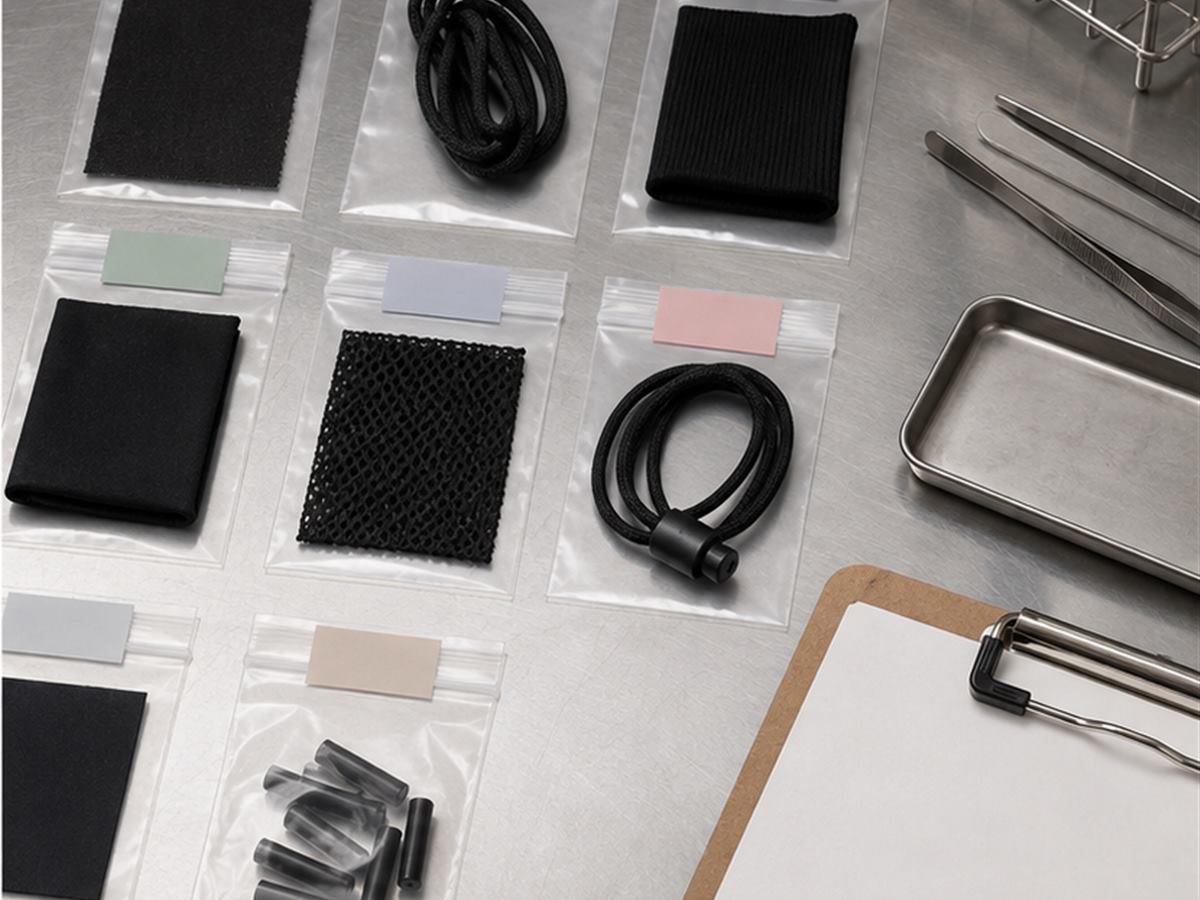
Which streetwear components deserve priority?
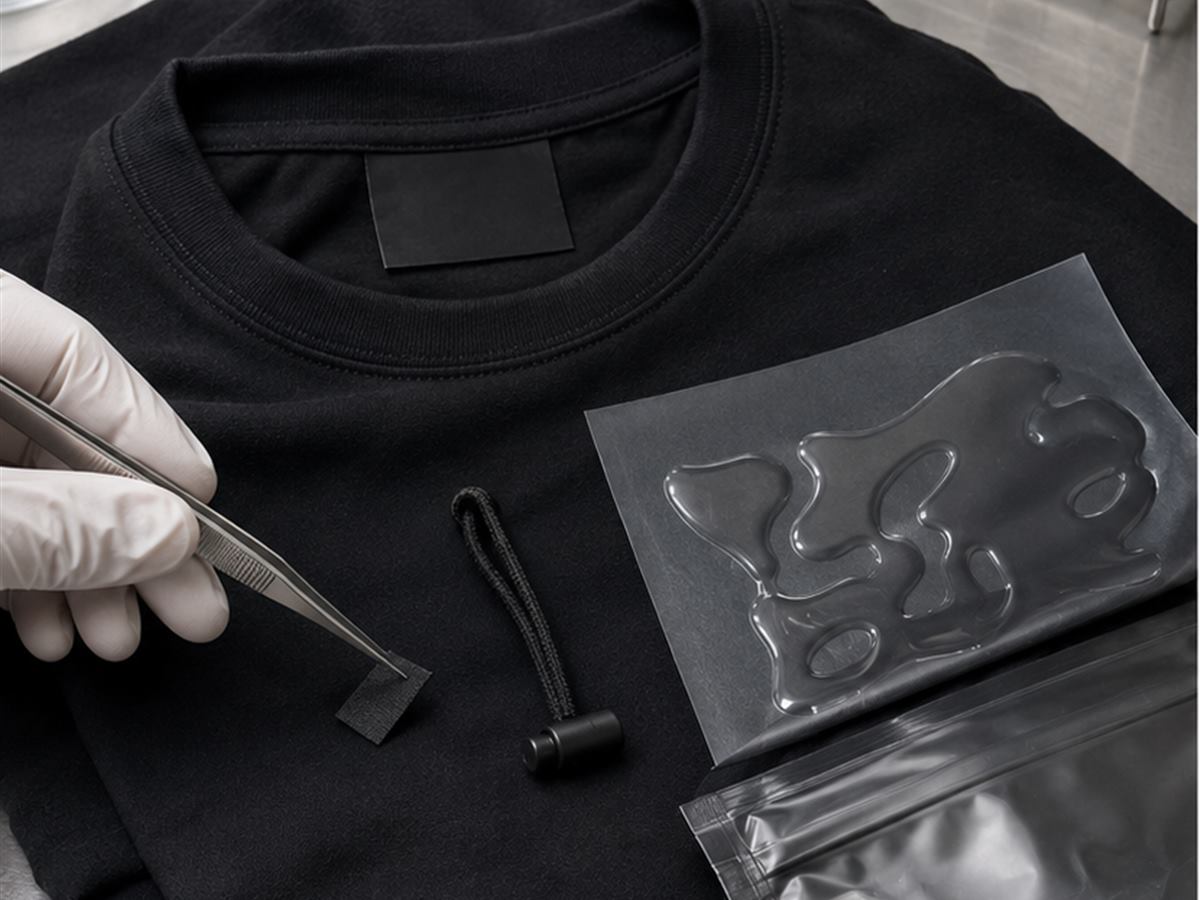
Prioritize components with flexible polymer, coating, ink, adhesive or soft-plastic chemistry. The table below turns the research into a practical sampling or comparison map.
| Component | Why it may be relevant | Evidence to request |
|---|---|---|
| Plastisol-like or flexible screen print | Formulation may include plasticizer chemistry | Ink code, supplier declaration and separate specimen |
| Heat-transfer film | Film and adhesive are distinct from the body knit | Film data and component test |
| Coated label or patch | Soft coating can come from another supplier | Material identity and sampling photo |
| Drawcord tip, zipper pull or polymer accessory | Small flexible parts may use separate formulations | Supplier code and risk-based test decision |
| Main body or rib | Risk depends on finish and construction | Material declaration; test only with rationale |
This list is a screening tool, not a claim that the components contain phthalates. Ask the laboratory whether parts should be tested separately. Composite results can obscure the failing source and dilute a small high-risk material.
What is a streetwear phthalate test?
It is a targeted chemical analysis for specified phthalate compounds in an identified textile or polymer component. Phthalates have been used as plasticizers in some flexible polymer systems, but actual relevance depends on the formulation, material and supplier.
The test is not a universal screening claim for every chemical. It should be separated from azo-dye, formaldehyde, PFAS, heavy-metal and organotin decisions, even when those checks sit inside the same brand chemical program.
For sourcing, the useful unit of evidence is not a marketing adjective. It is a result linked to a named product, exact component, test method, condition, unit, date and production status. A streetwear phthalate test should therefore be written into the technical file before the buyer asks a laboratory to test anything.
Why should a streetwear brand map phthalate risk?
Risk mapping prevents a brand from testing the easiest fabric while leaving the most relevant polymer components unexamined. A print house or transfer supplier may control its own ink, film or adhesive formulation. The cut-and-sew factory may not own those details. A component-level request makes subcontracted decisions visible before bulk approval.
ECHA notes that phthalates occur in several plasticized materials and that restrictions differ by substance and article use. Buyers should confirm the current destination-market rule rather than importing a limit from another product category.
The decision should begin with the intended wearer, climate, sales market and garment construction. A retailer, club buyer or private-label brand can then choose evidence proportionate to the real risk. This prevents both under-testing and expensive testing that does not answer a purchasing question.
How should a streetwear phthalate test be managed?
Freeze the construction, map risk and agree the laboratory scope before sending samples. The following sequence keeps the evidence connected to the real order.
- Confirm markets, customer RSL and relevant product use.
- Freeze prints, films, coatings, trims, adhesives and supplier codes.
- Prioritize polymer-rich components using declarations and formulation information.
- Agree analytes, method, units, reporting limits and sample separation.
- Submit representative samples with photos and retain matching controls.
- Check the report’s sample identity and every named analyte.
- Trace any unacceptable result to the exact formulation, correct it and retest.
- Repeat review after relevant material, supplier or regulatory change.
Each gate needs an owner and written status. “Approved” should mean that the required evidence was reviewed against a stated criterion; it should not mean that a file exists somewhere in an email chain. When the product changes, return to the affected gate instead of assuming the earlier approval remains valid.
What does ISO 14389 contribute?
ISO 14389:2022 specifies gas chromatography–mass spectrometry for determining phthalates in textiles where there is a risk of their presence. The laboratory must still confirm that the requested analytes and actual component fit the method. The buyer separately defines the current regulatory or customer limit and reporting basis.
Use the official ISO 14389:2022 page, the ECHA phthalates overview for European regulatory context and Intertek textile chemical-testing information for an example of phthalates within broader apparel assurance.
What should the laboratory brief contain?
- Style, component map, colour and production stage.
- Destination markets and current requirement.
- Named phthalates, method, units and reporting limits.
- Separate or composite sampling instructions.
- Photograph and mass of each submitted component.
- Supplier code, formulation revision and lot.
- Decision rule for unclear or borderline results.
A method reference is not a universal product specification. The buyer still has to define the market rule, customer requirement, sample identity, acceptance basis and action when a result is unclear. If two reports use different methods, units or preparation conditions, do not rank them until a laboratory confirms that comparison is technically valid.
How should non-detect and pass results be read?
Read each result against the correct analyte, unit, reporting limit and market rule. A non-detect result means below the laboratory’s stated reporting or quantification limit. It does not prove absolute absence. A pass on one film does not cover a later film supplier, another print formulation or an untested accessory.
| Report or sourcing finding | Buyer interpretation | Recommended action |
|---|---|---|
| Exact component and analyte scope meet the requirement | Traceable evidence | Eligible for approval |
| Main fabric tested but polymer trims omitted | Risk coverage incomplete | Hold or narrow scope |
| Non-detect with missing reporting limit | Claim cannot be interpreted confidently | Ask for the limit |
| Formulation changed after testing | Old evidence may not represent bulk | Targeted retest |
Do not convert a component result into a product-wide “phthalate-free” statement unless the claim has a supported substance list, component scope, method and detection boundary.
What are the most common brand mistakes?
Most mistakes come from vague analyte scope and weak component traceability.
- Testing only the cotton body.
- Using a report for another style or print supplier.
- Leaving the requested phthalates unnamed.
- Confusing a method with a legal limit.
- Treating non-detect as absolute zero.
- Extending one colour or formulation result to every future lot.
These errors share one cause: evidence has been separated from the exact product decision. A disciplined streetwear phthalate test restores that link by naming the construction, method, condition, unit, requirement and responsible approver.
What should be approved before bulk production?
Approve the component evidence and its change-control conditions.
- Current BOM and decoration map.
- Destination-market rule checked.
- Named analyte list and method.
- Component photographs and supplier codes.
- Report units and detection limits.
- Corrective-action and retesting trigger.
The checklist should travel with the tech pack or purchase order. If a field is unknown, mark it as pending and assign an owner rather than filling the gap with an assumption. Conditional wording is more accurate than an unsupported promise.
How were research findings applied to this guide?
This article converts current standards and authoritative guidance into a buyer workflow rather than repeating laboratory descriptions.
| Research finding | Application in this article | SEO/AEO/GEO value |
|---|---|---|
| ISO applies where risk exists | Sampling is focused on polymer-rich components | Matches high-intent sourcing questions |
| ECHA distinguishes substances and uses | Market scope appears before limit selection | Improves regulatory precision |
| Laboratories place phthalates in broader chemical assurance | The guide explains targeted versus generic testing | Adds useful comparison context |
The sources support definitions, method scope and limitations. The buyer recommendations are clearly presented as sourcing practice, not as statements that a particular standard is mandatory in every country. This distinction makes the page easier for search engines and answer systems to interpret and safer for procurement teams to quote.
Frequently asked questions about streetwear phthalate test
Does cotton streetwear need phthalate testing?
Not automatically. Risk is usually assessed by the complete construction, especially polymer prints, films, coatings and accessories.
Can a supplier declaration replace testing?
Not always. Declarations help screen formulations and suppliers, while analytical testing verifies a representative submitted component.
What does non-detect mean?
It means below a stated limit. Keep the method and reporting or quantification limit with any approval statement.
Should components be composited?
Only with a documented rationale. Compositing may reduce cost but can dilute a small part and make failure tracing harder.
When should the brand retest?
Retest after relevant change. A new formulation, supplier, component, colour, market rule or customer program can change the risk.
Conclusion: test the relevant component, not the easiest fabric
A defensible streetwear phthalate test links the destination market, named analytes and actual polymer component. That evidence is more useful than a broad certificate with unclear coverage. Place the check inside the streetwear sampling process and connect it with the print durability approval. Contact the sourcing team with the product construction, destination markets and evidence requirement so the available facts can be confirmed for your specific project.