Streetwear Care Label Guide
A practical streetwear care label turns material and decoration test results into instructions a customer can follow. For private-label hoodies, oversized T-shirts, jackets and tracksuits, the label must account for the weakest relevant component—not only the main fabric. A wash-safe shell does not guarantee that a print, embroidery backing, zipper coating or rib will perform under the same conditions.
Quick answer: Define the destination market, test the complete decorated garment under realistic care cycles, measure appearance and dimensional change, select instructions that protect every component, and approve the exact wording and symbols during sampling. This article provides a sourcing workflow, not legal advice; the responsible business should confirm current rules for every sales market.
Why a streetwear care label needs test evidence
Care instructions affect fit retention, color appearance, print durability and customer satisfaction. They also need a reasonable basis. The US Federal Trade Commission’s Care Labeling Rule requires manufacturers and importers covered by the rule to attach care instructions and possess a reasonable basis for them. Other markets use different frameworks and symbol systems.
Streetwear creates distinctive risks. Heavyweight cotton can shrink; brushed fleece can change surface character; dark pigment-dyed colors can release dye; dimensional rib may recover differently from the body; and high-build prints may react to heat. The correct instruction is therefore a product decision supported by testing, not a generic sentence copied from another style.
Build the care profile before testing
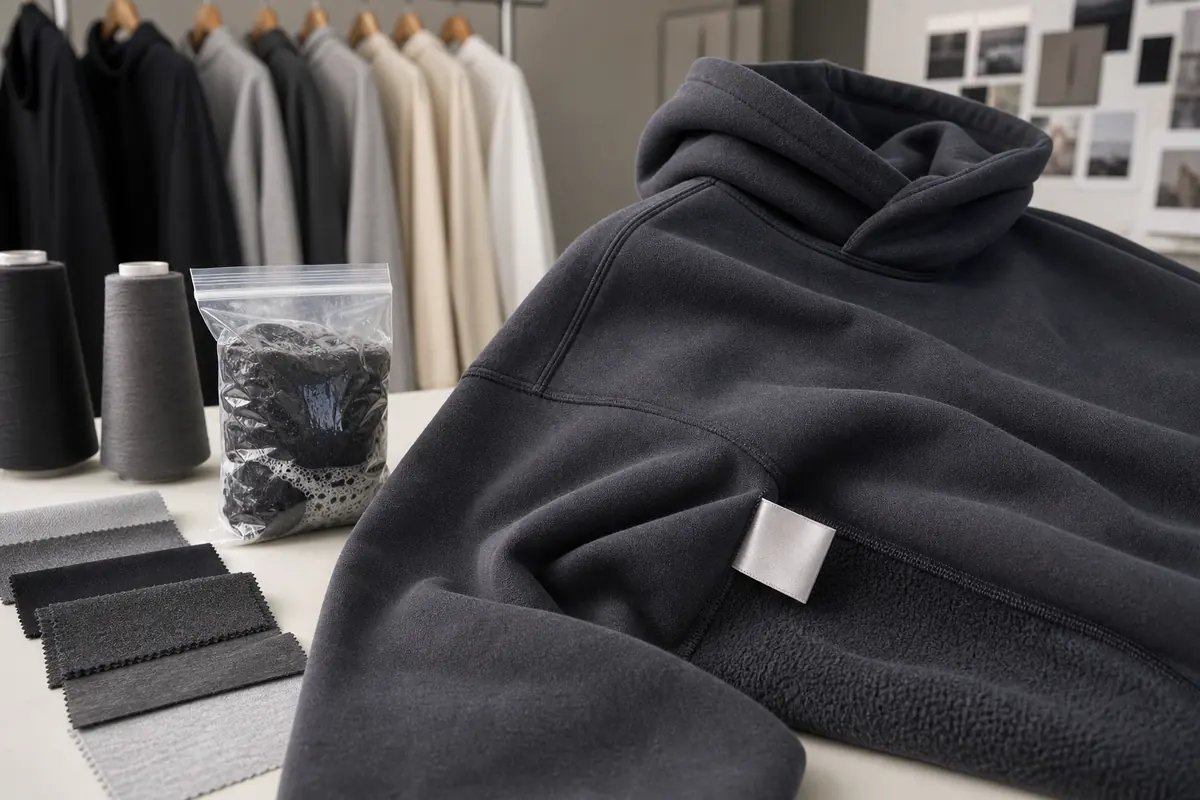
Start by listing all components that could limit care. A streetwear care label should reflect the assembled garment’s behavior. Include:
- shell fabric, rib, lining and pocketing;
- screen print, digital print, heat transfer, embroidery and appliqué;
- zippers, snaps, drawcords, eyelets and coated hardware;
- interlining, adhesive, shoulder tape and seam thread;
- special washes, pigment dye, enzyme effects and surface finishes.
Next, record the intended consumer use and the markets where the product will be sold. A fashion overshirt with coated trim may need a different validation plan from an everyday jersey T-shirt even if both contain cotton.
Care-validation evidence table
| Check | Question answered | Typical evidence | Approval concern |
|---|---|---|---|
| Dimensional change | Will length, width and key measurements remain acceptable? | Pre/post measurements under a defined cycle | Fit, grading and panel distortion |
| Color appearance | Will shade, staining or fading become unacceptable? | Color assessment and adjacent-fabric review | Dark-to-light combinations |
| Decoration durability | Will artwork crack, lift, bleed or distort? | Visual checks after repeated cycles | Temperature and mechanical action |
| Component function | Do trims and closures remain usable? | Operation and appearance inspection | Coating, corrosion and deformation |
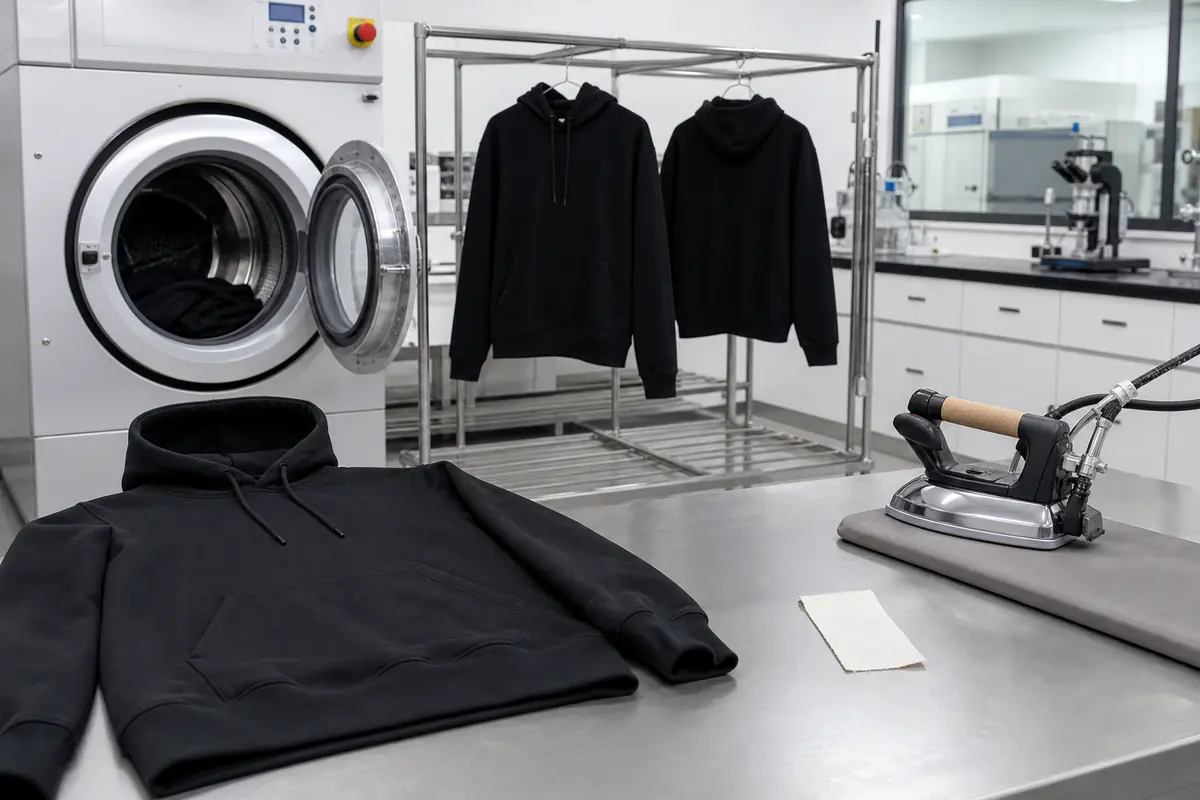
| Drying/ironing response | Can heat damage fabric or decoration? | Controlled drying and ironing trials | Transfer films and synthetic panels |
How to develop a streetwear care label
1. Define candidate care conditions
Choose test conditions based on fiber, construction, finish and realistic consumer behavior. Record water temperature, cycle type, detergent, load, drying method and ironing conditions. “Wash test passed” is not enough; the report must state what was actually done.
2. Test the complete decorated garment
Fabric-only results are useful during material selection, but the final streetwear care label should be supported by the assembled style. Sewn seams, mixed materials and decoration introduce interactions that a fabric swatch cannot reveal.
3. Measure before and after
Mark measurement locations and use the same conditioning and measurement method before and after care. Review body length, chest width, sleeve length, rib openings and any placement affected by shrinkage. Compare results with the approved specification and intended fit tolerance.
4. Inspect appearance and function
Photograph the garment under consistent lighting. Check twisting, seam puckering, pilling, surface change, staining, print cracking, transfer lifting, embroidery distortion, hardware function and label legibility. If a failure appears, identify whether the instruction, material or construction should change.
5. Select the safest clear instruction
Do not combine contradictory symbols and written instructions. Use the recognized language or symbol system for the destination market, and avoid unnecessary restrictions when evidence supports normal care. At the same time, never choose an easy-looking instruction that exceeds a component’s tested limit.
6. Lock the approved label proof
The final proof should show wording, symbols, translation, fiber information, origin information, responsible-party details where applicable, size, placement and attachment. Link it to the tested sample revision. Any material or decoration substitution must trigger an impact review.
Streetwear care label and sampling workflow
Add care validation to the sample approval process instead of leaving it until packaging. A controlled sequence is:
- Freeze the candidate fabric, color, trims and decoration process.
- Prepare a representative garment using production-intent construction.
- Document the test method and baseline measurements.
- Run the agreed number of care cycles.
- Assess measurements, appearance and component function.
- Resolve failures and repeat testing when the product changes.
- Approve the label copy against the final evidence.
- Check the first bulk pieces and retain the signed report.
Review available streetwear development capabilities and make the care-test plan part of the initial technical discussion. Clear checkpoints are especially important when multiple print or embroidery methods appear in one collection.
Common care-label errors
- Testing fabric but not the garment: seams and artwork change performance.
- Using one label across a collection: styles with different components need separate evidence.
- Ignoring repeated cycles: some failures appear only after several washes.
- Not measuring rib and body separately: uneven change can distort the silhouette.
- Adding “dry clean only” without basis: restrictive wording still needs regulatory and technical review.
- Changing decoration after approval: heat exposure limits may no longer match.
- Mixing market systems: symbols or language may not be understood or accepted everywhere.
Streetwear care label approval checklist
- Destination markets and applicable rule sets are listed.
- Every material, trim and decoration is included in the risk review.
- Test methods, cycles and conditions are recorded.
- Pre- and post-care measurements use consistent points.
- Color, surface, seams, artwork and hardware are assessed.
- The instruction protects the weakest relevant component.
- Symbols and words communicate the same treatment.
- Label size, placement, permanence and legibility are approved.
- The proof is tied to the tested sample revision.
- Bulk substitutions trigger a new review.
Frequently asked questions
Can one streetwear care label cover every color?
Only when the materials, color processes and supporting evidence justify it. Dark, pigment-dyed or contrast-panel versions may need separate review.
How many wash cycles should be tested?
The answer depends on product risk, buyer standards, claim scope and the applicable test plan. Define the requirement before testing rather than inventing a universal number.
Should a printed garment be ironed?
That depends on the decoration system and tested heat resistance. Instructions may need to prohibit direct ironing over artwork or specify a safer condition.
Are care symbols universal?
No. Symbol ownership, recognition and legal use vary. GINETEX manages an international care-symbol system, while the FTC provides US guidance. Confirm the correct system for the selling market.
What if the garment fails the intended care cycle?
Change the material, construction, decoration or supported instruction, then validate again. Do not issue a streetwear care label that conflicts with the observed performance.
Conclusion: connect instructions to the approved garment
A dependable streetwear care label is a concise result of a detailed process. Map the product, test the whole decorated garment, document outcomes and approve only instructions supported by evidence. This protects both the intended fit and the visual identity of the style.
Browse our custom streetwear products and contact Aimer Custom Lab with your tech pack, destination market and proposed materials. We can coordinate sample checkpoints and production-intent care trials; the buyer or importer remains responsible for final regulatory compliance.
Authority references: Consult the FTC Care Labeling Rule guide and GINETEX care-symbol resources when defining market-specific instructions.