Streetwear Abrasion Test: Fabric Buyer Guide
A streetwear abrasion test helps a private-label buyer evaluate how fabric surfaces respond to repeated rubbing before a style moves into bulk production. It is relevant to tees, hoodies, sweatpants, tracksuits, jackets, pocketing, linings, and decorated panels, but the result is meaningful only when the test method, specimen conditioning, abrasive, pressure, endpoint, and acceptance rule are recorded.
Quick answer: choose a recognised method that matches the fabric and risk, condition representative specimens, test the face side under defined settings, inspect at scheduled intervals, and report the endpoint required by the specification. Do not compare cycle counts from different instruments as though they were identical. Agree the pass rule during development and use the same method for approved samples and bulk lots.
Why a Streetwear Abrasion Test Matters
Streetwear garments experience rubbing at cuffs, elbows, underarms, pockets, seat areas, bag-contact zones, and layered surfaces. Abrasion can flatten a brushed face, disturb a print, expose backing yarns, cause colour change, create fuzz, or eventually form a hole. Laboratory rubbing cannot reproduce every movement made by a wearer, but it can provide a controlled comparison between materials, finishes, or lots.
For buyers, abrasion is one part of a complete fabric review. Weight, composition, construction, stretch, recovery, pilling, shrinkage, colourfastness, seam quality, and intended care all influence service performance. Link the test plan to the streetwear clothing sampling process and the controls described on the capabilities page.
Choose the Correct Streetwear Abrasion Test Method
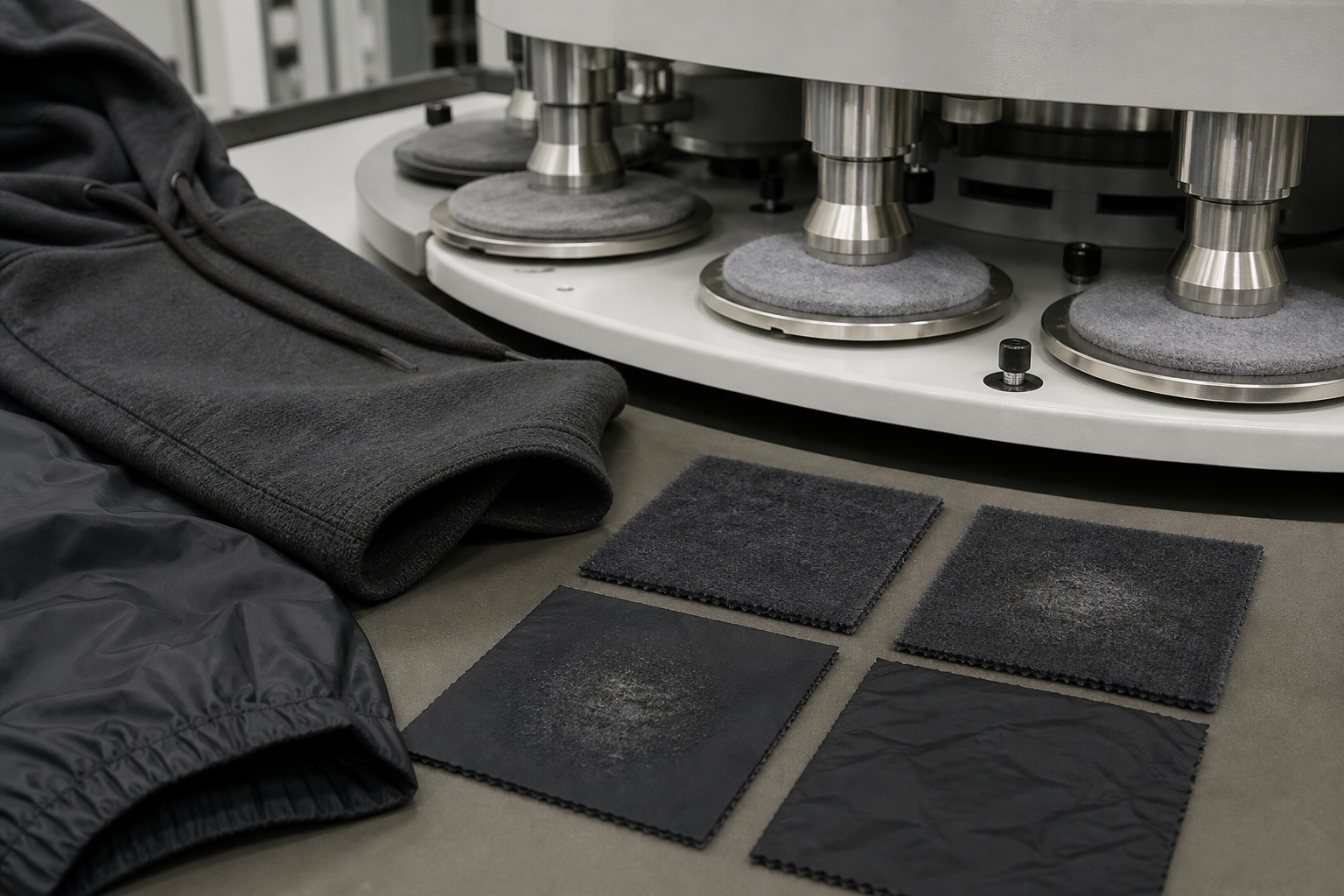
ISO 12947-2 describes the Martindale method for determining specimen breakdown of fabrics. Other programmes may reference rotary platform methods such as ASTM D3884 or accelerated procedures such as AATCC TM93. These methods use different motions, abrasives, loads, specimen arrangements, and endpoints. Their numbers are not interchangeable.
Martindale Abrasion
Martindale equipment rubs a specimen against a specified abradant in a multi-directional motion. Depending on the standard and buyer specification, testing may continue until specimen breakdown or may pause at stated intervals for appearance assessment. It is widely used for fabrics, but the exact pressure, abradant, backing, inspection interval, and endpoint must be stated.
Rotary Platform Abrasion
A rotary platform instrument uses rotating abrasion wheels on a mounted specimen. Results may include visual change, mass loss, or another defined endpoint. Wheel type, load, resurfacing, vacuum setting, and specimen mounting affect the outcome. A rotary result should not be converted into a Martindale cycle claim.
Accelerated Edge and Fold Exposure
Some methods create rapid multidirectional abrasion in a chamber and may expose edges or folded structures. They can be useful for comparative screening, especially when a product has raised or complex surfaces, but the procedure and rating scale still need to be specified.
Streetwear Abrasion Test Comparison Table
| Decision | What to define | Why it matters | Report evidence |
|---|---|---|---|
| Method | Standard edition and procedure | Different motions are not equivalent | Full method reference |
| Specimen | Fabric face, panel location, colour, lot | Surface and construction vary | Traceable sample ID |
| Abradant | Type, condition, and replacement rule | Worn media changes severity | Abradant record |
| Pressure or load | Method-specific setting | Changes the wear rate | Instrument setting |
| Endpoint | Breakdown, appearance grade, mass loss, or cycles | Defines what the number means | Individual observations |
| Acceptance | Product-specific limit and retest rule | Standards do not create one universal pass level | Approved specification revision |
How to Prepare Representative Specimens
Sampling should represent the material the buyer intends to approve. Record style, fabric code, colour, dye lot, roll, finish, garment location, and production stage. Avoid assuming that one leftover swatch represents an entire order. If orientation may matter, identify wale and course, warp and weft, or the direction used for cutting.
Condition specimens in the atmosphere required by the referenced method. Moisture and relaxation can affect textile behaviour. Inspect the fabric before testing and note any pre-existing fuzz, snag, print crack, shade variation, or finish inconsistency. Mount without unintended wrinkles or tension, and use the specified backing or foam.
Test the Intended Surface
Most wear concerns relate to the outward face, but lining, pocketing, brushed backs, and contrast panels may need separate plans. Keep rib, jersey, fleece, woven shell, mesh, and lining results separate. If a decoration covers the test zone, decide whether the purpose is to test the base fabric, the decoration, or the combined system.
Define the Endpoint Before Testing
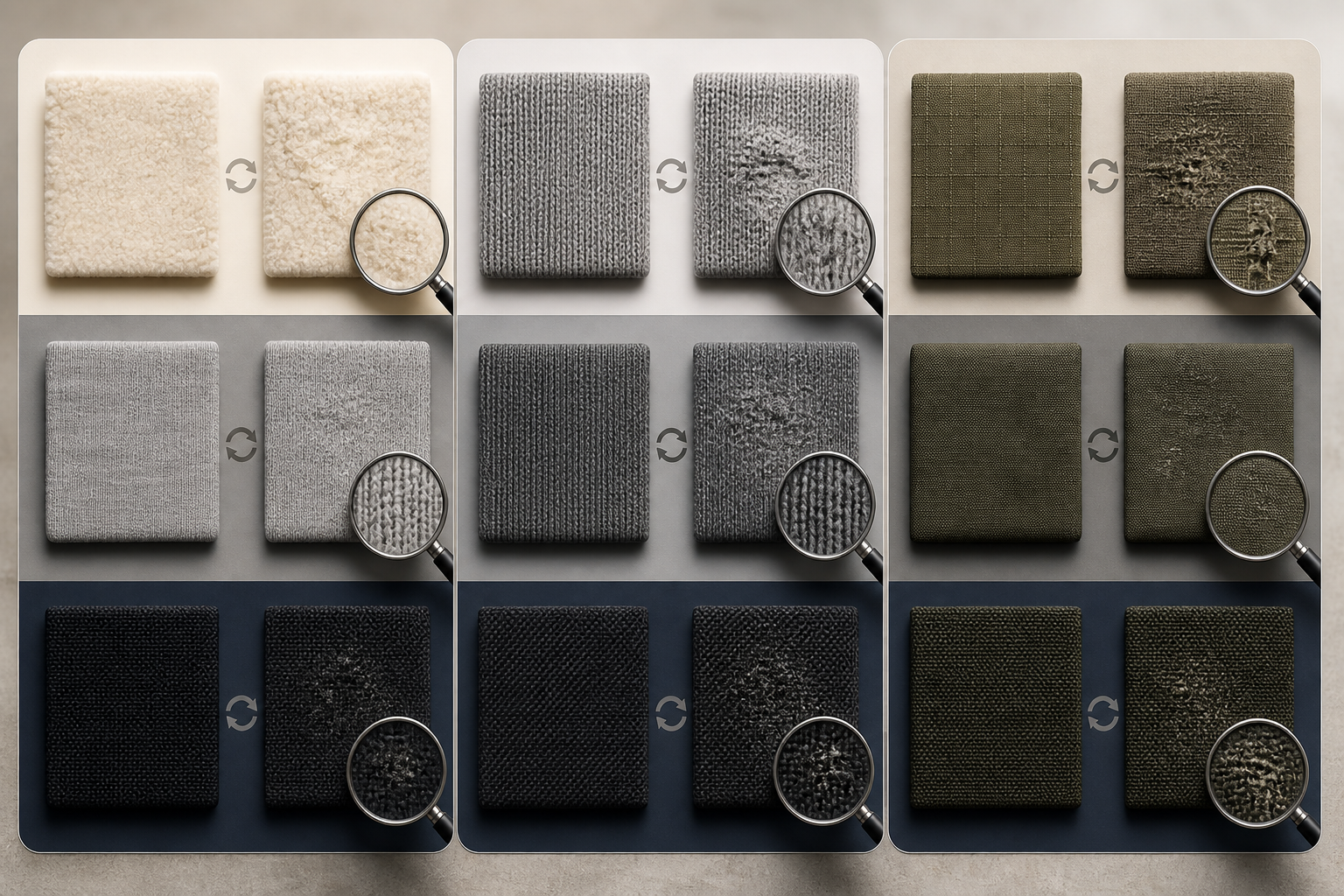
Abrasion reports can look precise while answering different questions. Specimen breakdown may mean a stated number of yarn breaks or a visible hole, depending on the method. Appearance assessment may consider colour change, fuzzing, flattening, surface loss, or print damage. Mass loss measures another type of change. The buyer should identify the required endpoint before the lab starts.
Use Scheduled Inspections
Inspect at the intervals stated by the method or buyer plan. Shorter intervals near the expected endpoint improve precision. If testing stops only after a large jump, the report may miss when breakdown actually occurred. Keep images under consistent lighting when appearance is part of the decision.
Compare Like with Like
Use the same method, settings, specimen orientation, conditioning, and rating approach when comparing suppliers or lots. A cycle count from one test cannot be treated as a direct substitute for another. Even within one method, changing pressure, abrasive, backing, or endpoint creates a different result.
Streetwear Abrasion Test Approval Checklist
- Reference the complete standard, edition, and procedure.
- Identify fabric, colour, lot, finish, garment panel, and sample stage.
- Condition specimens in the specified atmosphere.
- Record face side, orientation, dimensions, backing, and mounting.
- Verify the instrument, motion, abrasive, load, and inspection intervals.
- Define breakdown or appearance endpoint before testing.
- Retain individual results, not only an average.
- Photograph specimens consistently when visual change is rated.
- Link the report to the approved material and specification revision.
- State the retest, hold, review, and approval actions.
Apply Results to Streetwear Product Types
Oversized T-Shirts
Focus on shoulder and bag-contact surfaces, side seams, prints, and washes that alter the fabric face. Lightweight and heavyweight jerseys may need different expectations. Confirm abrasion together with collar recovery, shrinkage, pilling, and print durability.
Hoodies and Sweatpants
Brushed fleece can lose loft or develop surface change before structural breakdown. Examine cuffs, elbows, pocket openings, inner thigh, and seat areas. Separate the body fabric from rib and pocketing because their constructions differ.
Jackets and Tracksuits
Shells, linings, mesh panels, coated fabrics, and prints respond differently. A method suitable for a knitted hoodie may not be the best choice for a coated woven jacket. Clarify whether appearance, coating loss, colour change, or hole formation is the principal risk.
From Development to Bulk Quality Control
During development, use the streetwear abrasion test to compare candidate fabrics and finishing routes. Attach the selected result to the approved sample. At pre-production, confirm that the booked material uses the same construction and finish. During bulk, sample across relevant lots and colours according to order risk and the buyer’s inspection plan.
If results differ, first verify identity, conditioning, mounting, abrasive condition, equipment settings, calculation, and endpoint. Then review material or finishing changes. A retest should use a documented rule, not simply repeat specimens until a favourable number appears. Product categories for planning can be reviewed on the products page.
Common Buyer Mistakes
- Requesting an abrasion number without naming the method.
- Comparing Martindale and rotary-platform cycles directly.
- Testing only one convenient specimen.
- Ignoring colour, lot, finish, and garment location.
- Changing the abrasive or load between sample and bulk.
- Using a structural endpoint when appearance is the real concern.
- Assuming abrasion resistance alone predicts garment life.
- Creating a pass limit only after production is complete.
Frequently Asked Questions
What is a good abrasion result for streetwear?
There is no universal result for every product. The appropriate limit depends on the method, fabric, garment, intended use, risk, and approved specification. Confirm the endpoint and tolerance for the order.
Can Martindale and Taber results be compared?
Not directly. The motions, abrasives, loads, mounting, and endpoints differ. Compare results only when the same documented method and settings are used.
Does a higher cycle count always mean better fabric?
No. It answers only the defined abrasion endpoint. Hand feel, drape, stretch, recovery, shrinkage, pilling, colourfastness, and construction also matter.
Should printed or embroidered areas be tested?
Only when the goal and method are suitable. Decoration durability may require a separate protocol. Identify whether the test covers base fabric, decoration, or the complete decorated panel.
How should failures be handled?
Follow a pre-agreed retest and disposition rule. Verify test conditions and traceability, assess additional representative specimens, identify the cause, and hold material when required until an authorised decision is recorded.
Conclusion: Turn Surface Wear into a Controlled Decision
A dependable streetwear abrasion test connects the correct method with representative specimens, controlled settings, a clearly defined endpoint, and a written approval rule. It gives brand teams comparable evidence without promising that one laboratory number can predict every real-world wear condition.
To plan testing and sample documentation for a private-label project, contact Aimer Custom Lab with your product type, fabric construction, colours, finishes, decoration, intended use, and current specification. Final methods, limits, and production terms should be confirmed for the specific order.