Streetwear Seam Strength Test Guide
Streetwear seam strength test results are meaningful only when the specimen represents the intended fabric, seam direction, stitch recipe and production condition. Hoodies, oversized T-shirts, cargo pants and jackets place different loads on shoulder, armhole, side, crotch and pocket seams. A single generic force value cannot replace a construction-specific approval plan.
Quick Answer: What should a streetwear seam strength test include?
A streetwear seam strength test should identify the fabric, seam type, stitch type, thread, stitches per inch, allowance, reinforcement, specimen direction, conditioning and test method. ISO 13935 strip or grab methods and ASTM D1683 measure related seam behavior, but their results are not interchangeable. Record maximum force and the exact failure mode, then verify the same recipe after garment washing.
Decision rule: approve the seam system, not an isolated thread or fabric. The relevant output is a repeatable garment construction tied to a controlled test and visible failure description.
What is seam strength?
Seam strength is the maximum force recorded when a sewn seam is loaded under a defined tensile procedure. It combines fabric strength, yarn mobility, stitch formation, thread properties, seam allowance and sewing quality. The first visible failure may be thread breakage, fabric rupture, yarn slippage, seam opening or a mixed mode. Those outcomes lead to different corrective actions.
Do not confuse seam strength with seam slippage. Slippage methods assess yarn movement and seam opening at a specified load or opening; seam tensile methods determine maximum force to seam rupture. A buyer may need both for loosely constructed woven pants or jackets, while a stable knit T-shirt may need a different construction-focused plan.
Which standards are relevant?
ISO 13935-2:2026 specifies a grab method for maximum force to seam rupture with force applied perpendicular to the seam. ISO 13935-1 uses a strip method. ASTM D1683/D1683M addresses failure in sewn seams of woven apparel fabrics. Always check the current edition, scope and laboratory suitability for the fabric.
Results from different methods should not be directly compared. Specimen width, clamping and preparation affect the measured value. If the buyer compares seam maximum force with fabric maximum force, use compatible test types and conditions as directed by the relevant standards.
What belongs in the seam recipe?
| Variable | Why it matters | Approval record |
|---|---|---|
| Fabric | Strength, stretch, yarn mobility and finish affect rupture | Supplier, code, lot, weight and direction |
| Seam and stitch | Load distribution changes by construction | Seam class, stitch type and diagram |
| Thread | Ticket, fiber and elongation affect break mode | Brand, ticket, color and supplier code |
| Stitch density | Too few or too many stitches can reduce performance | Target SPI with tolerance |
| Allowance | Narrow margins can pull out or fray | Measured seam allowance |
| Reinforcement | Bartacks, tape or backing change stress concentration | Location and process specification |
| Post-treatment | Wash, dye and heat can change fabric and thread | Production-intent process recipe |
How should the test specimen be selected?
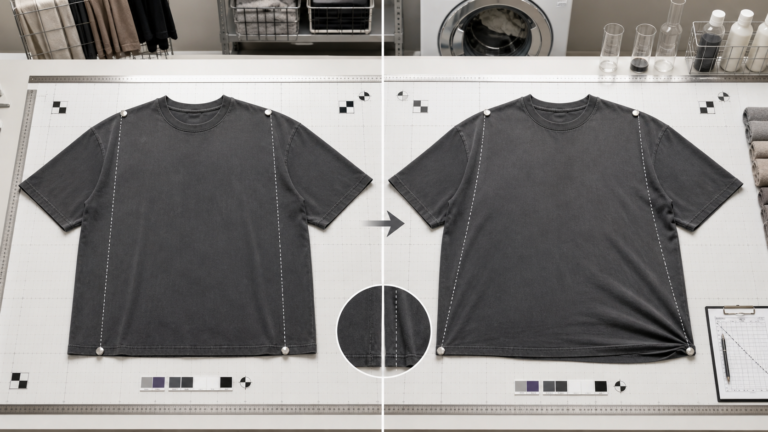
Use representative production-intent material. The laboratory request should state whether the seam is prepared in the warp, weft, wale or course direction and whether the fabric has stretch. For finished garments, identify the location and cutting direction. Shoulder, seat, crotch, armhole and pocket seams experience different force patterns and may not share one acceptance limit.
Condition specimens as required by the selected method. If the care label or garment development includes laundering, define whether testing occurs before wash, after a specified cycle or at both stages. Keep the wash recipe with the report so a later bulk comparison is valid.
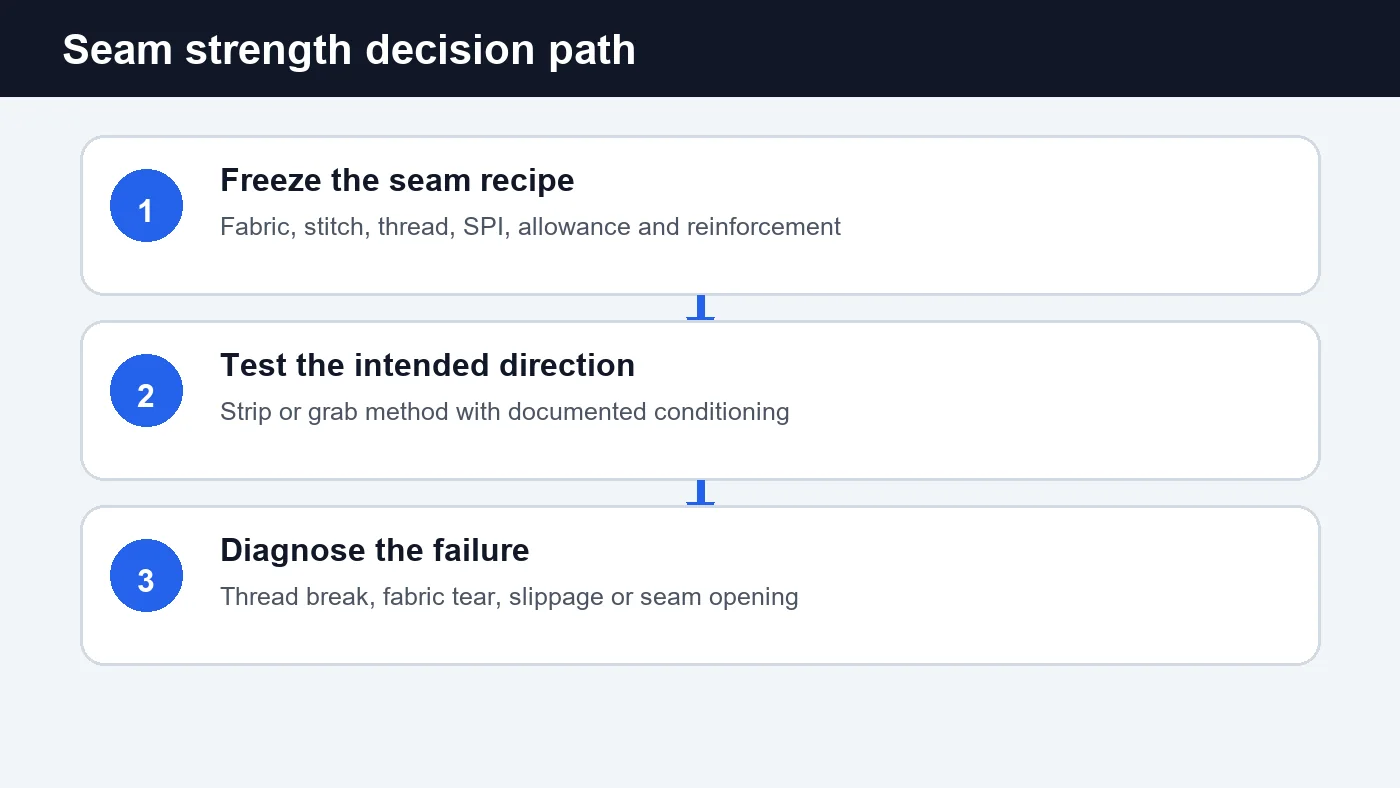
How is a streetwear seam strength test run step by step?
- Define the risk location. Map the garment seam and expected movement or load.
- Freeze the construction. Record fabric, thread, seam, stitch, SPI, allowance and reinforcement.
- Select the method. Choose the current strip, grab or other appropriate procedure with the laboratory.
- Prepare representative specimens. Control direction, cutting, conditioning and sewing equipment.
- Record force and failure. Keep individual results, average, photographs and the first failure mode.
- Compare with the reference. Use an approved benchmark tested by the same method.
- Retest controlled changes. Alter one variable at a time and document the corrected recipe.
What does each failure mode suggest?
Thread breakage can point to unsuitable thread capacity, stitch balance, density, needle damage or stress concentration. Fabric tear beside the seam may indicate that the seam is stronger than the local fabric or that perforation and allowance need review. Yarn slippage suggests fabric structure and seam margin require attention. Seam opening without rupture can reflect stitch formation, feed balance or stretch compatibility.
A higher number is not automatically better if the correction makes the garment stiff, bulky or visually unacceptable. For an oversized T-shirt, a soft shoulder seam may need tape without excessive ridge. Cargo pants may need targeted reinforcement at pocket corners rather than a heavier thread everywhere.
How should acceptance limits be set?
Start with regulatory or customer requirements where applicable, then test a proven reference in the same garment category. Compare development samples using the identical method, direction and condition. Consider wearer movement, garment fit, fabric weight and expected care. Record a minimum plus a clear failure-mode rule rather than relying on an average alone.
Define the escalation plan before testing. A borderline result may require retained-material retesting, a second production lot or a controlled sewing trial. Never average together different seam directions or methods to make an unstable system appear acceptable.
How should bulk production be controlled?
- Approve a physical seam panel and signed garment reference.
- Lock sewing-machine class, folder, needle, thread and stitch settings.
- Check stitch density, allowance and tension at line start and shift changes.
- Sample across colors, sizes, machines and production time.
- Inspect skipped stitches, seam grin, puckering, cut edges and reinforcement placement.
- Retain material and reports for traceable corrective action.
Connect the approved seam recipe with the manufacturing capability review. If fabric, finish, supplier or thread changes, the production team should notify the buyer before using the substitute.
What common mistakes reduce the value of the report?
- Writing “seam strength test” without naming the method.
- Testing an ideal lab seam that differs from the garment line recipe.
- Reporting only the average and omitting individual failures.
- Comparing strip and grab results as if they were identical.
- Ignoring wash shrinkage, softener, coating or garment dye.
- Correcting every failure with heavier thread instead of diagnosing the system.
Streetwear seam strength test frequently asked questions
Is seam strength the same as fabric tensile strength?
No. Fabric strength is one input. A sewn seam adds needle holes, thread, stitch geometry, allowance and load concentration.
Should a hoodie be tested before or after washing?
The test plan may include both. Use the production-intent wash and record the exact condition so results remain comparable.
Can one result cover every seam in the garment?
Usually not. Direction, location, construction and expected load differ. Prioritize high-risk seams and document the scope.
What is the best corrective action for thread breakage?
Diagnose thread, stitch balance, density, needle, fabric damage and stress concentration before changing one variable. Retest the controlled trial.
Does a higher force always mean a better garment?
No. The seam must also meet appearance, comfort, stretch, weight and manufacturability requirements.
Conclusion: approve a repeatable seam system
A useful streetwear seam strength test converts a force reading into a repeatable production recipe. Define the garment risk, choose the proper method, control specimen direction and record the exact failure mode. Review related streetwear product categories and contact Aimer Custom Lab with the fabric, seam diagram, size range, wash process and destination market for project-specific confirmation.
A streetwear seam strength test record should trace the approved construction, specimen direction and failure mode into bulk production checks.