Streetwear Clothing Flammability Test Guide
Streetwear clothing flammability test planning matters when a private-label buyer sells hoodies, T-shirts, tracksuits or jackets into a regulated market. A fabric name or fiber percentage alone does not establish compliance. The sourcing file must connect the garment, exposed materials, surface characteristics, test or exemption basis, classification, supplier lot and destination-market responsibilities.
Quick Answer: How should a streetwear clothing flammability test be planned?
A streetwear clothing flammability test should begin with the destination market and product scope, then identify every exposed textile, fabric surface, weight, finish and post-treatment. For United States general wearing apparel, review 16 CFR Part 1610, document any valid testing exemption, test representative materials when required, retain the classification and lock material substitutions before bulk release.
Decision rule: an exemption from a testing requirement is not an exemption from the underlying product requirement. Confirm the current rule and the responsible importer or brand before relying on any exemption.
What does clothing flammability mean for streetwear sourcing?
Flammability describes how a textile responds to an ignition source under a defined procedure. It is not the same as heat resistance, flame resistance, melting behavior or a marketing claim such as “fireproof.” A result applies to the tested material in the tested condition. Brushing, sanding, printing, garment washing, coatings, appliqués and exposed combinations can change the surface that meets the flame.
For United States general wearing apparel, the U.S. Consumer Product Safety Commission explains that 16 CFR Part 1610 classifies clothing textiles by flame-spread behavior and prohibits dangerously flammable Class 3 textiles. Buyers should start with the official CPSC clothing guidance and controlled regulation rather than a supplier summary.
Which products and materials belong in the compliance map?
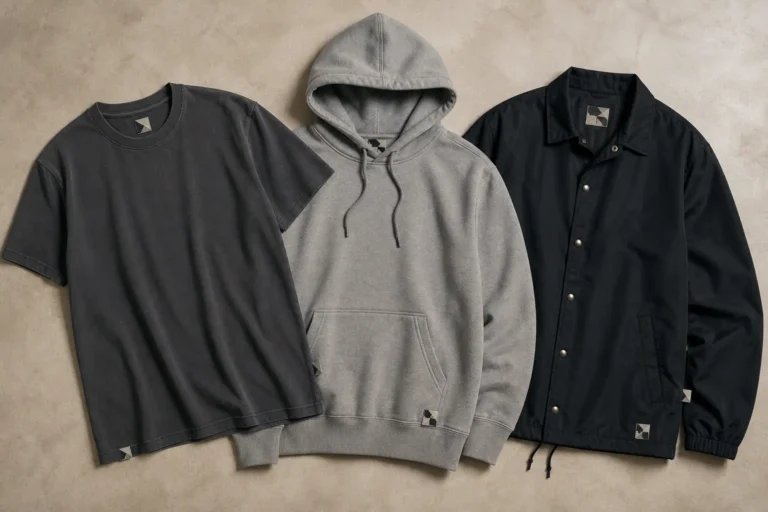
The scope should be written style by style. A heavyweight hoodie can include shell fleece, rib, hood lining, pocket facing, embroidery backing, patches and labels. A jacket may add coated shell fabric, lining, fusible layers or exposed decorative panels. Identify what is uncovered or exposed in the finished garment and ask the qualified compliance party how the rule applies to each construction.
| Control point | Buyer question | Required evidence |
|---|---|---|
| Destination | Where will the garment be sold? | Applicable rule and responsible legal entity |
| Fabric identity | What fiber, knit or weave, weight and surface? | Specification, supplier code and lot traceability |
| Finish | Is the surface brushed, washed, printed or coated? | Production-intent finish and process record |
| Exposed components | Which textile areas are uncovered in wear? | Garment map, bill of materials and photographs |
| Compliance route | Testing, exemption or another controlled basis? | Rule citation, report and certificate decision |
| Change control | What forces a new review? | Approved substitution and retest procedure |
When can testing exemptions apply under 16 CFR Part 1610?
Do not assume that “polyester” automatically closes the file. The CPSC describes specific testing exemptions in 16 CFR 1610.1(d), including certain plain-surface fabrics at or above the stated weight and fabrics made entirely from listed fibers or combinations. The precise composition, surface and finished construction still need verification, and certification or record obligations can depend on the product and responsible party.
Use the official Flammable Fabrics Act business guidance. If a fabric is mixed with unlisted fibers, has a raised surface, uses an exposed laminated layer or changes after wash development, obtain qualified advice before treating the earlier basis as transferable.
How is the 16 CFR Part 1610 procedure interpreted?
The CPSC laboratory manual describes a controlled specimen mounted at a 45-degree angle and exposed to a small flame for a specified time. The regulation addresses specimen preparation, refurbishment, surface condition, test sequence, burn behavior and classification. This article does not reproduce the controlled method. A competent laboratory must follow the current rule and report the required observations.
Class 1 represents normal flammability for wearing apparel. Class 2 applies to certain raised-surface textiles with intermediate flammability. Class 3 represents dangerously rapid and intense burning and is prohibited. Report the classification as well as individual observations; a buyer cannot interpret a pass by looking only at one burn-time number.
What should appear on the laboratory request?
- Style number, garment type, intended wearer and destination market.
- Every material code, color, supplier, fiber composition, weight and surface description.
- Garment wash, brushing, print, coating or other finish applied before testing.
- Required regulation, current version and any written exemption rationale.
- Specimen orientation, exposed surface and relevant refurbishment condition.
- Required classification, individual results, observations and photographs.
- Sample stage, production lot and the name of the approval authority.
How should sampling connect to bulk production?
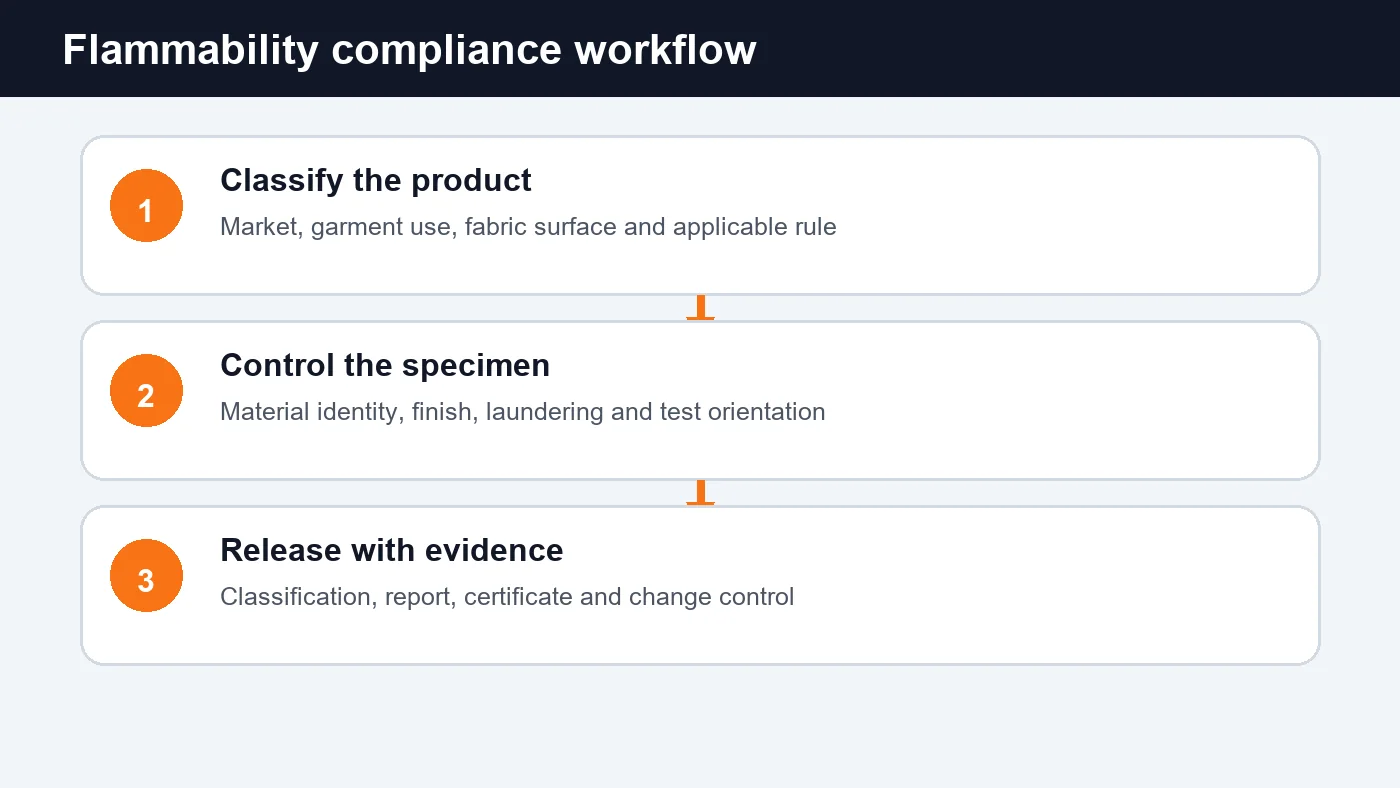
Test or document the production-intent material rather than a convenient substitute. Retain a sealed reference, approved specification and report. At pre-production, compare the fabric lot, weight, composition, nap, finish and color route with the approved identity. A switch from solid knit to brushed fleece, a heavier pigment print or a new coating supplier should trigger a documented compliance review.
Use incoming inspection to verify identity, not to recreate a regulatory test on the factory floor. The brand or importer should define when accredited external testing is required and who issues any certificate. The factory supports traceability by controlling purchase orders, roll tickets, bills of materials and process recipes.
What mistakes create false confidence?
- Testing only the base fabric: the exposed finished surface can be materially different.
- Using a generic supplier declaration: it may not identify the style, lot, finish or market.
- Confusing exemption and compliance: the underlying requirement still applies.
- Copying a report across colors or vendors: different materials and finishes may require review.
- Making “flameproof” claims: Part 1610 classification does not justify a broader protective claim.
Buyer checklist before approving the style
- Confirm the destination market and legal product category.
- Map every exposed textile and finish in the final garment.
- Verify composition, surface, weight and production route.
- Write the testing or exemption basis with the current citation.
- Retain reports, certificates, samples and supplier-lot records.
- Lock substitutions and define when a new review or test is needed.
- Use narrow consumer wording consistent with the actual evidence.
Streetwear clothing flammability test frequently asked questions
Does every polyester streetwear garment need laboratory testing?
Not necessarily. The U.S. rule describes testing exemptions for specified fabrics, but the exact composition, surface and finished product must be assessed and the compliance basis documented.
Does a fabric report cover every future order?
No. Confirm that supplier, construction, weight, finish, color route and exposed use remain representative. A material or process change can invalidate the comparison.
Can a garment be marketed as flame resistant after passing Part 1610?
No. General wearing-apparel classification is not the same as a protective-clothing or flame-resistant performance claim.
Should printing and garment washing be completed before assessment?
Use the condition required by the applicable rule and compliance plan. Production-intent finishes should be identified because they can affect the exposed surface.
Who is responsible for the certificate?
Responsibility depends on the market and transaction. In the United States, review current CPSC certificate guidance with the importer or qualified compliance party.
Conclusion: connect the rule to the exact garment
A defensible streetwear clothing flammability test file links the market, garment, material identity, surface, finish, compliance route and production lot. It avoids unsupported safety claims and prevents quiet substitutions after sample approval. Review relevant streetwear product options, our manufacturing capabilities, and contact Aimer Custom Lab with the destination market, bill of materials and finish brief for project-specific confirmation.
A streetwear clothing flammability test record should remain traceable from the approved sample to every released bulk lot.