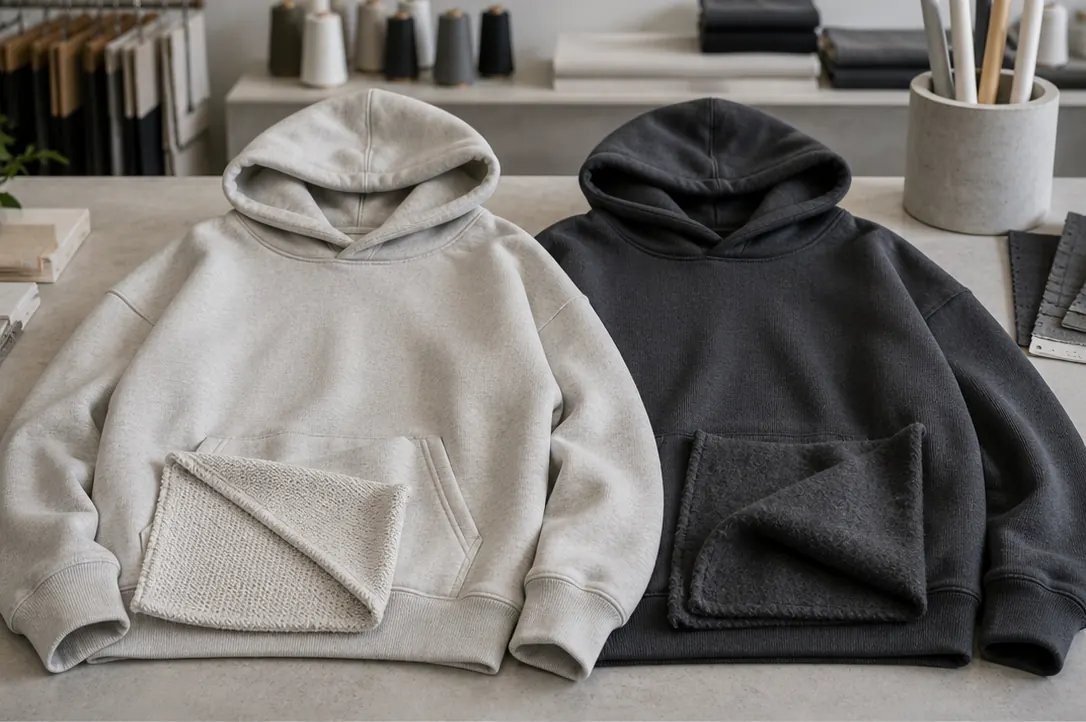
Streetwear Azo Dye Testing Guide

Quick Answer: Streetwear azo dye testing should be planned by destination market, fibre, colourant and component. ISO 14362-1 covers certain aromatic amines derived from azo colourants with and without extraction; ISO 14362-3 addresses specific 4-aminoazobenzene cases. Test representative dyed and printed components and never treat one fabric result as global legal approval.
Streetwear azo dye testing is a component-level chemical-compliance task tied to the actual destination market and construction. This buyer guide turns the topic into an auditable sourcing workflow. It distinguishes facts from assumptions, connects laboratory evidence to the actual garment component, and avoids unverified claims about price, certification, capacity, minimum order quantity or lead time.
What does streetwear azo dye testing mean?
Certain azo colourants can release specified aromatic amines under defined reduction conditions. The result is method- and analyte-specific. It does not mean every azo dye is prohibited and does not establish compliance with every chemical rule worldwide.
A useful specification names the exact product, material, colour, component, supplier lot and production stage represented by the evidence. The method number alone is not enough. Record the standard edition, procedure, specimen preparation, conditioning, units, replicate count, calculation and any deviation. These details allow a later buyer or technician to understand what the result really covers.
Why does streetwear azo dye testing matter?
A style may combine dyed shell, rib, lining, sewing thread, embroidery, print, patches and accessories. Colours and suppliers can use different chemistry. Sampling only the main black body can miss risk in a bright print, lining or trim.
Streetwear styles combine fabrics, rib, linings, coatings, washes, prints, embroidery, adhesives, trims and packaging. Each can have a separate supplier and process history. A convenient swatch from the body fabric cannot represent every component. The approval plan should map the complete construction and target the parts that can create the specific failure.
Which current sources should buyers use?
The European Chemicals Agency publishes the official REACH Annex XVII azo-colourant entry; scope must be checked for the destination. ISO 14362-1:2017 covers certain aromatic amines accessible with and without fibre extraction. ISO 14362-3:2017 is a supplementary procedure for certain colourants that may release 4-aminoazobenzene.
Check the current status and scope of every method when the order is placed. A test standard supplies a controlled procedure; it does not automatically set a pass limit or prove compliance in every country. Destination-market law, customer specifications and the intended care label must be reviewed separately. When legal interpretation is needed, obtain qualified advice.
| Decision point | What to record | Reason |
|---|---|---|
| Market scope | Country or region and product use | Determines applicable rules |
| Component map | Fabric, rib, thread, print, patch and lining | Prevents sampling gaps |
| Colour grouping | Dye route, supplier and shade risk | Supports defensible testing |
| Method route | Extraction and supplementary procedure | Matches fibre and colourant |
How should a streetwear azo dye testing plan be built?
- Step 1: Confirm destinations and obtain current compliance requirements.
- Step 2: Build a component and colour map from the bill of materials.
- Step 3: Group samples only when the laboratory and plan support it.
- Step 4: Select ISO 14362-1 procedures based on fibres and colourants.
- Step 5: Use ISO 14362-3 when the specified 4-aminoazobenzene case applies.
- Step 6: Reconcile results with declarations, lot traceability and change control.
Define the acceptance rule before results arrive. Otherwise, teams may select a limit after seeing the data or compare unlike reports. A result should be attached to the approved sample, bill of materials, purchase order and production lot. If the material, supplier, finish or process changes, assess whether targeted retesting is needed.
What belongs in the laboratory or inspection request?
- Style, colour, size, component and supplier-lot identification.
- Full method designation, edition and selected procedure.
- Specimen direction, face, layer arrangement and conditioning.
- Requested units, individual values, mean and uncertainty where reported.
- Care, ageing or exposure conditions before and after the test.
- Photographs, observations, failure locations and deviations.
- Agreed acceptance criterion and destination-market context.
Ask for raw observations as well as a pass/fail line. Photographs and failure descriptions can show whether the substrate, adhesive, seam, coating, dye or package failed. When a method offers different procedures, the report must identify the chosen route. If a control or validity criterion fails, do not accept a calculated result without technical review.
How should borderline or inconsistent results be handled?
First verify units, conditioning, specimen identity, preparation and method procedure. Then review replicate spread, measurement uncertainty and failure location. Retesting can be appropriate when the sample or procedure was wrong; it should not be used to search for a favourable number. Keep the original result and document the reason for any repeat.
Do not average away a severe component failure without a justified rule. If one colour, layer or trim fails while others pass, isolate the affected source and decide whether rework, replacement, additional sampling or a revised specification is needed. A conditional release must identify the limitation and responsible approver.
Which streetwear azo dye testing mistakes should be avoided?
Do not say “azo free” because one result is below a reporting limit. Avoid treating an EU restriction as a universal global rule, mixing unrelated colours without rationale, or ignoring prints and threads. A supplier declaration supports traceability but does not replace representative evidence when testing is required.
Also avoid broad words such as “safe,” “durable,” “mould-proof,” “compliant” or “tested” when the evidence supports only one measured property under stated conditions. Precise language is stronger: name the component, method, exposure, result boundary and destination. Never convert a textile test into a medical, legal or lifetime-performance promise.
How does streetwear azo dye testing connect to bulk QC?
Incoming inspection should confirm that bulk rolls, trims and packaging match the tested reference. In-line control should monitor process settings that could change the result. Final inspection should reconcile labels, care instructions, packaging and marketing claims with the approved technical file. Maintain traceability from report to lot rather than filing results as isolated PDFs.
Use documented change control for new suppliers, materials, colours, dye routes, finishes, adhesives, prints, coatings, wash formulas or packaging systems. Risk-based verification is more useful than testing everything blindly. The objective is to identify changes that can affect the controlled property and obtain proportionate evidence before shipment.
Buyer checklist before approval
- Map every relevant material and component.
- Confirm the intended market and care route.
- Use a current method whose scope fits the construction.
- Set measurable acceptance rules before testing.
- Review individual results, photographs and deviations.
- Check before-care and after-care evidence where relevant.
- Link the report to the approved sample and production lot.
- Use qualified, limited claim wording.
- Trigger review when a material or process changes.
Streetwear azo dye testing frequently asked questions
Are all azo dyes banned?
No. Restrictions target specified hazardous amines and defined uses; check the relevant destination-market rule.
Can different colours be composited?
Sometimes, but compositing can dilute or obscure a component result. Use a documented laboratory rationale.
Why are there two ISO 14362 procedures?
Part 1 covers certain aromatic amines with and without extraction; Part 3 addresses specific 4-aminoazobenzene cases.
Does a pass cover future lots?
Not automatically. Supplier, dye, colour, process or material changes can alter relevance.
Is this legal advice?
No. It explains testing concepts. Confirm current duties with qualified counsel for each destination market.

Conclusion
Streetwear azo dye testing is strongest when market scope, component mapping, method selection and lot traceability are documented together. The strongest sourcing file combines representative sampling, a suitable current procedure, transparent reporting, a pre-agreed decision rule and disciplined change control. No single test replaces fit approval, workmanship review or final inspection.
Review the men’s streetwear manufacturing site and the streetwear clothing sampling process guide for related sourcing context. Contact the site with the real construction, destination market and evidence requirements so feasibility can be confirmed for the specific project.