Streetwear Metal Trim Corrosion Test Guide
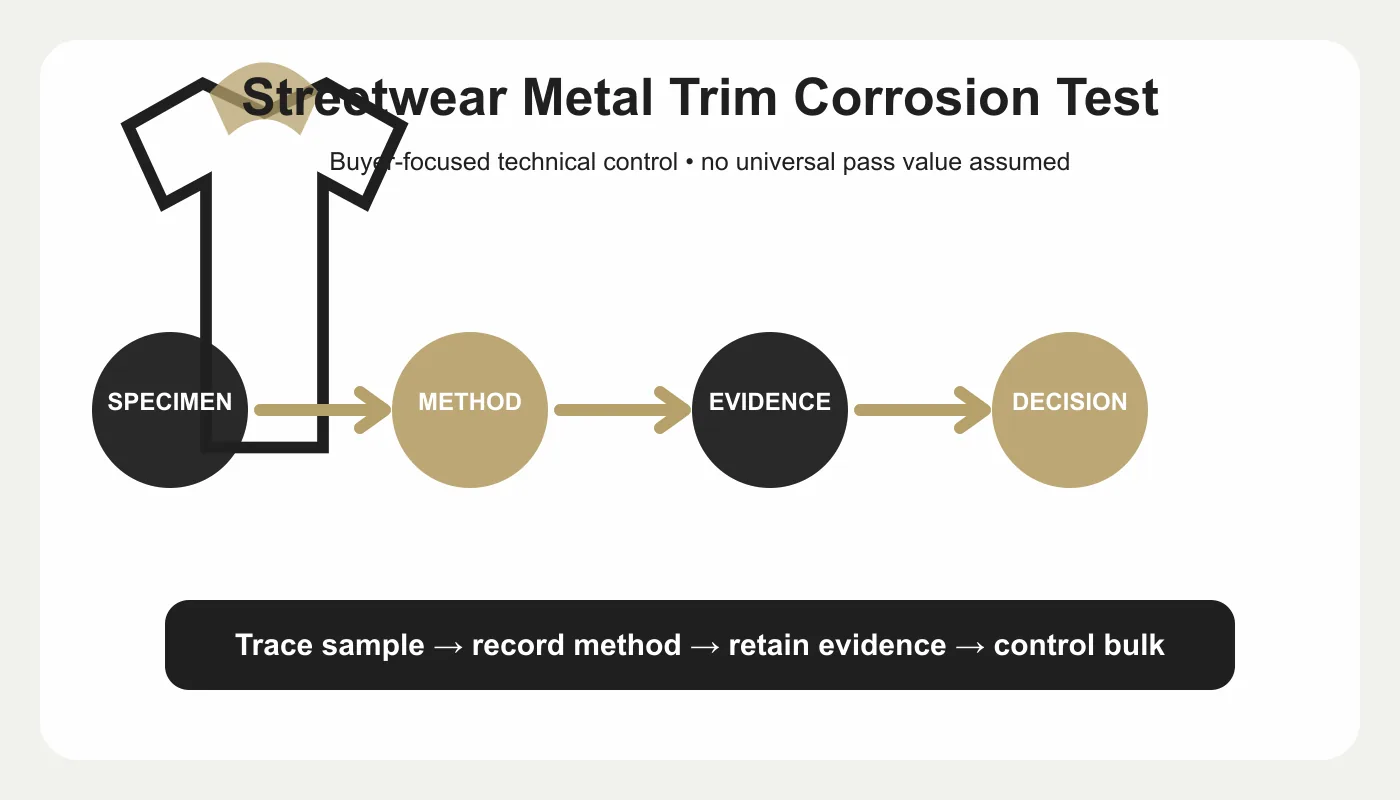
Quick Answer — streetwear metal trim corrosion test: Identify the metal, coating, colour, supplier lot and garment location; select an applicable corrosion method; expose multiple representative components under controlled conditions; then record red rust, tarnish, blistering, coating loss, staining and operating changes. Salt spray is a comparative quality-control tool and should not be converted into an unsupported prediction of years in real use.
A streetwear metal trim corrosion test evaluates how a zipper, snap, eyelet, buckle, cord end or decorative component changes in a controlled corrosive environment. The goal is not to promise a lifetime outdoors. It is to detect coating discontinuities, staining risk, functional change and inconsistent trim lots before metal components are installed across a private-label production run.
This guide connects laboratory exposure with garment washing, operation and appearance checks for hoodies, jackets, tracksuits and overshirts. Use it with Aimer Custom Lab’s cut-and-sew capabilities and product overview. Test conditions and acceptance rules must be confirmed for the actual trim, finish and destination market.
What does a streetwear metal trim corrosion test reveal?
It reveals visible and functional changes produced by the specified accelerated environment and evaluation rule.
ISO 9227:2022 defines neutral, acetic-acid and copper-accelerated salt-spray procedures for metallic materials and coatings. Importantly, ISO states that the method does not set product exposure periods or interpretation and is not intended to rank materials for long-term corrosion resistance. ASTM B117-26 likewise describes a controlled salt-fog apparatus rather than a product pass specification.
Which streetwear components require separate review?
Treat each base metal, plating system, lacquer, colour and attachment construction as a separate risk unless evidence supports grouping.
Zipper teeth, slider, puller and stops may use different materials. A snap includes several mating parts, while an eyelet contacts cut fabric and reinforcement. Buckles, cord ends and logo plates may have decorative coatings that behave differently at edges and recesses. Test complete assemblies when contact between metals could influence corrosion or staining.
Why should corrosion be checked on the garment as well?
The shell, wash recipe, perspiration, detergent, storage and dissimilar materials can create interactions that a bare component test cannot reproduce.
Run planned garment care and finishing trials on installed trims. Inspect surrounding light fabric for staining, check zipper travel and snap operation, and look for rough edges that could abrade the textile. SATRA notes a salt-water contact approach for metal trims and clasps using a saturated cotton cloth, which highlights staining alongside component corrosion. Use a method appropriate to the buyer’s product rather than combining procedures casually.
How should corrosion evidence be organized?
A comparison record should describe both the component and the exposure.
| Evidence | Record before test | Record after test | Decision use |
|---|---|---|---|
| Trim identity | Part code, supplier, lot and finish | Same verified specimen | Traceability |
| Exposure | Method, solution, time and position | Any deviation | Comparable testing |
| Appearance | Reference photos and colour | Rust, tarnish, blistering, loss | Visual approval |
| Function | Opening force or operation notes | Sticking, roughness or failure | Garment usability |
| Contact textile | Fabric colour and construction | Staining or damage | Assembly approval |
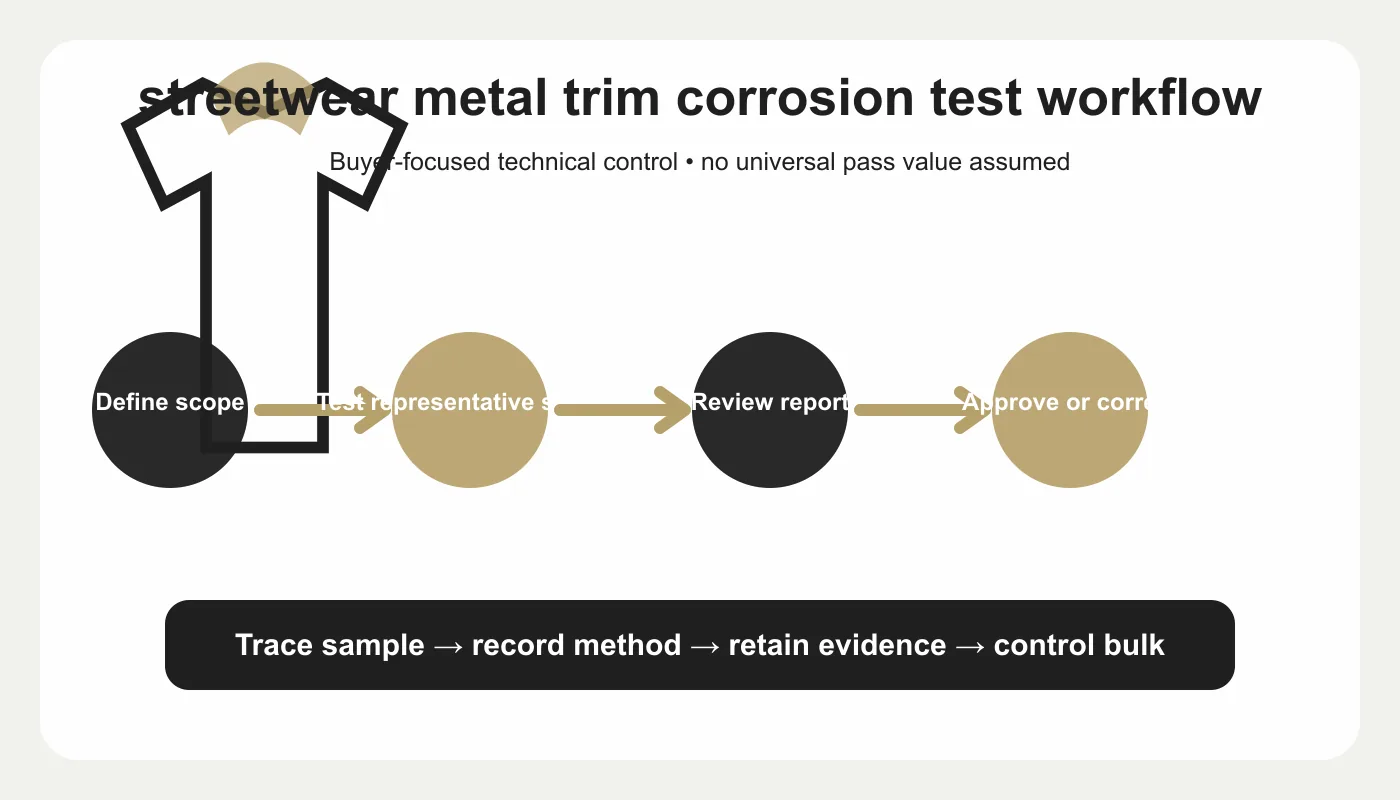
How should buyers run a streetwear metal trim corrosion test workflow?
Use a staged workflow that connects development evidence to bulk decisions.
1. Freeze the trim specification
Record dimensions, base material, plating or coating, colour, supplier reference and installation method.
2. Define service risks
Consider garment washing, coastal exposure, perspiration, storage humidity, metal contact and light-fabric staining.
3. Select the agreed method
Ask a competent laboratory to confirm applicability, exposure and evaluation criteria for the component.
4. Use replicates and controls
Test multiple parts from traceable lots and retain an unexposed reference.
5. Assess appearance and function
Record photographs, corrosion type, location, textile staining and zipper or snap operation.
6. Control bulk substitutions
Reopen approval after changes in supplier, base metal, coating chemistry, thickness, colour or setting process.
Which problems can make the result misleading?
Most misleading reports omit context rather than numbers.
| Risk | Why it matters | Control |
|---|---|---|
| Hours-to-years claim | Accelerated salt exposure does not predict an exact service life. | Use method-specific comparison language. |
| Mixed component materials | A zipper assembly may contain several metals and coatings. | Identify and test the full assembly. |
| Appearance-only review | A trim may look acceptable but operate poorly. | Check function before and after. |
| No textile contact check | Corrosion or coating transfer can stain pale fabric. | Include installed-garment trials. |
streetwear metal trim corrosion test buyer checklist
- Record part code, supplier lot, base metal and coating.
- Name method, edition, solution and exposure.
- Define appearance, staining and operation criteria before testing.
- Use multiple specimens and an unexposed control.
- Photograph edges, recesses and contact points.
- Run relevant garment wash or finish trials.
- Inspect pale adjacent fabric for staining.
- Retest after supplier, coating or process changes.
How should buyers document evidence and manage change?
Keep a compact evidence pack that another reviewer can understand without relying on memory. Record the product reference, material or component code, colour, size, sample stage, supplier lot, test method and report date. Attach the approved specification, relevant photographs and the decision made. For streetwear metal trim corrosion test, that record is more useful than an isolated pass label because it shows exactly what was examined and which purchasing question the evidence answered.
A development sample does not automatically represent every future production lot. Fibre blend, yarn, knit or weave construction, finish, dye recipe, coating, trim supplier and processing route can change performance. Buyers should therefore define change-control triggers before ordering. A meaningful material substitution, new colour family, new finishing route, new component source or recurring complaint can justify a new risk review and, where appropriate, targeted retesting.
Use the result as one input to approval, not as a substitute for product judgement. Compare laboratory evidence with the approved sample, measurement report, workmanship inspection, wear or handling trial and intended care instructions. If the report does not clearly identify the specimen or method, return it for clarification. If a result is close to an agreed limit, discuss repeatability, conditioning and sampling with a competent laboratory rather than rounding the number into a convenient answer.
Supplier communication should remain specific and neutral. State the observation, cite the agreed requirement, identify the affected lot and request a corrective-action explanation with fresh evidence. Avoid vague instructions such as “improve quality.” A practical corrective plan names the suspected cause, containment action, process change, responsible owner, verification method and approval gate. This makes the streetwear metal trim corrosion test workflow auditable without pretending that one test predicts every use condition.
Finally, retain approved reports with purchase-order and material records for a period appropriate to the buyer’s market and internal policy. Link the evidence to the exact style and revision rather than storing it in an unlabelled folder. When the next order begins, reviewers can see what was previously approved, which variables changed and whether a new test is proportionate to the risk.
Frequently asked questions
Does a streetwear metal trim corrosion test predict years of wear?
No. It provides controlled comparative evidence under the selected method and product criteria.
Can the same salt-spray time be used for every trim?
No universal period should be assumed. The product specification must define the exposure and interpretation.
Should zippers be tested as complete assemblies?
Yes when teeth, slider, puller, stops and tape interactions affect the garment. Record operation as well as appearance.
Can a plated snap pass before washing but fail afterward?
Yes. Garment processing and installation can damage coatings or change contact conditions, so test the production-intent assembly.
What should happen when bulk parts differ from approval?
Hold the affected lot, verify the specification and source, compare with the approved reference, investigate the change and repeat the agreed checks.
Conclusion: make the evidence usable
A useful streetwear metal trim corrosion test combines a named exposure with traceable components, functional checks and installed-garment review. It helps buyers control coating and lot changes without turning laboratory hours into a false lifetime guarantee. Send the trim card, garment drawing, wash plan and target market through the Aimer Custom Lab contact page before bulk purchasing decisions are finalized.